Expounding on the partnerships, Sampath noted that AOI Electronics will supply essential technology and training for advanced packaging, a vital area for achieving technological supremacy and profitability. This alliance is part of the Detailed Project Report (DPR) presented to the Indian Semiconductor Mission. The partnership with Mitsui is twofold: it will strategically bolster the supply chain for vital raw materials like chemicals and utilize its network to connect Kaynes with new clients in Japan, improving market access.
Discussing the company’s Outsourced Semiconductor Assembly and Test (OSAT) facility, Sampath assured that progress is on track. “We’ve finalized our pilot plant and have dispatched the first batch of semiconductors assembled in India. It is under evaluation, and we anticipate feedback from the customer regarding approvals soon,” he stated. The company has already attracted major clients, including Alpha & Omega Semiconductor and Infineon Technologies, and has sufficient demand to utilize its entire capacity. However, it aims to be prudent, targeting to secure about 25-30% of its total capacity by the upcoming fiscal year.
Addressing investors’ concerns regarding the smart metering sector, which has faced scrutiny over disclosure issues and working capital challenges, Sampath clarified the company’s stance. He stated that the segment’s contribution will naturally diminish as a percentage of total revenue with the growth of other verticals. “It’s simply evolving into a run-rate business between ₹800 to ₹1,000 crore annually,” he remarked. For the current year, with anticipated revenues exceeding ₹4,000 crore, smart meters will represent about 25% of the total, down from 30% in the first half. The company’s order book totals ₹8,100 crore, with smart meters contributing approximately ₹1,300 crore.
Also Read: Wobble in US AI stocks may benefit India, says Geosphere Capital’s Arvind Sanger
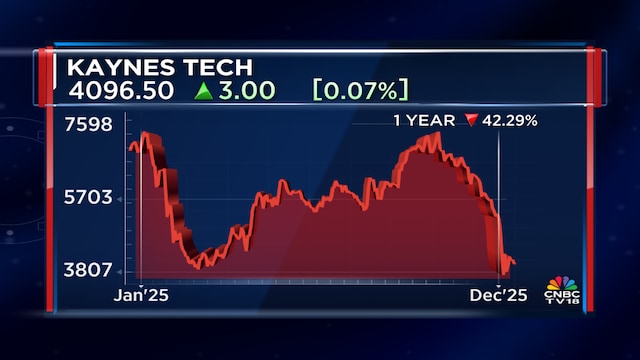
With the stock having decreased nearly 50% from its peak, Sampath acknowledged the necessity of restoring investor confidence. While emphasizing that the key measure is delivering promised results, he hinted that the board might contemplate initiating a small dividend in the coming year. On the critical matter of working capital, he noted, “We expect to achieve around 85 days or less by year-end in terms of net working capital, and we are committed to demonstrating significant positive operating cash flows by year-end.”
Clarifying the full-year revenue projection, Sampath confirmed that the consolidated topline is anticipated to be approximately ₹4,200 crore to ₹4,500 crore. He explained that a prior reference to ‘₹4,000 crore plus’ specifically pertained to the electronics manufacturing services (EMS) segment of the business. The company remains dedicated to its long-term strategic objectives, including reaching a $1 billion revenue target by 2027-28 (FY28).
For the full interview, watch the accompanying video
Catch all the latest updates from the stock market here