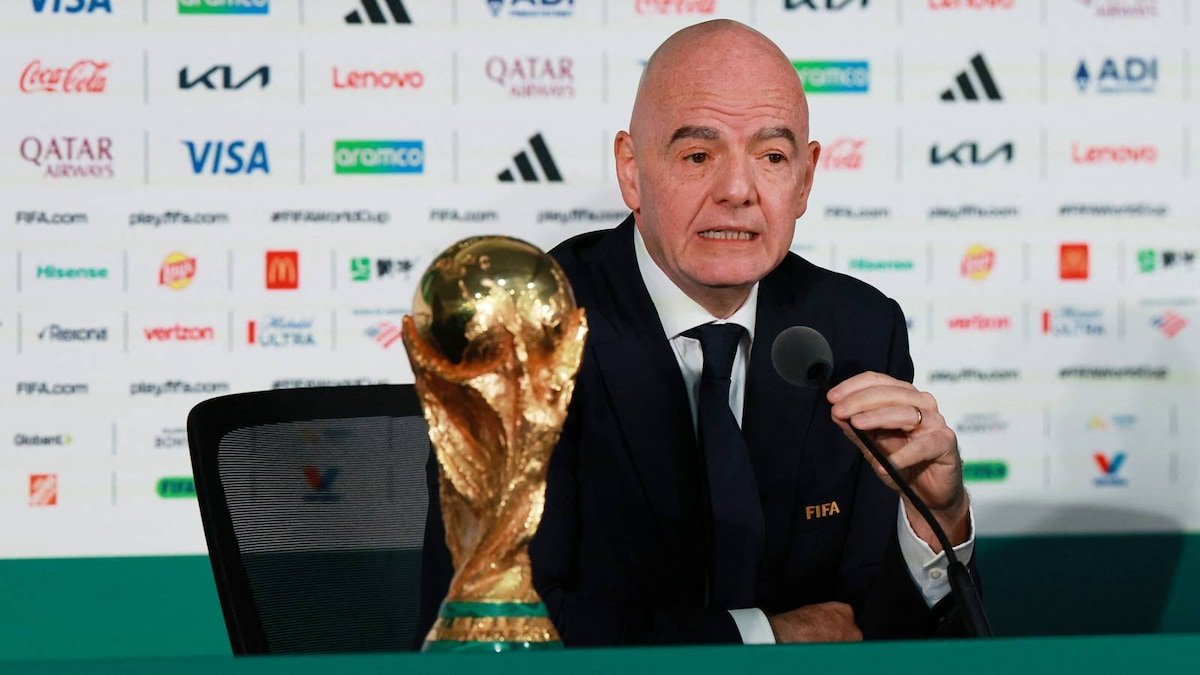
Five influential football figures across Africa have publicly endorsed Infantino while expressing approval of his decision to withdraw a contentious proposal to sell a portion of future World Cup revenues.
Their endorsements surfaced ahead of a meeting of the Confederation of African Football’s executive committee on Thursday, where they will evaluate the discarded plan aimed at generating $4.2 billion through a new commercial rights entity.
In contrast to the growing mistrust shown by Asia, Europe, and CONCACAF over the weekend, CAF has remained supportive, providing hope to Infantino as he prepares for the FIFA presidential election next March.
Last Wednesday, CAF issued a statement indicating it would review Infantino’s FIFA Forward Enterprise initiative, but he scrapped the project amid significant pressure on Friday.
This topic remains on the agenda for the CAF meeting; however, it’s uncertain whether the governing body will take a definitive stance on Infantino’s future.
Committee leaders, including CAF Vice President Fouzi Lekjaa from Morocco and FIFA Council members Hany Abo Rida (Egypt), Hamidou Djibrilla (Niger), and Ahmed Yhaya (Mauritania), have expressed their backing for Infantino.
Veron Mosengo-Omba, the newly elected president of the football federation in the Democratic Republic of Congo and former CAF general secretary, also reaffirms this support, having studied in Switzerland with Infantino.
All the statements issued share similar sentiments, praising Infantino’s decision to abandon the project and voicing their support.
African nations played a crucial role in Infantino’s election in 2016, driven by his commitment to significantly increase development funds for FIFA’s member associations.
This financial assistance has been crucial in maintaining his popularity among African members, many of whom face financial struggles and increasingly rely on FIFA funds for competition.
“Our challenge lies in securing funding. At the moment, we lack sponsors. So, what’s our strategy for competing? Wealthier nations can invest in player training, infrastructure, and equipment, which naturally leads to better results. Most European countries don’t encounter these issues,” stated Saïd Ali Athouman, president of the Comoros Football Federation.
“Our government struggles to provide medical supplies for hospitals and simultaneously focus on football. Malawi desperately requires funding. Malawi needs stadiums,” added Fleetwood Haiya, president of the Football Association of Malawi.
FIFA’s baseline funding assures each of its 211 member associations $8 million over a four-year period, and CAF now provides an annual grant to its members as well.
GRANT DISTRIBUTION
The concept of gifting grants to member associations was initially proposed by Infantino’s predecessor, Sepp Blatter, during the 1998 election against Lennart Johansson. Blatter secured victory with support from many African nations, which had not previously received financial assistance from FIFA, despite CAF’s formal endorsement of Johansson, the then UEFA president.
Infantino carried on Blatter’s initiative, rebranding it from the Goal Project to FIFA Forward and significantly increasing the funding amounts.
Motsepe praised Infantino profusely just days before the scandal regarding the World Cup revenue plan emerged.
“I stand firmly behind Gianni Infantino,” he declared. “He is not just a good friend; he is a loyal friend. He remains committed to Africa. I believe in showing gratitude to those who are loyal to you,” he emphasized.