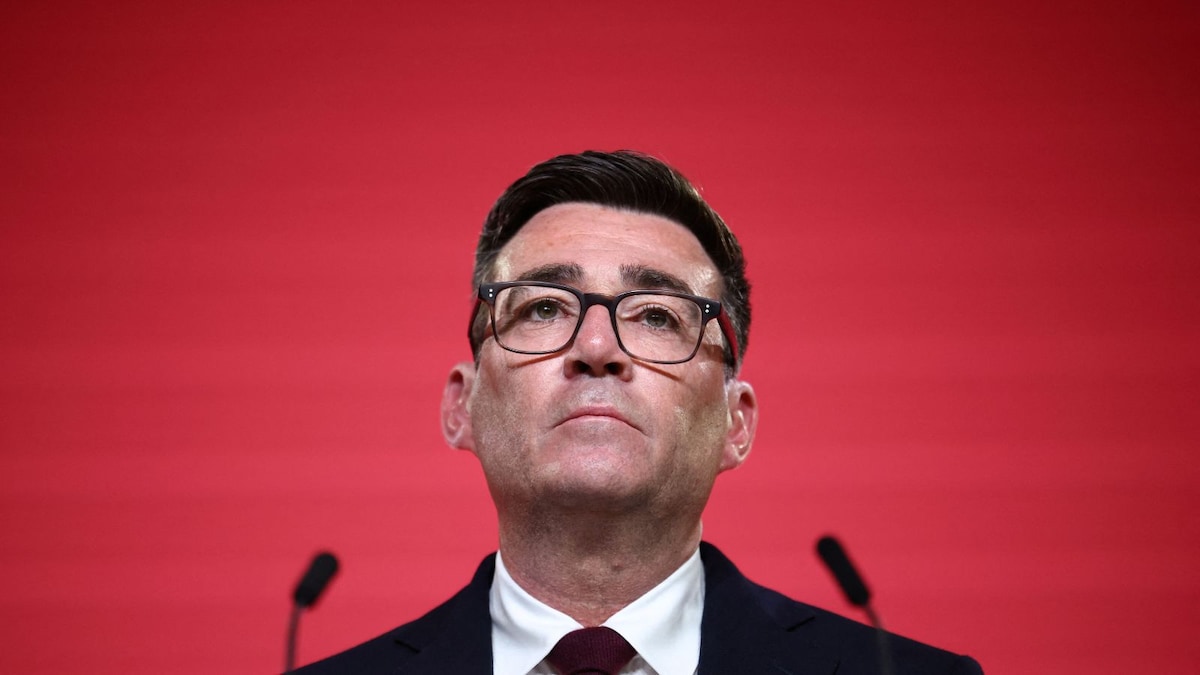
The former mayor of Greater Manchester received resounding approval as the Labour party leader on Friday, succeeding Keir Starmer, who resigned last month.
Experts indicate that Burnham must address a variety of issues that have led to the rapid downfall of his predecessors.
Cost-of-living
The foremost priority will be stimulating the economy and enhancing living standards for voters who have become disillusioned by soaring energy and food costs since the onset of the Russia-Ukraine conflict.
Burnham will face limited flexibility amid sluggish economic growth, substantial public debt, and stringent financial regulations mandating a balance between government expenditure and tax revenues.
In a speech on Friday, Burnham expressed his desire to “lead us to a nation where life is more affordable.”
He has advocated for devolving power to regional centers as a means of driving growth.
“It’s not merely about promoting local growth; it’s about transforming these areas to drive national growth,” explained Philip McCann from the Productivity Institute.
Burnham has committed to supporting smaller businesses, “reindustrialisation,” and increased public oversight of water, transportation, and energy sectors.
The Financial Times reported that he might consider relaxing restrictions on oil and gas drilling in the North Sea to help lower energy expenses.
His yet-to-be-named finance minister could significantly influence whether his economic approach leans more left or center.
Welfare bill
Another pressing issue will be addressing rising welfare expenses, which Burnham acknowledges need to be curtailed.
Starmer encountered public and party backlash over proposed reforms to the benefits system, including reductions in winter fuel allowances for the elderly.
His retreat from these changes contributed to his diminishing popularity.
Coming from the softer left of Labour, Burnham will face pressure to resist drastic cuts to benefits.
He has also pledged to “fix” underfunded areas such as social care, a sector he attempted to reform as health secretary in 2009.
On Friday, Burnham, whose father suffers from Alzheimer’s, stated he was “ready to grasp the nettle” for necessary changes, asserting, “the system’s broken.”
Defence
Burnham will need to address a £4.7-billion ($6.3-billion) shortfall over four years in the country’s defense investment strategy.
The much-delayed plan was released by Starmer last month, but its implementation will fall to Burnham.
He will likely experience pressure both internally and from allies like the United States to increase defense spending and achieve the NATO goal of spending 3.5 percent of GDP by 2035.
He previously stated he would take “responsibility” for funding the defense agenda and would make “no compromise” regarding defense.
Labour’s popularity
A crucial task will be countering the rising popularity of Nigel Farage’s hard-right, anti-immigration party, Reform UK.
Labour has been losing supporters to the left-leaning Greens and Reform, which made significant gains in local elections earlier this year, putting pressure on Starmer to let in a leader who can effectively challenge Reform’s ascendancy.
In his speech on Friday, Burnham committed to creating a new political direction “that is distinctly Labour,” independent of the two fringe parties.
“We succeed by being ourselves,” he asserted.
“We won’t strive to out-Green the Greens, or out-Reform Reform, nor repeat the past of wearing too many Tory garments.”
Tony Travers, a professor at the London School of Economics, indicated that this might represent a new approach.
“This suggests that the Labour Party under Burnham aims to win back voters from Reform and the Greens with a distinct offer,” Travers told AFP.
Foreign policy
“Regarding international matters, the major challenge is navigating the relationship with Donald Trump,” noted Travers, highlighting that Starmer maintained a relatively cordial relationship with the U.S. president until the US-Iran conflict.
Beyond adjusting to the unpredictable American leader, who has labeled Burnham as “extremely liberal,” he will have to manage ongoing conflicts in Russia-Ukraine and the Middle East.
Burnham has indicated he would maintain a similar stance to Starmer’s generally well-received foreign policy, preserving close relationships with NATO and other allies.
“Our partnership with the U.S. will remain essential as our primary defense and security partner. Britain’s support for Ukraine will not falter,” Burnham stated in The Times this month.