This meeting coincides with a time when the BJP-led National Democratic Alliance (NDA) is actively increasing its numbers through defections, making every parliamentary seat crucial.
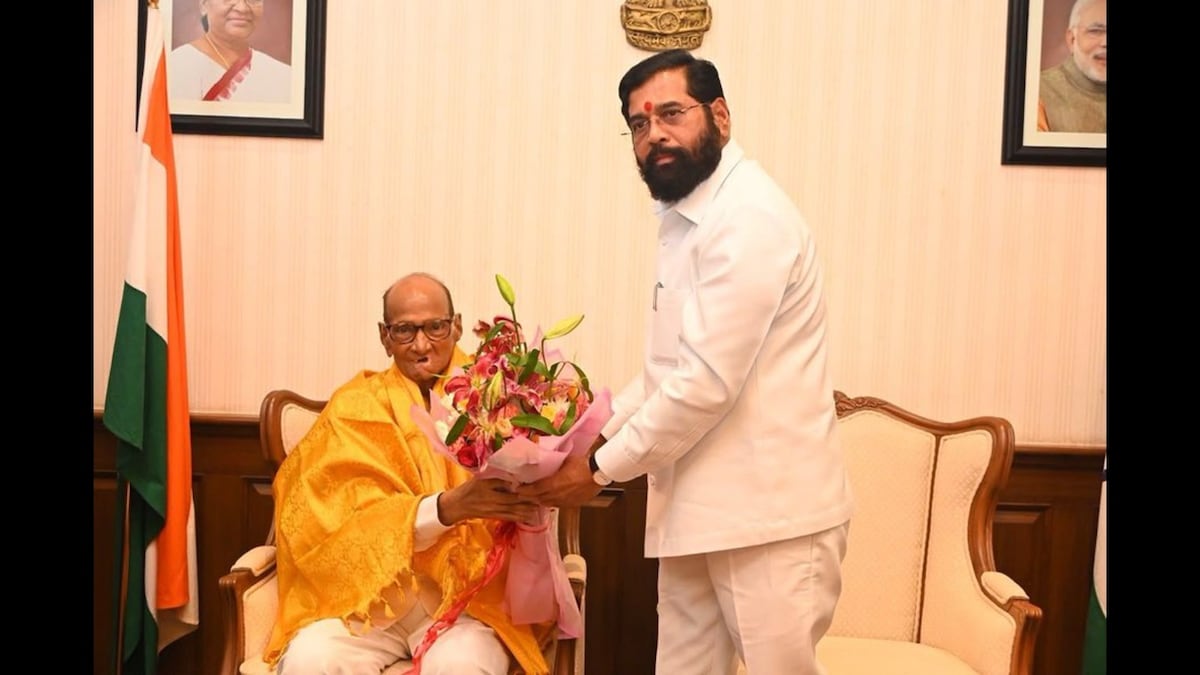
Pawar met Shinde at Mumbai’s Vidhan Bhavan following his attendance at a meeting regarding the Maharashtra-Karnataka border dispute committee.
Though the NCP (SP) referred to it as a courtesy call, the optics have raised concerns within the opposition Maha Vikas Aghadi (MVA), with Shiv Sena (UBT) leader Sanjay Raut stating the meeting has “hurt” party members.
Congress leader Prithviraj Chavan defended the encounter, stating that political adversaries often maintain friendly personal relations.
The numbers game
While there’s no indication that Pawar is preparing to join the NDA, such a decision would considerably enhance the ruling alliance’s standing in Parliament.
Currently, the NDA’s seat count in the Lok Sabha stands at approximately 313 after several political shifts, including dissent within the Trinamool Congress (TMC).
If Pawar’s faction, which holds eight Lok Sabha MPs, were to officially support the NDA, the alliance’s total would rise to about 321.
Even then, it would still be over 40 seats short of the 362-member two-thirds majority needed in the 543-member House to pass constitutional amendments.
In the Rajya Sabha, the effect would be less significant. Pawar’s faction contains two MPs in the Upper House, raising the NDA’s count to around 141 if they switch allegiance. However, the alliance would still fall short of the 163-member two-thirds threshold.
This speculation arises amidst a larger upheaval in opposition politics. A rebellion within the TMC has already changed the parliamentary landscape, with a faction of Lok Sabha and Rajya Sabha members breaking away, potentially enhancing the NDA’s numbers even more.
Additionally, Eknath Shinde’s faction has grown at the expense of Shiv Sena (UBT), while Ajit Pawar’s previous split from the undivided NCP has reshaped the political dynamics in Maharashtra.
For the NDA, these changes are less about immediate political survival and more focused on strengthening the numbers necessary to advance constitutional amendments, including those related to women’s reservation and any future delimitation initiatives.
At this stage, Sharad Pawar’s meeting with Shinde remains simply that—a meeting. Yet, in India’s rapidly evolving political landscape, even a courtesy call is sufficient to incite speculation about potential future realignments.
With inputs from PTI