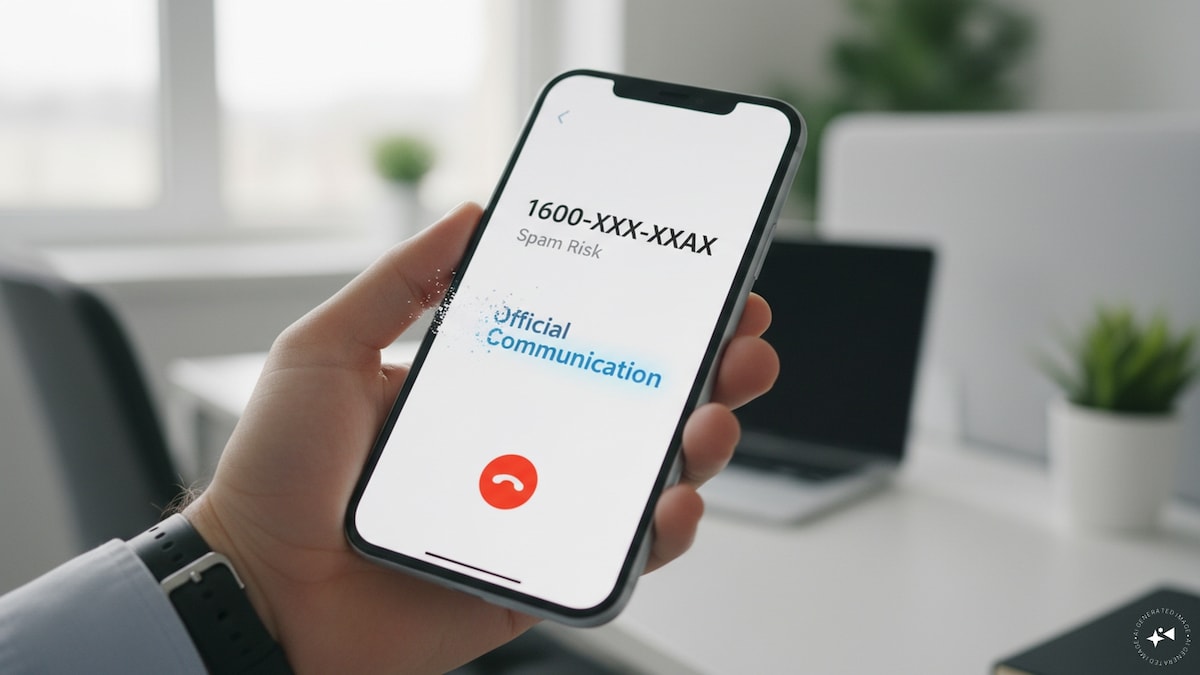
Established by the Department of Telecommunications (DoT) in May 2025, the 1600 number series was designated for banking, financial services, and insurance (BFSI) communications and transactional calls. Its purpose was to help consumers easily identify authentic messages.
On X, Jhunjhunwala pointed out that limiting community-based caller data has diminished consumer confidence, increased unanswered calls, and will “only worsen.”
“In late 2025, TRAI mandated that businesses contact consumers using the 140 (for telemarketing) and 1600 (for BFSI services or transaction-related calls) number series to regulate calls through these dedicated lines.
“While this may seem advantageous in theory, issues arose when TRAI also restricted Truecaller from displaying any community-reported spam information, meaning Truecaller cannot identify any 140 and 1600 numbers as spam,” he elaborated.
Wondering why spam calls have increased SIGNIFICANTLY in India recently? Well, it’s actually going to get worse, here’s why:
In late 2025, TRAI enforced businesses to call consumers using 140 (for telemarketing calls) and 1600 (for BFSI companies to make service/transaction… pic.twitter.com/Gy5ykiBxrL
— Rishit Jhunjhunwala (@rishj) July 8, 2026
Jhunjhunwala indicated that this restriction has resulted in a significant increase in spam calls from these number series. He noted that over 51 million calls from 140 and 1600 numbers go unanswered daily. In the last eight months, Truecaller users ignored 81% of calls from the 140 series and 79% from the 1600 series.
“Some of these calls are legitimate, which Truecaller would have verified and displayed as such, prompting consumers to answer. Instead, both consumers and legitimate businesses have lost opportunities. It’s detrimental for all parties involved,” he stated.
Jhunjhunwala reported that blocking actions against 1600-series numbers have surged by 208% since October 2025. He also mentioned that Truecaller users manually blocked 74 million calls from these numbers during this time.
“Currently, Truecaller users block about 400,000 calls daily from the 140 series and approximately 125,000 calls from the 1600 series,” he added.
TRAI’s Request
Truecaller has introduced a ‘Frequently Blocked’ badge for 1600-series numbers that many users have blocked, though not marking them as spam. However, Jhunjhunwala shared in his X post that TRAI has reached out to the Ministry of Electronics and Information Technology (MeitY) for the authority to regulate caller ID applications.
“Yesterday, we learned that TRAI is requesting MeitY for the authority to prevent caller ID apps from showing any information on 140/1600 numbers. This reasoning is completely flawed. We are responsible actors assisting millions of Indians daily…,” he expressed.
Urging the government not to penalize reputable entities like Truecaller, the CEO stated that the company will present its data to MeitY to substantiate these claims and ensure a data-driven decision-making process.
Users Voice Frustration with 1600 Number ID
In his post, the CEO also included screenshots from X users who raised flags over the misuse of 1600 number series. In these screenshots, users highlighted that financial institutions are exploiting the new 1600 series to sell loans and policies, undermining the original intent of its implementation.
Many others responded to his X post, sharing similar concerns.
“This is why I stopped answering most 1600 calls,” one user commented.
Another echoed: “I’ve blocked several 1600 numbers myself. Many calls were promotional rather than service-related.”
Following the policy’s introduction in May 2025, TRAI directed all entities under the Insurance Regulatory and Development Authority of India (IRDAI) to adopt the dedicated number series by February 15, 2026.
Similar directions were given to entities regulated by the Reserve Bank of India (RBI), Securities and Exchange Board of India (SEBI), and Pension Fund Regulatory and Development Authority (PFRDA).
At that time, the government announced that around 570 entities had already started using the 1600 series, subscribing to over 3,000 such numbers.