Indian Prime Minister Narendra Modi is making his second trip to Australia, with his previous visit occurring in 2023 in conjunction with the Economic Cooperation and Trade Agreement (…

 1/5
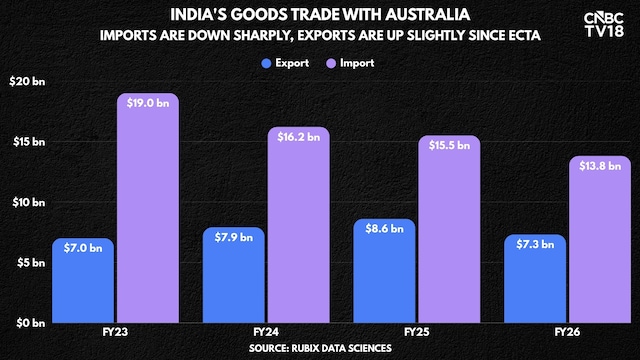
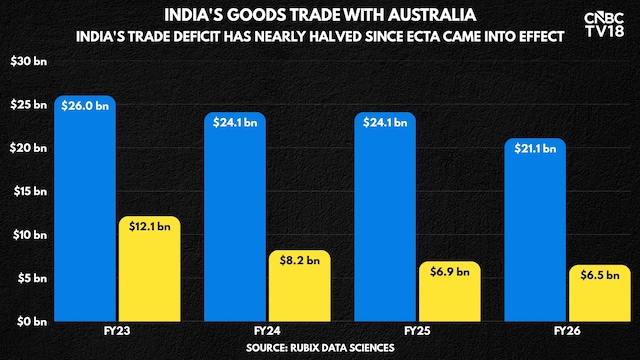
1/5India’s annual trade deficit in goods with Australia has decreased to $6.5 billion for the financial year ending March 2026, down from $12 billion in March 2023, as per an analysis by Rubix, a Mumbai-based advocacy and risk management firm. The Economic Cooperation and Trade Agreement (ECTA), effective from December 2022, allowed India gradual preferential market access for all of its exports to Australia. However, the agreement was limited to goods and did not include the services sector or address labor mobility.
 2/5
2/5As of January 2026, all Indian exports benefit from zero-duty market access to Australia. “Despite modest growth in exports, the significant reduction in imports has resulted in a more than halved trade deficit, reflecting an improvement in imports rather than a comprehensive increase in trade,” the report stated.
 3/5
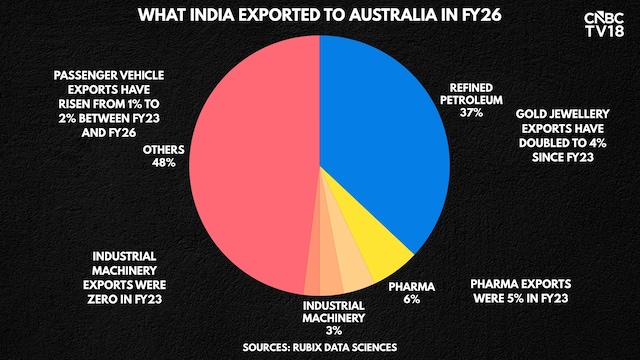
3/5India’s exports to Australia have gradually increased. The share of refined petroleum products has diminished, while there’s been a rise in the export of value-added items such as gold jewellery, pharmaceuticals, passenger vehicles, and industrial machinery.
 4/5
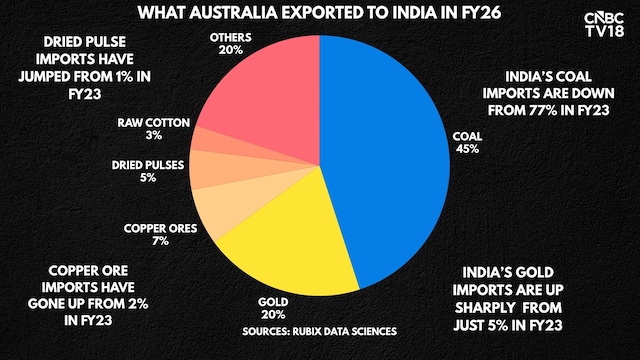
4/5Imports of coal from Australia have significantly dropped, aligning with a record surge in domestic production and a notable rise in renewable energy capacity. Interestingly, the share of gold imports from Australia in India’s total import basket has quadrupled, alongside an increase in the export of value-added gold jewellery.
 5/5
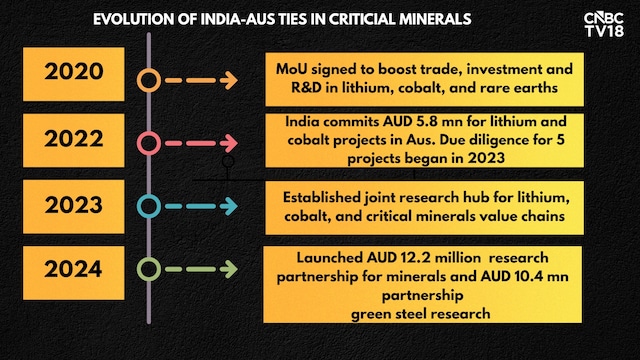
5/5Australia plays a vital role in ensuring India’s mineral security, possessing reserves of at least 21 of the 49 critical minerals identified by the Government of India. Both nations signed a broader agreement in May 2026 to secure the supply chain of these critical minerals under the QUAD framework, which is a strategic alliance between India, Japan, Australia, and the US.