A certificate of origin is a crucial document needed for exports to benefit from duty exemptions outlined in India’s trade agreements with partner nations.
Establishing the origin of goods is vital to prevent products from third countries from improperly benefiting from the preferential tariff advantages of trade agreements between the two nations.
Read more: India aims for FTAs with Canada, Mexico, and Brazil in the next six months: Goyal
The Central Board of Indirect Taxes and Customs (CBIC) has stated in a notification that entities authorized by both countries can issue these certificates in their respective territories.
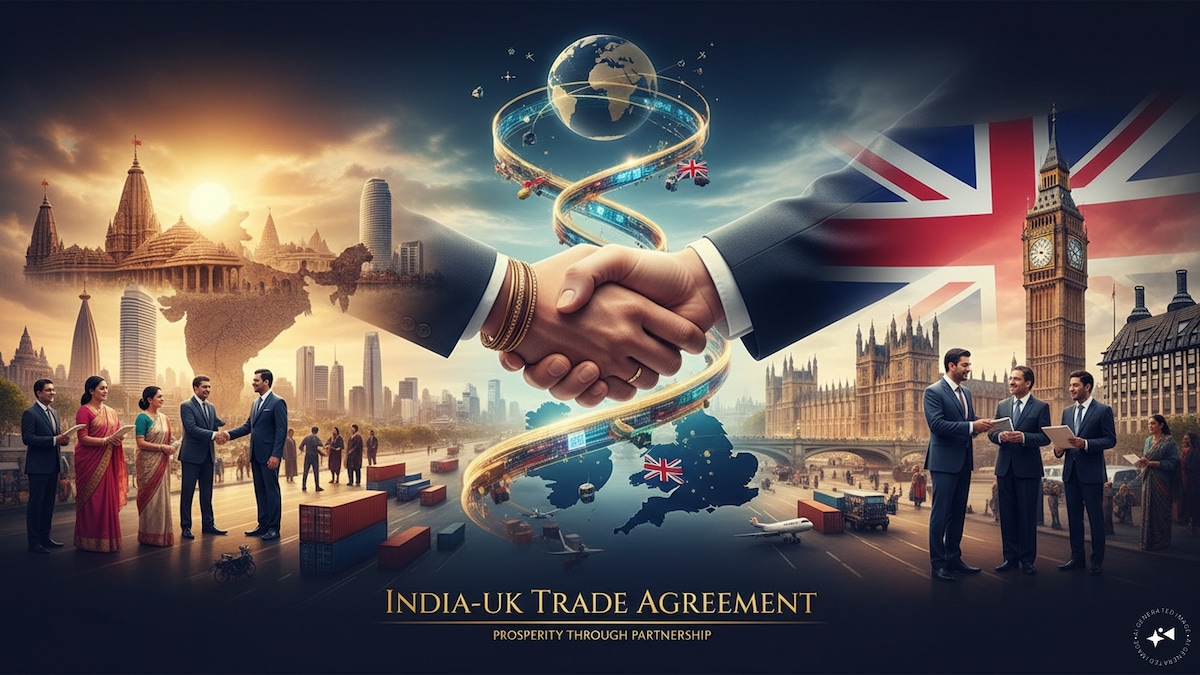
”These rules may be referred to as the Customs Tariff (Determination of Origin of Goods under the Comprehensive Economic and Trade Agreement between India and the United Kingdom of Great Britain and Northern Ireland) Rules, 2026. They are set to take effect on July 15, 2026,” it mentioned.
CETA ensures duty-free access for 99% of India’s exports to the UK, encompassing nearly the entire trade spectrum.
This is anticipated to create new opportunities for labor-intensive sectors such as textiles, marine products, leather, footwear, sports goods, toys, and gems and jewelry, in addition to rapidly growing industries like engineering goods, auto components, and organic chemicals.
Trade between India and the UK increased by 8.62% to $25.12 billion (exports: $13.44 billion; imports: $11.68 billion) in 2025-26, rising from $23.13 billion in 2024-25.
India reported a trade surplus of $1.76 billion in the previous fiscal year.
On the notification, Rajat Mohan, Managing Partner at AMRG Global, commented that the introduction of the Rules of Origin under the CETA is a significant advancement towards transparent and effective implementation of the pact.
”While the agreement provides substantial tariff benefits, these advantages will only apply to goods that genuinely meet the established origin criteria. This framework enhances the integrity of the FTA by preventing misuse via third-country routing and ensuring that concessions are granted only to bona fide manufacturers and exporters,” he explained.
Also read: India-EU FTA to be signed by year-end, says EU Ursula von der Leyen
Mohan emphasized that businesses need to actively assess their supply chains, value addition, sourcing methods, and documentation, as adherence to the rules of origin will be just as crucial as the tariff concessions themselves.