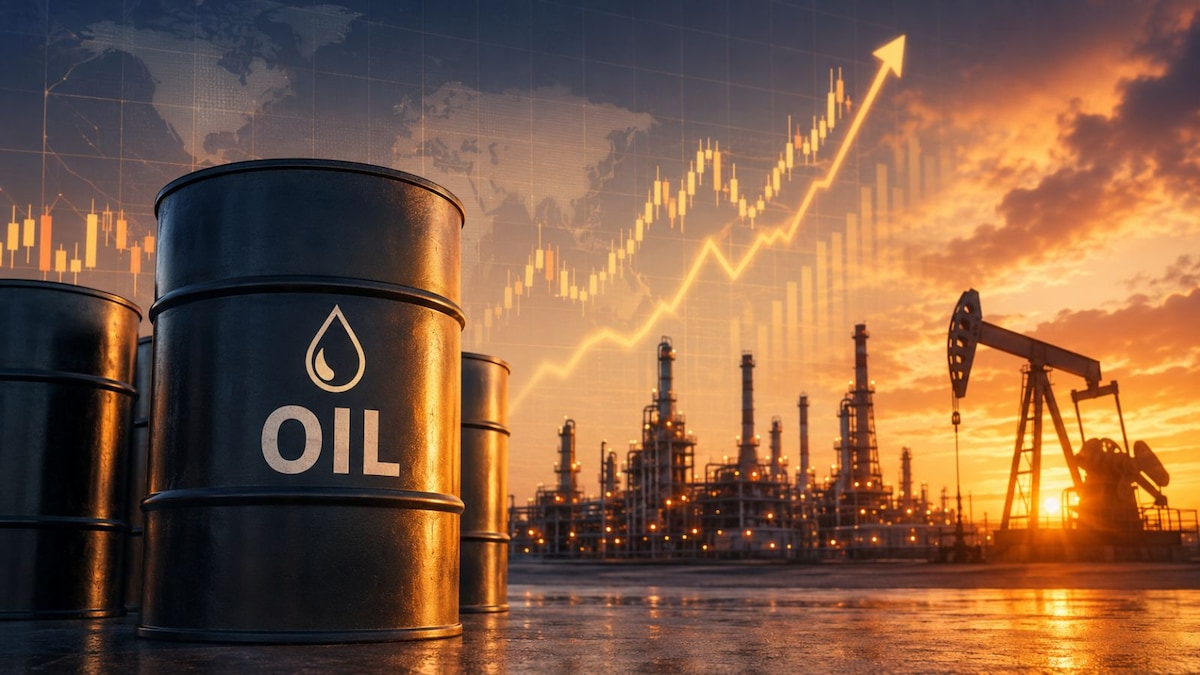
The recent tensions in the Strait of Hormuz—one of the busiest oil shipping lanes globally—sparked fears of potential supply interruptions and momentarily drove crude oil prices significantly higher. Although Brent crude has subsequently fallen below $74 a barrel and shipping conditions are improving, the threats to global energy markets persist.
Petroleum Minister Hardeep Puri and Chief Economic Adviser Anantha Nageswaran maintain that India navigated the crisis more successfully than many other nations, aided by prompt government action, resilient domestic infrastructure, and sound fiscal management. Experts interviewed by CNBC-TV18 concur that these strategies mitigated the immediate effects but suggest that the crisis signals the onset of a more unstable period for global energy security.
Why the threat remains
Even though the immediate military tensions have subsided, experts warn that the geopolitical landscape is still precarious.
Former Ambassador to the UAE Navdeep Suri asserts that the ceasefire between Iran and the US should not be misconstrued as a sign of lasting tranquility.
“The ceasefire is still quite fragile.”
He contends that another incident in the Strait of Hormuz could swiftly reignite fears regarding global oil availability.
Moreover, while shipping appears to be normalizing, another challenge looms. Many consuming nations have depleted their strategic petroleum reserves and commercial inventories during the conflict, and rebuilding these stockpiles could further drive crude prices upward.
“The world is currently a billion barrels short of where it would have been if the war hadn’t happened.”
This suggests that oil prices could remain inherently higher than they were prior to the conflict, even if physical supplies stabilize.
How India safeguarded domestic fuel supplies
India’s key advantage during the crisis was its capacity to swiftly boost domestic LPG production.
Former Joint Secretary at the Ministry of Petroleum and Natural Gas Vivek Kumar notes that years of investment in refining capabilities, import infrastructure, and storage enabled policymakers to respond promptly when the crisis unfolded.
Just eight days into the conflict, the government enacted the LPG Control Order, mandating refineries to adjust their production mix and prioritize LPG production over other petroleum products.
The results were immediate, with domestic LPG output rising from about 35,000 metric tonnes per day to nearly 54,000 metric tonnes per day within a week, reducing reliance on imported butane and propane.
The government also instituted caps on cooking gas refills, implemented digital authentication to combat black market activities, reduced excise duty by ₹10 per litre, and absorbed part of the LPG subsidy burden to shield consumers.
Securing alternative supplies before shortages arose was another crucial aspect of the response. Authorities discreetly diverted 12 LPG ships away from the Strait of Hormuz, avoiding transit fees, while simultaneously sourcing supplies from countries including Algeria, Japan, and Canada.
Kumar indicates that India also maintained petroleum inventories comparable to roughly two months of national consumption across crude oil, LNG, and refined products, offering an essential buffer against supply disruptions.
Why fuel prices didn’t surge
Despite HPCL’s prices briefly climbing to about $126 per barrel during the crisis, retail fuel prices in India largely remained stable.
Unlike many other nations, retail fuel prices in India do not automatically fluctuate with global crude prices. State-owned oil marketing companies (OMCs) and the government can absorb part of the price hikes through lower taxes and increased subsidies, protecting consumers from sudden price increases.
This strategy was extensively employed during the recent crisis. The government reduced taxes and increased LPG subsidies, while OMCs absorbed considerable losses on fuel sales.
Former HPCL Chairman and Managing Director MK Surana believes that government-owned OMCs, which command around 90% of India’s fuel marketing, serve as a strong financial buffer during periods of extreme volatility. However, he warns that consistently relying on companies to absorb losses is not sustainable.
He advocates building financial reserves during times of lower oil prices, allowing for deployment when global markets become unstable.
He also believes consumers may not benefit from reduced crude prices immediately. Global inventories are still below pre-conflict levels, and nations are expected to replenish strategic reserves, while oil companies will first need to recover losses incurred during the crisis before significant retail price cuts are feasible.
Diversifying beyond the Strait of Hormuz
The crisis has expedited India’s initiatives to lessen its reliance on one of the world’s most precarious energy chokepoints.
Prior to the conflict, nearly half of India’s crude oil imports relied on the Strait of Hormuz. Kumar states that this dependence has begun to diminish, as Indian refiners have increasingly sourced crude from Latin America, West Africa, and the Americas.
Countries like Brazil, Colombia, Argentina, Nigeria, Ghana, and Ivory Coast are becoming vital suppliers alongside established Middle Eastern producers.
Suri argues that diversification is only one facet of a comprehensive energy security strategy.
India has displayed considerable adaptability in recent years, boosting imports from Russia following Western sanctions and expanding purchases from the United States whenever commercial conditions were favorable.
At the same time, he cautions against assuming the Gulf can be easily replaced.
“Gulf oil is the closest, most accessible, and most competitive option for us.”
Instead of moving away from the region, India is also fortifying partnerships with Gulf producers that can circumvent the Strait of Hormuz. The UAE and Saudi Arabia are enhancing export capacity through pipelines terminating at Fujairah on the UAE’s east coast and Yanbu on Saudi Arabia’s Red Sea coast.
The UAE has also entered into a long-term LPG supply agreement with Indian Oil and is collaborating with India to bolster strategic petroleum reserves.
A playbook that may be tested again
Chief Economic Adviser Anantha Nageswaran has indicated that the government adopted a strategy akin to its approach during the COVID-19 pandemic, emphasizing targeted interventions over broad market distortions.
He anticipates only a minor widening of the current account deficit this financial year and believes that inflows from NRI dollar deposits could provide additional support for India’s external balance.
Collectively, the government’s actions—from rapidly increasing LPG output and securing alternative supplies to shielding consumers and diversifying crude imports—enabled India to navigate one of the most significant energy disruptions in recent years.
The broader takeaway, however, extends far beyond this crisis.
As geopolitical disputes, shipping interruptions, and strategic competition become more frequent, energy security is no longer solely about ensuring a sufficient oil supply. It involves building resilience in advance of the next disruption.
This means investing in domestic infrastructure, expanding strategic petroleum reserves, diversifying import sources, strengthening diplomatic partnerships, and establishing financial buffers capable of absorbing future shocks. The Gulf oil crisis has shown that these measures can mitigate the impact of disruptions but will also dictate how effectively India responds when the next one inevitably occurs.