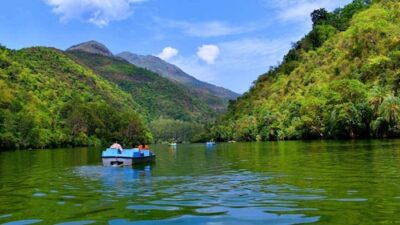
Maintenance work at Vajiralongkorn Dam has resulted in the draining of the hydropower facility’s reservoir, uncovering Nithe Station for the first time in over four decades.

 1/5
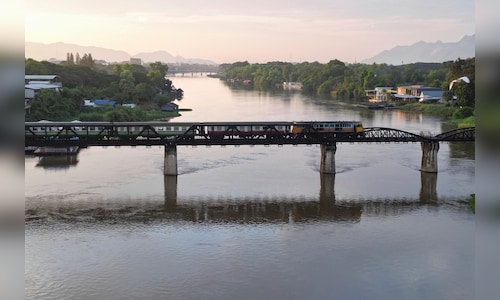
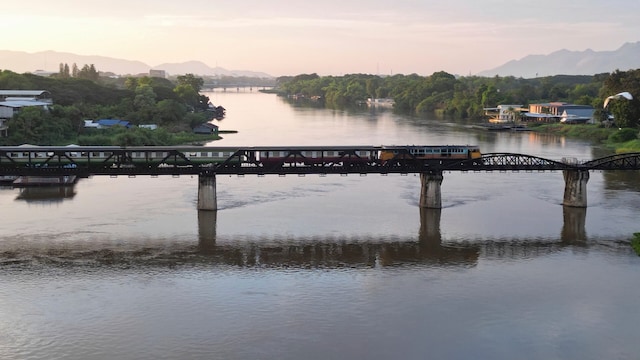
1/5Researchers are hurrying to explore the area, which served as a significant depot on the historic 415-kilometer (257-mile) route linking Siam and Burma, now Thailand and Myanmar. Time is of the essence, as the dam’s maintenance will conclude in August, coinciding with Southeast Asia’s rainy season, which may soon submerge the site again. A train passes over the River Kwai Bridge, a iconic section of the notorious World War II “Death Railway,” in Kanchanaburi, Thailand, on Sunday, May 31, 2026. (AP Photo/Anton L. Delgado)
 2/5
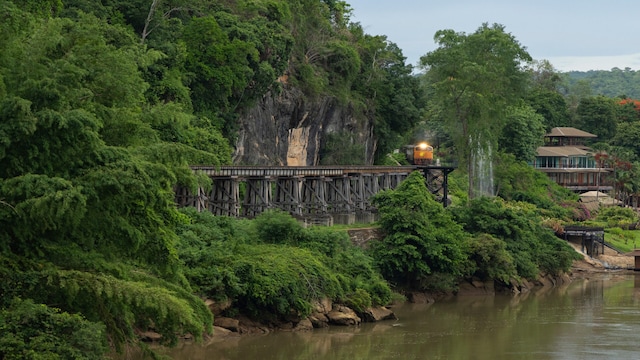
2/5During WWII, approximately 60,000 Allied prisoners of war and countless Asian laborers were compelled to construct the railway under the Empire of Japan’s direction. Tragically, over 12,500 POWs and 75,000 laborers perished during its construction, earning it the grim nickname “The Death Railway.” A train approaches Thamkra Sae Station, one of the operational segments of the WWII “Death Railway,” in Sai Yok, Thailand, on Thursday, May 28, 2026. (AP Photo/Anton L. Delgado)
 3/5
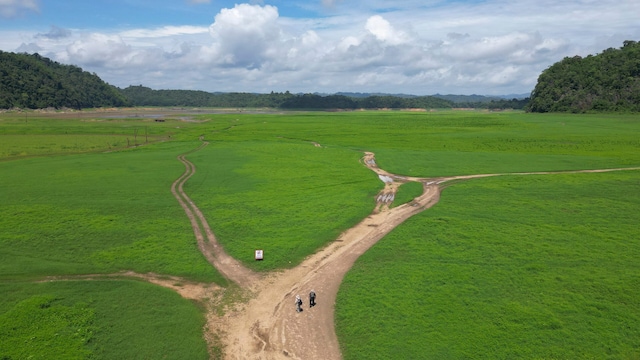
3/5“We engage with many relatives of POWs. Some of them worked in the region we’re currently exploring, specifically Nithe, and this offers a valuable chance to conduct surveys… to provide insights for their descendants,” remarked Andrew Snow, a researcher at the Thailand-Burma Railway Centre, whose father was captured in Singapore in 1942 and forced to labor on the railway. Researchers traverse the drained reservoir where Nithe Station, a depot on WWII’s notorious “Death Railway,” has reemerged in Sangkhlaburi, Thailand, on Friday, May 29, 2026. (AP Photo/Anton L. Delgado)
 4/5
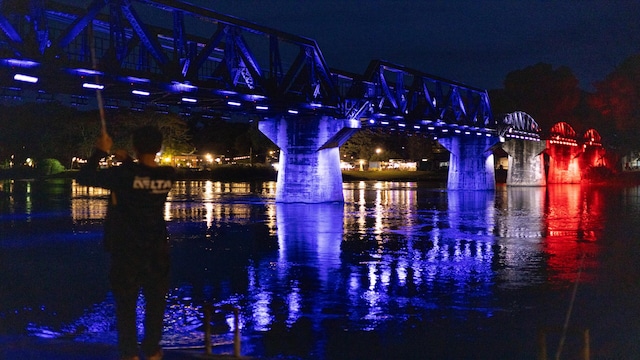
4/5Martyn Fryer, an independent researcher who has visited Nithe on three occasions, traveled from Australia to witness the completely resurfaced site. His grandfather perished as a POW while constructing the railway, and he expressed a desire to discover “what infrastructure remains beneath the water.” Active segments of the historical railway continue to operate, accommodating locals and attracting numerous tourists. Educational sites, such as The Hellfire Pass Interpretive Centre, aim to preserve the railway’s history. A man is seen fishing in front of the River Kwai Bridge, a renowned section of the WWII “Death Railway,” illuminated with the colors of the Thai flag in Kanchanaburi City, Thailand, on Saturday, May 30, 2026. (AP Photo/Anton L. Delgado)
 5/5
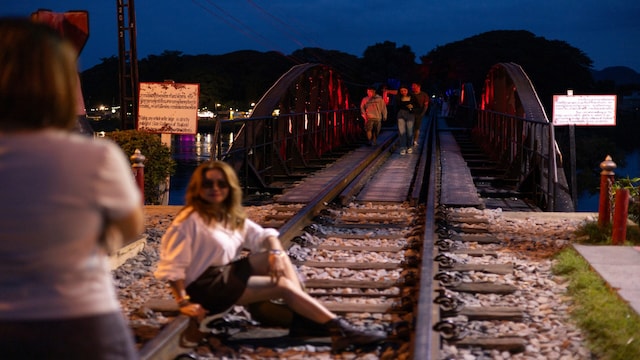
5/5Traveling offers a unique opportunity to understand the people and culture of a destination, noted Michael Weber, a German tourist at Thamkra Sae Station. “Every culture has its history, which is equally significant.” A visitor takes a photo at the River Kwai Bridge, a notable part of the WWII “Death Railway,” in Kanchanaburi, Thailand, on Saturday, May 30, 2026. (AP Photo/Anton L. Delgado)
Inputs from AP