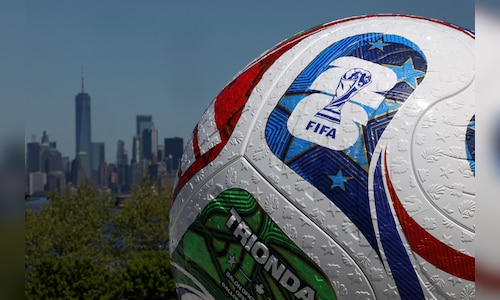
For over a hundred years, a football was merely an object kicked by players. The FIFA World Cup 2026 ball, Trionda, marks a new milestone in the technological advancement of the sport.
3 Min Read

 1 / 7
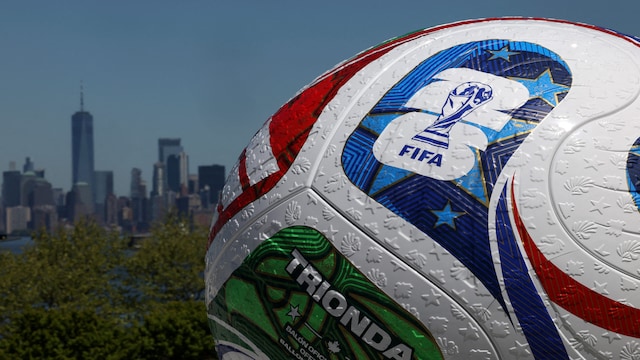
1 / 7For over a century, a football was merely an object kicked by players. The FIFA World Cup 2026 ball, Trionda, marks a new milestone in the technological advancement of the sport. Engineered through mathematics, aerodynamics, and data connectivity, it stands as one of the most sophisticated balls ever crafted for this grand sporting event. (Image Source: Reuters)
 2 / 7
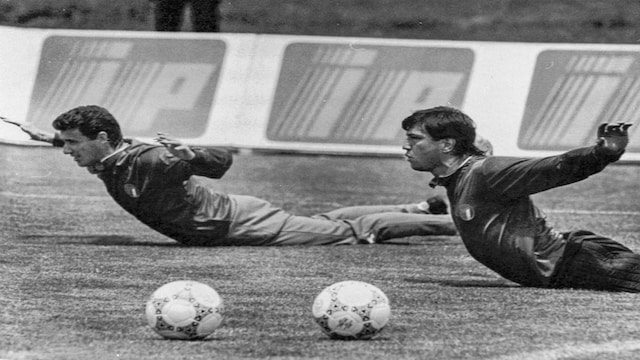
2 / 7A drive for enhanced speed, stability, and control has guided the transformations of World Cup balls over time. Panel counts have evolved as follows:
• Teamgeist (2006): 14 panels
• Jabulani (2010): 8 panels
• Brazuca (2014): 6 panels
• Telstar 18 (2018): 6 panels
• Al Rihla (2022): 20 panels
• Trionda (2026): 4 panels
With just four panels, Trionda has the fewest in FIFA World Cup history. (Image Source: Reuters)
 3 / 7
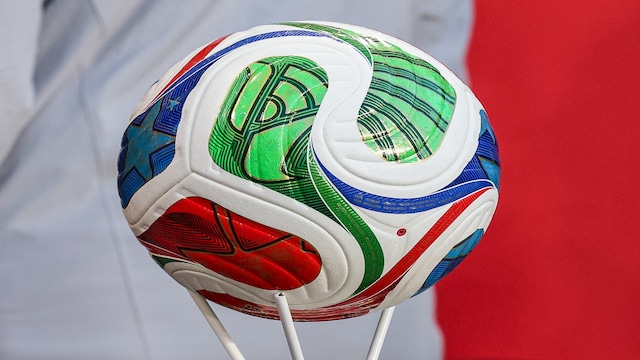
3 / 7The Geometry Behind Trionda: Central to Trionda’s design is a tetrahedron, a shape consisting of four triangles, with three meeting at each vertex.
Engineers have curved and adjusted these triangular faces to create a near-perfect sphere. The outcome is a football whose structure is grounded in one of geometry’s most refined forms while providing enhanced consistency on the field. (Image Source: Reuters)
 4 / 7
4 / 7The design of Trionda’s four-panel construction isn’t just aesthetic; fewer panels mean fewer seams, allowing for a smoother and more uniform surface. This design minimizes manufacturing variability, enhances precision, and provides engineers with better control over the ball’s flight dynamics. Each seam influences airflow, making panel design integral to football engineering. (Image Source: Vincent Carchietta-Imagn Images)
 5 / 7
5 / 7The Science of Flight: When a football moves through the air, it generates a wake behind it. Insufficient turbulence can render a ball unpredictable, while excessive turbulence may decelerate it. Cutting-edge football design aims to regulate airflow to achieve shots that are both rapid and stable. Trionda has been crafted for reduced drag, increased distance, enhanced stability, and predictable flight compared to many earlier models. (Image Credit: Vincent Carchietta-Imagn Images)
 6 / 7
6 / 7Trionda’s embedded sensor collaborates with AI tracking systems and stadium cameras, aiding match officials. This technology can accurately determine the exact moment a player interacts with the ball, facilitating quicker and more precise offside analysis and VAR decisions. By merging mathematics, physics, and data technology, Trionda has redefined football from a mere sporting object into one of the most advanced pieces of equipment used in FIFA World Cup history. (Image Source: Reuters)
 7 / 7
7 / 7