The Hyderabad-based integrated solar photovoltaic (PV) cell and module manufacturer aims to invest nearly ₹5,000 crore to expand its manufacturing capabilities, which includes backward integration into ingots and wafers, alongside investments in storage and inverter sectors.
Rustagi mentioned that the current cell capacity of 3.6 GW is expected to increase to 10.6 GW within the next four months. “The majority of our order book for the upcoming year is already secured, offering us considerable visibility into our margins,” he stated.
He further added that the company is optimistic about strong demand in FY27, driven by initiatives like Surya Ghar Yojana and Pradhan Mantri Kisan Urja Suraksha evam Utthan Mahabhiyan (PM-KUSUM), along with an uptick in corporate demand linked to net-zero objectives.
Rustagi clarified that the board’s approval to raise ₹5,000 crore serves only as an enabling resolution; there are no immediate plans to raise capital. The company is currently exploring new growth opportunities before making any fundraising decisions.
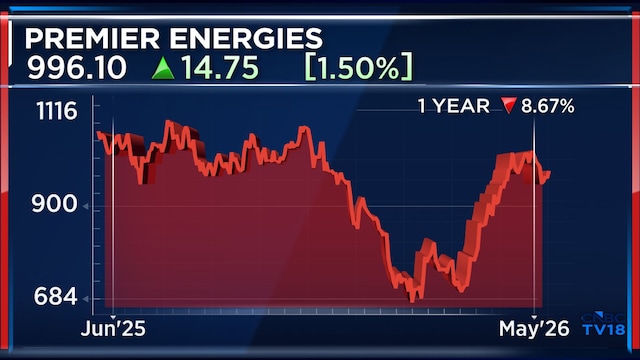
Premier Energies has also disclosed its earnings for the January-March 2026 quarter and currently holds a market capitalization of ₹45,104.65 crore. Its shares have fallen by over 8% in the past year.
These are edited excerpts from the interview.Q: Can you provide four key figures regarding revenue growth, margins, planned capex, and order wins for FY27?
A: FY27 is expected to be another excellent year for us. Our current order book stands at approximately ₹14,000 crore, and a significant part of this will be executed over the year, ensuring strong visibility for sales, pricing, and margins.
We also have an extensive capex program planned, with around ₹5,000 crore earmarked for tripling our cell capacity and investing in backward integration and new products such as storage and inverters. This capex initiative will facilitate growth in the upcoming years.
Q: Are you experiencing any pricing pressure in the market, especially since you’re focused on the domestic sector and with multiple players increasing their capacity?
A: To clarify, our cell capacity is currently 3.6 gigawatts, set to rise to 10.6 gigawatts in the next four months.
Regarding margins and pricing, we have to recognize that we offer three main products: cells, DCR modules (manufactured from Indian-made cells), and non-DCR modules (which involve imported cells transformed into modules). The last category is highly commoditized, with over 100 companies competing, leading to slim margins, and our involvement in this segment is minimal.
Also Read | KEC International cites labor shortages as a significant execution hurdle
The majority of our revenue and profits derive from the cell and DCR module segments, which provide substantial value and margins. While competition is increasing, the Indian market has seen growth of 87% year-over-year, a remarkable trend we expect to continue, especially considering global energy dynamics and supportive government schemes. Hence, demand looks to remain robust.
As for supply, while many new entrants are emerging, we believe that breaking into this sector is challenging. It often takes investors considerable time to secure funding, construct their facilities, and stabilize production, which can span from two to three years. Therefore, we anticipate a favorable demand-supply scenario, benefiting the company’s financial outlook.
Q: Could you elaborate on your expected order wins in FY27? Do you have a pipeline for new orders, and how will the margin profile evolve in the upcoming year?
A: Our order book is projected to grow significantly, with our cell and module capacities increasing two to three times over the next year. This positions us strongly in the market to capture new orders, extending beyond FY27. The demand landscape is vibrant, with large programs like Surya Ghar Yojana and PM-KUSUM set for robust execution in the coming year. The corporate market is also booming due to decarbonization and net-zero initiatives, suggesting sustained order inflow throughout the year.
Also Read | Tata Steel anticipates higher steel prices, forecasting a profitable UK operation in FY27
Q: A certain brokerage note indicates expected margin compression from 30% in FY26 to about 26% in FY28, mainly due to scaling up BSS and ingot-wafer operations. What’s your perspective on this, and when might you think the ₹5,000 crore funding would be anticipated in the market?
A: I cannot provide specific guidance on margins, but several factors will influence them as we move forward. The majority of our order book for the next year is accounted for, allowing us visibility to maintain our historical margin levels.
However, the business landscape is shifting. We expect the market share of the non-DCR segment to decline over time, which should help to enhance margins. Additionally, as we integrate backward into ingots and wafers, this will also bolster our margins, albeit with some impact from the growth of lower-margin businesses like battery storage, inverters, and transformers. Overall, our margin outlook remains generally strong.
For the complete interview, watch the accompanying video

Regarding fundraising, we have an extensive capex initiative, primarily funded through internal accruals and debt. There’s currently no need to seek external capital. Nevertheless, we’re in a dynamic space with numerous new opportunities to explore, both horizontally and vertically. We are assessing various options, and while we have passed this enabling resolution, we will approach the market for funding once our growth strategies and new initiatives are finalized. However, I want to emphasize that there are no specific timelines or amounts planned for future fundraising at this moment.
Q: Are you suggesting that brokerages may be underestimating the margins?
A: It’s not my place to comment on brokerage opinions. While I cannot provide specific guidance, the demand-supply dynamics in the sector are promising, and our competitive position and order book should lead to a healthy performance in the forthcoming year.
Stay updated with the latest stock market news here