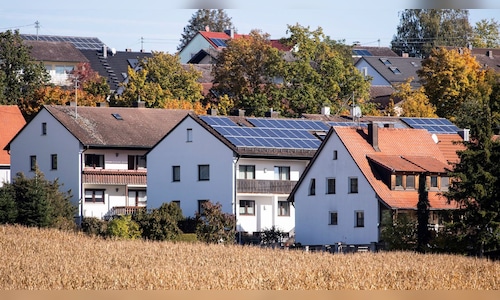
This “heating law,” enacted during the administration of former Chancellor Olaf Scholz, faced backlash from conservatives and some media outlets due to concerns that it would compel households to replace gas and oil heaters, incurring substantial costs for new green technologies.
Efforts to amend the law have been part of a broader strategy introduced by Merz’s administration, which has experienced a significant drop in public support since taking office last year amidst ongoing disputes between his conservative Christian Democrats (CDU) and their coalition partners, the centre-left Social Democrats (SPD).
According to the cabinet’s agreement on Wednesday, the heating law will be succeeded by a new building modernization law that eliminates the requirement for mandatory renewable energy components. Households will be permitted to retain their existing boilers unless they opt for alternatives such as heat pumps, district heating, or biomass systems.
Also Read: Russia to fulfill all agreements on energy supply to India: FM Lavrov
“With this, we are establishing investment security, providing planning reliability, and fostering technological openness and flexibility in heating system choices,” stated Economy Minister Katherina Reiche.
The forthcoming law, anticipated to be approved before parliament’s summer recess, will mandate that new gas and oil systems gradually incorporate climate-neutral fuels starting in 2029, with levels rising from 10% to 60% by 2040.
This new legislation underscores Germany’s dedication to achieving climate neutrality by 2045 and will also implement the European Union’s Buildings Directive, which requires all new buildings to be zero-emission by 2030.
The BDI, Germany’s industry federation, welcomed the change as “a significant step towards restoring investment” and expressed optimism about revitalizing the renovation of Germany’s building infrastructure and increasing capital flow into construction.
Conversely, Katherina Droege, the parliamentary leader of the Greens, criticized the move, asserting it represents “a complete abandonment of Germany’s climate objectives,” as her party was instrumental in advocating for the original heating law during its coalition with Scholz.
Also Read: World oil supply to fall below demand in 2026, says IEA, as deadlock in Iran war continues