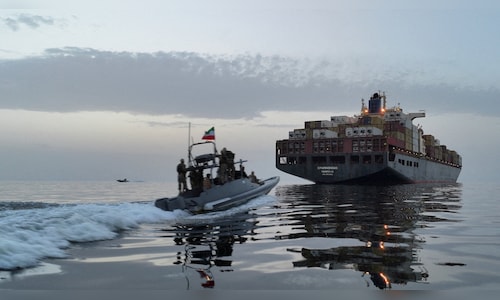
The ongoing US-Israeli conflict with Iran has drastically reduced energy exports from a region typically responsible for 20% of global crude oil and LNG supply. The US has imposed a blockade on Iranian ports in recent weeks, and while Iran initially aimed to stop traffic through the strait, that position is now evolving, noted Claudio Steuer from the Oxford Institute for Energy Studies.
“Iran has transitioned from blocking Hormuz to exerting control over access to it … Hormuz is no longer a neutral transit route; it has become a controlled corridor,” he stated.
With most of its crude usually routed through the strait, Iraq has been significantly impacted by its closure. Pakistan, actively mediating in the ongoing conflict, is heavily reliant on Gulf energy imports and is facing rising fuel costs.
Iraq has secured, through a previously unreported agreement with Tehran, safe passage for two very large crude carriers, each transporting about 2 million barrels of crude, which passed through the strait on Sunday.
The Iraqi government is currently negotiating for Iran’s approval for additional transits, according to an official from the Iraqi oil ministry familiar with both the initial agreement and ongoing discussions. This effort aims to protect the oil revenues that constitute 95% of its budget.
“Iraq is a close ally of Iran, and any decline in Iraq’s economy would adversely affect Iran’s economic interests in the nation,” the official remarked.
A second official from the Iraqi oil ministry and a source from the shipping industry also corroborated the reports of negotiations with Tehran. All sources requested anonymity as they were not authorized to comment publicly.
A spokesperson for the Iraqi government did not respond immediately to a Reuters inquiry.
QATARI LNG FOR PAKISTAN
Likewise, two tankers loaded with Qatari LNG are en route to Pakistan following a distinct bilateral agreement between Islamabad and Tehran, as confirmed by two industry sources, who also requested anonymity.
Prior to the conflict, Pakistan received approximately 10 LNG cargoes each month and now faces high summer electricity demand for cooling needs.
Neither Iraq nor Pakistan has made direct payments to Iran or its Islamic Revolutionary Guard Corps (IRGC) concerning the transits, the sources indicated.
While Qatar was not directly involved in these bilateral agreements, the two industry sources mentioned that it had pre-informed the United States about the shipments to Pakistan.
Pakistan’s petroleum and information ministries did not immediately reply to requests for comments, nor did Qatar’s foreign ministry.
IRAN TIGHTENS ITS GRIP
Other nations are looking into similar arrangements, as rising energy prices and supply disruptions heavily impact Asian economies.
“As more governments express willingness to strike deals with Iran for passage, it risks normalizing the perception that Iran will control the Strait of Hormuz more permanently,” explained Saul Kavonic, head of research at consultancy MST Marquee.
Before the conflict, around 3,000 vessels navigated Hormuz monthly; traffic has now dwindled to about 5% of that amount, based on shipping data.
This disruption has caused Brent crude prices to surge more than 50% since the conflict began in late February. LNG prices in Europe and Asia have increased by roughly 35% to 50%.
Iran has expressed its desire to maintain control over the strait following the war, demanding reparations, sanctions relief, and access to frozen assets as part of any settlement—conditions that US President Donald Trump labeled as “garbage,” undermining hopes for conflict resolution.
In the meantime, Iran is solidifying its grip over the strait, according to industry sources. It has requested Iraq to submit documentation for each tanker to facilitate transit via designated maritime routes under Iranian naval supervision, noted one Iraqi oil ministry official.
Specialized teams within the Iraqi oil ministry are providing Iranian authorities with comprehensive details on individual vessels, including destinations, shipping particulars, ownership, and cargo specifications, aiming to prevent any incidents.
A source familiar with negotiations between Pakistan and Iran concerning vessel passage noted there have been some hurdles in the process.
“The IRGC sometimes alters requirements, making it challenging to keep the discussions on track, but we are managing through it,” they remarked.
Also Read: Britain to send mine-hunting drones and warship to protect Hormuz shipping lanes