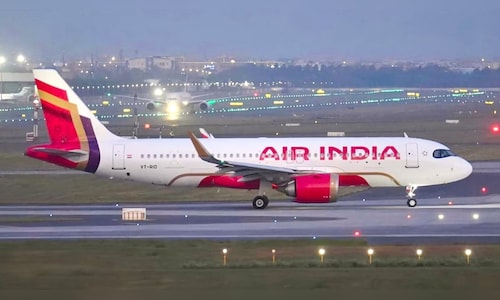
The Air India Group is expected to report a loss exceeding ₹22,000 crore for the financial year ending in March 2026, with difficulties intensifying due to the conflict in West Asia.
Amid an ambitious transformation initiative, the Tata Group-owned airline is actively seeking a new CEO since the current one, Campbell Wilson, a veteran from Singapore Airlines Group, will be resigning later this year.
Sources indicate that the board, led by Tata Sons Chairman N Chandrasekaran, will convene in Mumbai on May 7.
During this meeting, various cost-cutting measures, succession plans for the CEO position, financial outlook for the 2025-26 fiscal year, and other matters are expected to be on the agenda, as noted by the sources.
Neither Tata Sons nor Air India provided comments.
In response to soaring jet fuel prices, Air India is considering separating meal services from ticket prices and offering lounge access for business class passengers as part of its cost-saving efforts.
This unbundling strategy would allow the airline to introduce different fare categories for passengers who may not want meals. Likewise, business class travelers will have the option to select lounge access, as stated by the sources.
They emphasized that these initiatives are still under consideration, and no final decision has been made regarding their implementation.
Due to airspace restrictions arising from the West Asia conflict, the airline has been forced to take longer routes for numerous international flights, contributing to increased fuel consumption.
The board is also anticipated to discuss the selection process for the next CEO, with Singapore Airlines owning a 25.1% stake in the airline.
Several candidates, including executives from Air India and Singapore Airlines, as well as potential European candidates, are being considered for the CEO role.
One source mentioned the possibility of appointing a joint MD or CEO.
In addition to Chandrasekaran and Wilson, Singapore Airlines CEO Goh Choon Phong and four others—Sanjiv Mehta, Alice Vaidyan, P R Ramesh, and P B Balaji—are members of the Air India board.
On May 1, Wilson communicated to staff that the challenges surrounding airspace and jet fuel prices remain severe.
“… significant increases in jet fuel prices, compounded by airspace closures and extended flying routes, have rendered many of our international flights unprofitable,” he noted in a message.
Following reductions in international flights during April and continuing into May, Wilson stated that the airline is left with no option “but to further adjust schedules for June and July.”
“We sincerely apologize for the disruption to our customers’ plans and our crew’s schedules, and we hope that the Middle East situation stabilizes—and the Strait of Hormuz reopens—soon so we can return to a more normal operation,” he remarked.
He added that the profitability of domestic flights has also been adversely affected, though to a lesser extent due to the government capping domestic fuel price increases at 25%.
“To mitigate the steep rise in costs, we have raised airfares and implemented fuel surcharges; however, these elevated fares understandably influence customer demand, limiting how far we can increase prices before people choose to stay home,” he mentioned.
On April 26, Air India, IndiGo, and SpiceJet informed the government that the Indian airline sector is under extreme stress and on the brink of “halting operations,” as they sought adjustments in jet fuel pricing and financial aid.
In the monthly update on aviation turbine fuel (ATF) prices on May 1, it was noted that jet fuel prices for international flights increased by just over 5%.
This situation is not exclusive to Indian airlines; globally, the airline industry faces significant challenges due to the turmoil in West Asia, prompting many carriers to implement cost-cutting measures. Notably, US ultra-low-cost operator Spirit Airlines has ceased operations.
IATA’s head Willie Walsh remarked on April 29 that Asia and Europe may face jet fuel shortages in the coming months, and that exceptionally high fuel costs are becoming increasingly evident in ticket prices.