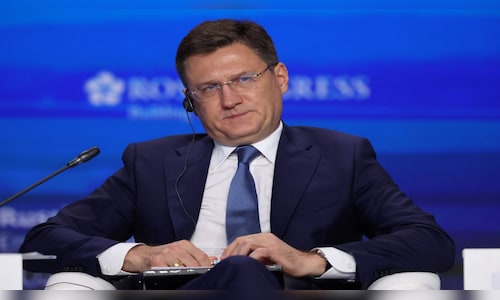
Novak conveyed his expectation that an oil price war would not arise following the UAE’s departure, owing to a global oil shortfall.
The UAE announced on Tuesday its withdrawal from OPEC, presenting a challenge to the oil producers’ group as a unique energy crisis triggered by the Iran war highlights divisions among Gulf nations.
As the fourth-largest producer in OPEC+, which includes OPEC and its allies, the UAE holds this position while Russia ranks second, just behind Saudi Arabia.
“Given the current circumstances, discussing a price war is difficult when there is a market shortage. Instead, we are witnessing the most severe crisis in the industry,” Novak was quoted as saying by Interfax news agency.
“Significant quantities of oil are not currently reaching the market, while demand substantially surpasses supply. This has resulted in an imbalance caused by severe logistical disruptions, particularly in the Middle East,” Novak informed Interfax.
He also emphasized that Russia remains committed to OPEC+, established in 2016, and is dedicated to the group’s framework that governs production among its members.
Recovery of markets will take several months
Following the initiation of the U.S.-Israeli war against Iran on February 28, which led to the near-total closure of the Strait of Hormuz, the global market has lost access to 500 million barrels of crude and refined products, according to analysts at Citi.
This situation triggered price surges due to panic buying, but the elevated prices have led to decreased demand from both consumers and refiners.
Novak estimated the loss to be around 600 million barrels, suggesting that it would take several months for the global market to stabilize.
“This is a significant volume. Many nations have had to rely on their reserves, depleting their accumulated stockpiles. Once the crisis subsides, those reserves will require replenishment,” he was quoted as saying by Interfax.
Novak also acknowledged the possibility of additional oil price hikes if the conflict extends.