He indicated that Tehran is open to discussions with the United States, yet emphasized that no official information regarding any new proposals has been disclosed, describing media reports as speculative. He underscored that Iran aspires to achieve a “durable and lasting peace” rather than engage in a continuous cycle of conflict and ceasefires, asserting that Tehran’s steadfast red lines include its entitlement to peaceful nuclear energy under the NPT and the removal of “unjust” sanctions.
Refuting US President Donald Trump’s claims that Iran is on the verge of “collapse”, the ambassador characterized such assertions as unrealistic, affirming that Iran is ready for a prolonged standoff.
He also reassured that Supreme Leader Mojtaba Khamenei enjoys “complete health,” labeling the circulating rumors as propaganda aimed at undermining public morale.
Excerpts from the InterviewNews18 India: Your government recently proposed a new approach to the US that delays nuclear negotiations—can you outline its key points and explain why Iran believes this could resolve the current impasse? How long might the ceasefire endure?
Ambassador Fathali: No official details on this proposal have been made public thus far. What has emerged in the media is merely speculation. We believe that concluding the war and establishing a lasting peace is essential for creating the prerequisites necessary to address other issues. We are determined not to remain ensnared in the vicious cycle of war, ceasefire, negotiations, and subsequent war. We have consistently stated our preparedness for both war and peace, welcoming any dialogue aimed at achieving a durable and long-lasting resolution.
Also Read | Discussions ongoing with both Iran and US: MEA on Chabahar port
News18 India: What are Iran’s non-negotiable terms for any renewed nuclear agreement with the US, and would the lifting of sanctions be a prerequisite from the outset?
Ambassador Fathali: Our non-negotiable principle is the legitimate right of the Iranian people to benefit from peaceful nuclear energy. As a member of the Treaty on the Non-Proliferation of Nuclear Weapons (NPT), we have adhered to international regulations. Naturally, the elimination of all unjust sanctions imposed on the Iranian populace is a critical precondition for any negotiations.
In the past 47 years, the United States and its allies have subjected the Iranian people to extensive pressure via the most severe and inhumane sanctions. The freezing of billions of dollars of Iran’s assets, medical sanctions jeopardizing the lives of millions, restrictions on aircraft purchases, and limitations on importing aircraft parts are merely a part of these unjust policiestargeting the Iranian populace.
Even now, through the deployment of military vessels to the region and the stationing of advanced military technology, they aim to confront our nation simply because Iran seeks to uphold its independence and national dignity.
News18 India: Strait of Hormuz Access for India: With rising US-Iran tensions, will Iran guarantee safe passage for Indian vessels through the Straits of Hormuz, specifically for critical oil imports, or are there conditions involved?
Ambassador Fathali: The Islamic Republic of Iran is committed to ensuring maritime security in line with international regulations. We have stated that vessels from nations that have not participated in US-Israeli aggression against Iran are welcome to navigate the Strait of Hormuz.
In this context, our friendly nations, including India, face no restrictions in transiting the Strait of Hormuz. To date, several Indian ships have passed through this route securely, and this will continue in the future.
Of course, certain regulations have been established for managing the situation more effectively, and all vessels are required to comply; however, Iran has shown the highest level of cooperation and flexibility toward Indian vessels and those from other non-participating countries.
News18 India: Impact of US Blockade on Oil Supplies: President Trump has asserted that Iran is in a “state of collapse” due to dwindling oil reserves because of the American blockade—what effect is this having on global oil supplies, particularly for India, and what is Iran’s contingency strategy?
Ambassador Fathali: Experience has demonstrated that references to “a few days” or “a few weeks” from the US President are unrealistic. At the outset of this act of aggression, he alleged that the Islamic Republic of Iran would capitulate within three days and that regime change was imminent. Yet, as we have seen, not only did regime change not occur, but this conflict has strengthened our nation’s unity and resilience.
Currently, such claims should not be taken at face value.
Moreover, we have equipped ourselves for extended turmoil and have prepared for all possible eventualities.
News18 India: Trust in Pakistan as Negotiator: Pakistan has offered to mediate between Iran and the US—does Tehran trust Islamabad’s neutrality given its close relations with Washington, or do you view this more as posturing than genuine diplomatic initiative? The Islamabad discussions exclude Israel—how does Iran anticipate these talks succeeding without addressing Tel Aviv’s role in regional escalations?
Ambassador Fathali: We welcome any initiative that aids in diminishing tensions and fostering peace. The nation hosting the talks is secondary to the fact that our negotiations will be grounded in our national interests and aim to secure the legitimate rights of the Iranian populace.
Regarding the latter part of your question, it is crucial to note that our negotiating partner is the US government. We do not recognize Israel as a regime worthy of negotiation. The Islamabad discussions also involved dialogues between Iran and the United States. We see the Zionist regime as an illegitimate entity founded on occupation and belligerence, with a lengthy history of genocide and civilian casualties.
Also Read | India considering divestment from Iran’s Chabahar Port, according to reports
News18 India: Supreme Leader’s Health Rumours: Speculation surrounds the safety and health of Supreme Leader Mojtaba Khamenei—can you confirm his well-being and explain why these speculations persist amidst Iran’s internal difficulties?
Ambassador Fathali: The Supreme Leader of the Islamic Republic of Iran, Ayatollah Seyyed Mojtaba Khamenei, is in excellent health and is actively managing the situation. The rumors circulating about his health are propagated by our adversaries to sap the spirits of our people. However, our citizens are well-informed and vigilant, and they do not succumb to such unfounded claims.
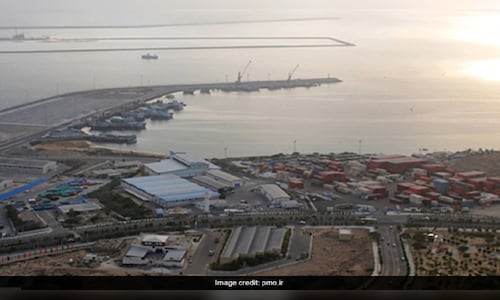
News18 India: Chabahar Port’s Strategic Role: As India invests significantly in Chabahar Port, how is Iran ensuring its development amid sanctions, and what advantages will it offer for bilateral trade, particularly in accessing Afghanistan and Central Asia?
Ambassador Fathali: We assert that economic and developmental collaborations, particularly significant regional projects like Chabahar, should not be hindered by unilateral measures and illegal sanctions. Chabahar Port is a strategically vital project with regional and international significance, playing a crucial role in enhancing connectivity for India and access to Central Asia.
We are actively advancing the development of this port and believe that the benefits of this collaboration extend beyond Iran and India; all nations within the region stand to gain.
Despite sanctions, this project has not been interrupted and continues to progress steadily. The Chabahar–Zahedan railway, essential for the port’s transit capabilities, has reached 90% physical completion. Rail-laying operations in the Chabahar segment are set to conclude by mid-June this year, linking the port to Iran’s national railway network.
Additionally, improvements in public services, such as constructing a hospital and developing hotels, are projected to be completed by August or September 2026, providing the necessary framework to transform the region into a sustainable economic and social center.
News18 India: Safety of Indians in Iran: With approximately 10,000 Indians residing in Iran, including Sikh communities actively practicing at the Tehran Gurudwara, what actions is your government taking to ensure their safety and religious freedoms in light of regional tensions?
Ambassador Fathali: From our perspective, there is no distinction between Indian citizens in Iran and Iranian citizens. We are committed to their safety. What endangers the safety of both Indians and Iranians is the aggressive actions taken by the United States and the Zionist regime. The harsh reality is that our enemies disregard all religious beliefs; during acts of aggression, they even targeted a Jewish synagogue in Tehran, revealing their anti-religious and terrorist tendencies.
The Islamic Republic of Iran stands as the most hospitable nation in the region for followers of various faiths. Based on our Constitution and moral values, we guarantee the security and freedoms of all religious communities. The community of around 10,000 Indian citizens, including Sikhs, is a respected segment of our society, having practiced their faith freely and conducted their ceremonies in their places of worship, such as the Gurudwara in Tehran, without any restrictions for decades.
In Iran, adherents of all divine religions and varying beliefs can freely practice their traditions without issues. However, the true threat to religious freedom and human lives across the region comes from the criminal activities of the United States and the Zionist regime.