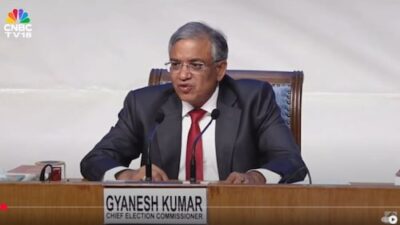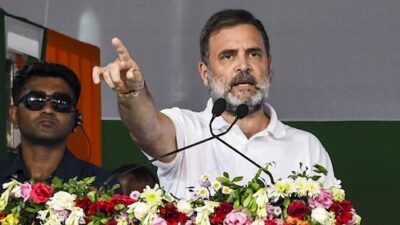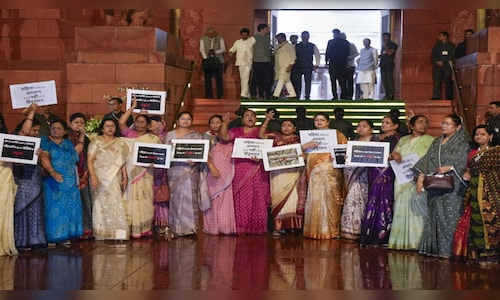
The Bill did not secure the necessary two-thirds majority in the Lok Sabha on Friday. With 298 MPs in favor and 230 against, the legislation required 352 votes to pass. The proposal also included a rise in Lok Sabha seats from 543 to over 800 to facilitate reservation ahead of the 2029 general elections.
BJP leaders attack Opposition
Multiple BJP leaders accused opposition parties of denying women their rights. Haryana Chief Minister Nayab Singh Saini claimed the defeat had “unmasked” the Congress and its allies, alleging they were against women’s empowerment. He further accused them of causing confusion regarding delimitation.
Goa Chief Minister Pramod Sawant labeled the INDIA bloc as “anti-women” and “anti-national,” asserting that the alliance deliberately undermined the bill and denied millions of women political representation.
Union Minister Annpurna Devi called April 17 a “black day,” alleging that opposition parties “broke the expectations” of women by voting against the legislation.
Echoing similar sentiments, Bihar Chief Minister Samrat Choudhary stated that the bill’s failure was a setback for women’s reservation and criticized parties like Congress and TMC for mocking the initiative.
PM Modi and senior leaders weigh in
Prime Minister Narendra Modi accused the Trinamool Congress (TMC) of “betraying” women by opposing the bill. While addressing a rally in West Bengal, he stated that the BJP remains committed to enhancing women’s participation in politics and framed the issue as essential to women’s empowerment.
Union Home Minister Amit Shah also condemned Congress and DMK, accusing them of “betraying” women by voting against the amendment. He assured that the government would persist in its efforts to secure justice and representation for women.
Regional leaders join the criticism
In West Bengal, BJP leader Nitin Nabin held Chief Minister Mamata Banerjee and other opposition parties responsible for the setback, alleging they conspired to block the bill.
AIADMK chief Edappadi K Palaniswami also criticized the DMK and its allies, stating that women would not forgive those who opposed the legislation.
Political flashpoint ahead of elections
This issue has swiftly transformed into a significant political flashpoint, particularly in states gearing up for elections. BJP leaders are working to mobilize women voters by underscoring the bill’s defeat, while opposition parties have previously raised concerns about the linkage of reservation with delimitation, fearing it could disrupt political representation.
The women’s reservation law, also referred to as the Nari Shakti Vandan Adhiniyam, was passed in 2023 but necessitates additional constitutional amendments for its implementation.
With elections on the horizon in several states, the debate around women’s political representation is anticipated to be a central campaign issue, as both sides aim to shape the narrative regarding empowerment and intent.
(With inputs from PTI)
(Edited by : priyanka deshpande)