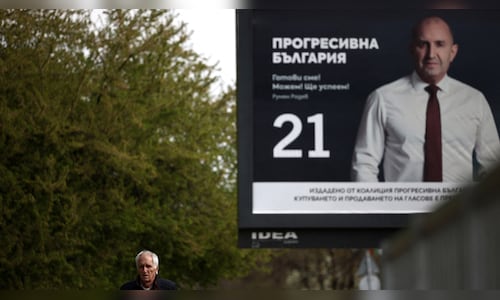
Radev, a eurosceptic ex-fighter pilot who opposes military aid for Ukraine’s efforts against Moscow, resigned from the presidency in January to enter the election, following mass protests that led to the ousting of the previous government last December.
A polished social media strategy, substantial funding, and a commitment to stability have increased Radev’s popularity in the Balkan nation of approximately 6.5 million, where frustration over recurring snap elections and a small cadre of long-serving politicians perceived as corrupt has grown.
The rising cost of living has also become a key issue since Bulgaria adopted the euro in January. The prior government collapsed amid protests against a new budget that proposed tax hikes and increased social security contributions.
This seems to resonate more with voters than Radev’s assertions of improving ties with Moscow or resuming the flow of Russian oil and gas to Europe.
“I will put my trust in the new general in politics,” stated Georgi Bozhkov, a 37-year-old civil servant concerned about escalating expenses. “When something new comes along, we should give it a try.”
RADEV HAS STRONG LEAD IN POLLS
Polls released on Friday indicated that Radev’s Progressive Bulgaria is at around 35%, an increase from a month prior. If validated, this would represent one of the highest results for a single party in years, although it still falls short of a parliamentary majority.
Interest among voters has risen. A survey by Sofia-based Alpha Research predicts a turnout of approximately 60%, nearly double the 34% seen in June 2024.
The statistics underscore growing frustration with the long-standing dominance of the GERB party led by former Prime Minister Boyko Borissov, currently in second place at about 18%, and the Movement for Rights and Freedoms, whose leader Delyan Peevski faces U.S. and UK sanctions for corruption.
One potential coalition ally is the pro-European We Continue the Change-Democratic Bulgaria (PP-DB) coalition, which also advocates for reform.
Critics argue that Radev holds some accountability for the contentious decisions made by the interim governments he appointed during his presidency starting in 2016. These decisions include a 2023 gas agreement between the Turkish state gas company Botas and Bulgaria’s Bulgargaz that resulted in losses and an investigation.
“Any coalition that forms is likely to experience governmental instability and face significant scrutiny from civil society and the opposition. Another snap election in 2026 seems less likely now but remains a considerable possibility,” remarked Mario Bikarski, an analyst at risk consultancy Verisk Maplecroft.
BREAK FROM THE PAST?
Bulgaria has progressed significantly since the fall of communism in 1989, joining the European Union in 2007. Life expectancy has notably increased, unemployment is the lowest in the EU, and the economy has gained greater protections since adopting the euro.
However, corruption remains widespread, notably in elections, where vote-buying is prevalent. Bulgaria ranks 84th in Transparency International’s 2025 Corruption Perceptions Index, sharing the lowest score in the EU with Hungary.
“We genuinely hope for a change, that these corrupt leaders will be replaced,” expressed 82-year-old pensioner Temenuzhka Vaseva.
Also Read: Strait of Hormuz conundrum continues as LNG tankers make u-turns as Iran keeps waterway shut