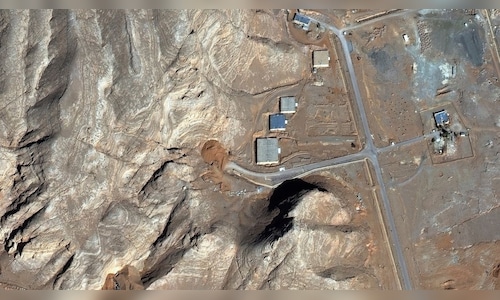
This change came after inconclusive discussions in Islamabad last weekend, where significant disagreements over Iran’s nuclear program — particularly regarding its enriched uranium reserves and the duration of any suspension of nuclear activities — continued to impede progress, despite optimistic remarks from US officials and Pakistani intermediaries.
A senior official from Iran indicated that the two parties had begun to close some gaps, including strategies for managing the Strait of Hormuz, an essential corridor for approximately 20% of the global oil and gas supply that has been largely inaccessible to ships for several weeks.
Iran, which has endured severe US sanctions for years, seeks a memorandum that includes the unfreezing of certain Iranian assets by Washington in exchange for granting more vessels passage through the strait, as stated by the senior official, who preferred to remain anonymous due to the delicacy of the situation.
A source informed by Tehran on Wednesday mentioned that Iran could permit ships to navigate freely on the Omani side of the Strait of Hormuz without the threat of attack under proposals discussed with the US, contingent upon securing a stable agreement.
However, even as a two-week ceasefire approaches its midpoint, substantial divisions persist. The senior official noted ongoing disagreements regarding Iran’s highly enriched uranium (HEU) stockpile — the US insists on its removal — and the length of any cessation of Iranian nuclear activities, particularly uranium enrichment.
Iran has insisted that Washington recognize its right to enrich uranium, which Tehran claims it seeks solely for peaceful purposes, while Western nations and Israel contend it is aimed at developing nuclear weapons.
A Western diplomat remarked that the nuclear issue continues to pose a significant barrier.
If a conflict-stopping memorandum is established, both sides are anticipated to have 60 days to negotiate a conclusive deal, requiring input from experts and the International Atomic Energy Agency (IAEA), according to the Iranian sources.
A previously established international agreement that limited Iran’s nuclear activities in exchange for sanction relief was signed in 2015 but required nearly two years of negotiation. President Donald Trump annulled this accord in 2018.
The Iranian sources conveyed that the US is insisting on a halt to Iran’s nuclear enrichment for 20 years, while Iran seeks to confine it to three to five years. Tehran is also advocating for a timeline for the removal of sanctions from the U.N., US, and EU.
In the past, Iran has resisted a US request to transfer its entire stockpile of uranium enriched to 60%, a level significantly higher than what is necessary for civilian applications.
Nevertheless, Iranian sources indicated potential for compromise. One source suggested that, although Iran was not prepared to export all of its HEU, a portion could be dispatched to a third nation.
This source noted that some HEU is required for medical purposes and for a research reactor in Tehran that operates on relatively small quantities of uranium enriched to around 20%.
The IAEA estimates that Iran possessed 440.9 kg of uranium enriched to 60% when Israel and the United States initiated their first assaults on Iranian nuclear sites in June 2025. The exact amount that remains is uncertain.
IAEA chief Rafael Grossi stated in March that the remaining stock is “mainly” kept in a tunnel complex in Isfahan, with indications that slightly more than 200 kg is stored there. It is also believed that some quantity exists at the extensive nuclear facility in Natanz, which housed two enrichment plants.
A second Western diplomat expressed concern: “The 440 kg HEU continues to be troubling because it allows Iran to have what we call sufficient quantities to quickly manufacture several nuclear bombs, given that the final enrichment phase is relatively swift.”