Dubbed the Mother Road by author John Steinbeck, this legendary route has changed over the decades from a refuge for struggling farmers fleeing the catastrophic dust storms of the 1930s to the quintessential American road trip that continues to provide adventure.
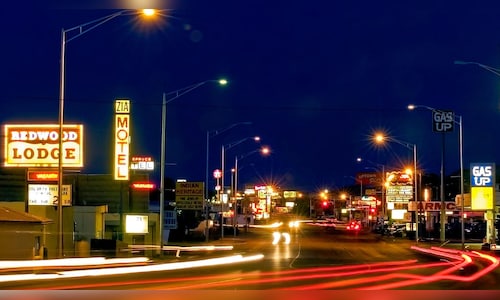
Even though there have been quicker and more direct routes between the nation’s second- and third-largest cities for quite some time, the bright neon of Route 66 still shines vividly, enticing travelers to vintage motor lodges, classic diners, and unique roadside attractions.
Each stop along the way sparks the imagination, inviting travelers to ponder what life was like for the people and communities that have kept the road alive through the years.
Chicago has historically been one of the nation’s economic powerhouses, with access to international waters and railroads connecting all corners of the country. In the 1920s, Oklahoma businessman Cyrus Avery, known as the Father of Route 66, foresaw the dominance of automobiles in transportation and envisioned Chicago as the ideal starting point for his ambitious project.
A member of the federal highway board responsible for mapping the U.S. highway system, Avery chose the number 66. He recognized that the double digits had marketing potential and would stick in motorists’ minds.
For some travelers, the journey is driven more by culinary delights than scenic views, and there’s no shortage of options — homemade pie, thick shakes, cheeseburgers, and a variety of fried treats.
The Cozy Dog Drive In in Springfield, the capital of Illinois, is one of the many diners that emerged along Route 66, famous for its breaded hot dogs on a stick. Third-generation owner Josh Waldmire keeps the recipe a secret.
Waldmire’s grandfather, Ed, recognized the fast-food potential of this creation and developed a method for frying the hot dogs vertically.
Also Read: Penang to Singapore, kid-friendly destinations in Southeast Asia
Route 66 features its fair share of twists and turns, and it’s no wonder that a highway known for its eccentric roadside attractions also crosses the nation’s most famous river via one of modern engineering’s more unusual bridges.
As the road approaches St. Louis, the mile-long (1.6-kilometer-long) Chain of Rocks Bridge towers more than 60 feet (18 meters) above the Mississippi River.
Engineers eventually built a straighter, faster alternative, allowing the original bridge to escape demolition. Today, it serves as a path for pedestrians and cyclists.
A median in Missouri is home to St. Robert Route 66 Neon Park, showcasing orphaned neon signs that once lured travelers to various sites and businesses along the highway. These signs were often handcrafted, serving as more than just markers for motels, cafes, and gas stations; they represented folk art and local culture.
The Sunflower State may only offer a brief stretch of Route 66, but it packs a punch with the Kan-O-Tex Service Station in Galena. This classic example of roadside attractions inspired the animated Pixar film “Cars” in 2006.
Director John Lasseter and his team took road trips along the route, delving into history to find elements that would bring their project to life. In Galena, they discovered the old boom truck that inspired the character Tow Mater. The storyline isn’t too far off, as many once-thriving towns — much like the fictional Radiator Springs — have nearly vanished after being bypassed by an interstate.
Kansas is also home to the Brush Creek Bridge, also known as the Rainbow Bridge. This bridge is listed on the National Register of Historic Places and is one of the few remaining examples of the concrete arched bridges designed by James Barney Marsh.
Traveling on this road posed real dangers for some, particularly Black motorists navigating unwelcoming and segregated areas during the Jim Crow era. The Green Book — a guide first published in 1936 by Victor Hugo Green — listed hotels, restaurants, and gas stations catering to Black clientele.
The Threatt Filling Station near Luther wasn’t included in The Green Book, but it provided a safe haven — not just for fuel, but also for barbecue and baseball. It is listed on the National Register of Historic Places and was the only known Black-owned and operated gas station along Route 66.
Also Read: Plan ahead: Top monsoon getaways in India as global travel faces disruptions
Route 66 is dotted with abandoned buildings and worn signs, but one emblem of the highway’s enduring spirit stands proudly in Sapulpa, near Tulsa. The restored Tee Pee Drive-In Theater offers a nostalgic glimpse into the 1950s, when car culture helped spawn thousands of drive-in theaters across the nation.
Opened in 1949 with a screening of John Wayne’s “Tycoon,” it was one of the few drive-ins at the time to feature paved pathways. Over the years, it weathered a tornado, a fire that consumed the concession stand, and break-ins before closing for more than 20 years. It celebrated its grand reopening in 2023.
Don’t miss a stop at Cadillac Ranch in Amarillo, a must-see for anyone traveling Route 66. For decades, visitors have spray-painted the ten vintage Cadillacs at this site, contemplating the fleeting nature of time, much like Bruce Springsteen captured in his 1980 song.
Though not a ranch, it’s a public art installation created in 1974 by the art and architecture collective Ant Farm. Originally, the cars — which were half-buried front-down at a 60-degree angle — were targets for practice. Others would carve their initials into the metal, but spray painting became a later tradition.
Arriving in Adrian means you’re halfway through your journey. Just steps away from a white line marking the midpoint of Route 66 lies the Midway Cafe, where the “ugly pies” are anything but.
If hunger still calls, head back to Amarillo for a 72-ounce (2-kilogram) steak and all the sides at The Big Texan. Finish it within an hour, and it’s free.
Over half of Route 66 runs through sovereign Native American territories, often tracing paths utilized by tribes long before settlers arrived. Much like the railroad in the 1800s, this highway opened a new era of commerce, but it also perpetuated stereotypes about the cultures along its path.
Some stops along the historic highway still exhibit faded and crumbling references to tipis and feathered headdresses. Though often appropriated for marketing by roadside vendors, these symbols don’t accurately represent the distinct Native American cultures in the region.
Today, tribes are crafting their own narratives and showcasing their creations, whether it’s pottery, fruit pies, or poetry.
Albuquerque features the longest intact urban section of Route 66. Those 18 miles (29 kilometers) venture through various neighborhoods and business districts, from historic Old Town to Nob Hill.
Also Read: Disneyland Paris unveils ‘World of Frozen’ in €2 billion expansion
Some of the old motor lodges and neon signs along what is now Central Avenue have been restored, while others are being creatively reimagined using hubcaps, stunning lowrider-inspired paint jobs, and New Mexico’s classic yellow and red license plates, paying tribute to the enduring car culture in the city.
Musician Jackson Browne was on a road trip in the early 1970s when his car broke down in Winslow, an experience that inspired the lyrics for the Eagles’ hit “Take it Easy.” It’s just one of many songs perfect for a Route 66 playlist.
Bobby Troup wrote a classic American road anthem in the 1940s with “(Get Your Kicks on) Route 66.” Nat King Cole, Chuck Berry, The Rolling Stones, and Depeche Mode have lent their unique styles to this timeless tune over the years.
While standing on a corner in Winslow, don’t be surprised if someone approaches with a guitar, ready to strum favorites from their own road trip playlist.
Before leaving the state, the one-time gold mining town of Oatman offers a Wild West vibe, complete with daily staged shootouts and friendly burros. Oatman was part of one of Route 66’s original alignments via a challenging route through the Black Mountains but was bypassed during improvements made in the 1950s.
Roy’s Motel & Café in Amboy represents a quintessential Route 66 landmark, once a desert oasis. Its towering neon sign is among the most photographed spots along the highway. Inside, a wall adorned with foreign currency left by international visitors tells its own story. Across the street, a clothing post decorated with shoes, shirts, and various items stands out against the desert backdrop.
This segment of the highway through the Mojave Desert offers a unique sense of solitude. The pavement can be rough in places, while the landscape showcases Joshua trees, expansive open spaces, and remnants of ancient volcanic activity.
Much of the area remains undeveloped, resembling what it would have looked like when Route 66 was established in 1926.
After navigating through often-congested Los Angeles, the iconic Santa Monica Pier signifies the end of the journey, serving as a bustling hub for spectators and performers alike. Although many stretches of Route 66 have fallen into disrepair, the stunning views of the Pacific Ocean serve as a reminder of the adventures made possible by this highway over the past century.
Also Read: Is it safe to travel to Turkey amid West Asia tensions?