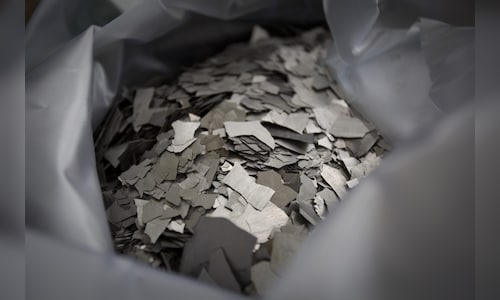
The government plans to select up to five entities through the bidding process, with each entity establishing facilities capable of producing up to 1,200 MTPA, totaling a maximum capacity of 6,000 MTPA.
“We are pleased with the Ministry of Heavy Industries’ progressive initiative to foster rare earth permanent magnet manufacturing, which is vital for sectors like EV, aerospace, defense, and consumer electronics. We are exploring this opportunity as it aligns with our emphasis on critical minerals and provides a chance for horizontal growth,” a Vedanta spokesperson informed PTI.
On March 20, the heavy industries ministry called for bids to create manufacturing facilities for 6,000 metric tonnes per annum (MTPA) of magnets under this scheme.
“The pre-bid conference hosted by the Ministry of Heavy Industries (MHI) for interested bidders in the ‘Scheme to Promote Manufacturing of Sintered Rare Earth Permanent Magnet’ has attracted significant interest, with at least 25 companies in attendance,” an official statement noted.
The heavy industries ministry released a request for proposal (RFP) for the selection of beneficiaries to establish integrated sintered NdFeB rare earth permanent magnet manufacturing units.
The pre-bid conference took place on April 7, while the bidding date is set for May 28. Technical bids will be opened on May 29, 2026.
“A comprehensive presentation was given to potential bidders covering the scheme’s details, essential provisions of the RFP, and aspects of the bidding process. During the pre-bid conference, questions raised by potential bidders were addressed. Attendees were informed that the deadline to submit their queries via e-mail (as per details in the RFP) is April 22, 2026,” the heavy industries ministry stated.
Also Read: Rare earth magnet manufacturing in India could grow through partnerships, says DPIIT Secy | Q&A
Participants were also informed that the bidding will occur online via a transparent two-stage process, utilizing the least cost system (LCS) approach through the CPP Portal, it added.
This initiative is anticipated to significantly bolster domestic manufacturing capabilities, decrease import reliance, and aid in developing a robust and globally competitive REPM ecosystem in India.