Also Read: Donald Trump signs executive order aimed at safeguarding funds from Venezuelan oil
The meeting, which begins with a dinner on Sunday evening, will include finance ministers or cabinet members from the G7 advanced economies, the European Union, Australia, India, South Korea, and Mexico, said the official, who requested anonymity.
Collectively, this group represents 60% of global demand for critical minerals.
”Urgency is the theme of the day. This is a significant task with many angles and numerous countries involved, and we truly need to accelerate our efforts,” the official stated.
Bessent told Reuters on Friday that he had been advocating for a separate meeting on this issue since the G7 leaders summit in Canada in June, where he presented on rare earths to the assembled heads of state from the US, UK, Japan, Canada, Germany, France, Italy, and the EU.
At the summit, leaders agreed to an action plan to secure their supply chains and enhance their economies, but Bessent has expressed frustration over the lack of urgency shown by those present, the official noted.
With the exception of Japan, which acted after China abruptly halted its critical mineral supplies in 2010, G7 members continue to be heavily reliant on critical minerals from China, which has threatened to implement stringent export controls.
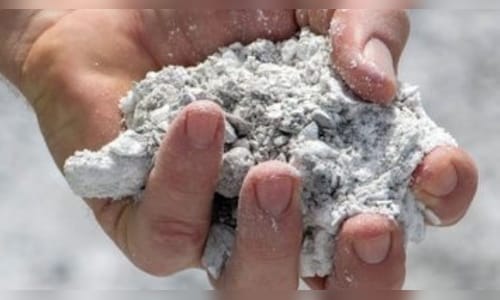
China controls the critical minerals supply chain, processing between 47% and 87% of copper, lithium, cobalt, graphite, and rare earths, as reported by the International Energy Agency. These minerals are essential for defense technologies, semiconductors, renewable energy components, batteries, and refining processes.
Also Read: Trump orders special forces to prepare Greenland invasion plan, says report
Following the meeting, the US is anticipated to release a statement, though no concrete joint actions are expected, the official added.
“The United States is taking the lead in bringing everyone together, sharing our vision for the future,” said the official. ”We are prepared to proceed with those who share a similar sense of urgency … and others can join as they recognize the seriousness of the situation.”
The official did not provide specifics on additional steps planned by the Trump administration, which is advancing initiatives to boost domestic production and minimize reliance on China through agreements with Australia, Ukraine, and other producers.
The US signed an agreement with Australia in October to counter China’s dominance in critical minerals, which includes an $8.5 billion project pipeline. This deal utilizes Australia’s proposed strategic reserve to supply metals like rare earths and lithium that are susceptible to disruption.
The official acknowledged progress but stated that there is more work to do. ”It’s not resolved,” they added.
Canberra has indicated that it has since received interest from Europe, Japan, South Korea, and Singapore.
Monday’s meeting occurs just days after reports emerged that China had commenced restrictions on exports of rare earths and powerful magnets to Japanese companies, as well as banning dual-use items from being exported to the Japanese military.
US officials stated that this meeting was arranged well in advance of that action, emphasizing that China has continued to fulfill its commitments to purchase US soybeans and supply critical minerals to US companies.