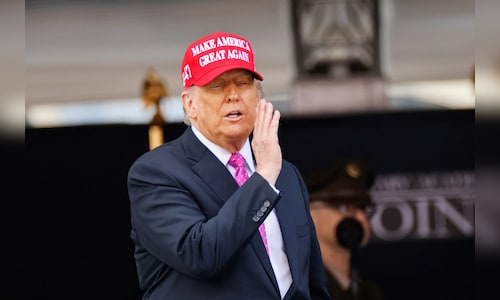
President Donald Trump announced the intention for the US to leave the organization on his first day in office in 2025. According to US law, a one-year notice must be given, and all outstanding fees must be settled before departure.
In the past year, numerous global health experts have called for a reassessment of this decision, including WHO Director General Tedros Adhanom Ghebreyesus who spoke out most recently.
“I hope the US will reconsider and rejoin WHO,” he stated during a press conference earlier this month. “Withdrawing from the WHO is a loss for the United States and a loss for the global community.”
QUICK RETURN UNLIKELY
The WHO has also indicated that the US has not yet covered the fees owed for 2024 and 2025. Member states are expected to discuss the implications of the US departure and how to manage it at the WHO’s executive board meeting in February, as conveyed by a WHO spokesperson to Reuters via email.
The US State Department did not respond to inquiries regarding whether the US could exit without settling its fees, or what this departure may signal for global collaboration.
Read more: Issue of whether Greenland stays with Denmark did not come up with Trump, says NATO chief
“This is a clear violation of US law,” argued Lawrence Gostin, founding director of the O’Neill Institute for Global Health Law at Georgetown University in Washington, an attentive observer of the WHO. “Yet, it’s highly probable that Trump will evade accountability.”
In discussions with Reuters at Davos, Bill Gates – chair of the Gates Foundation, a significant donor to global health initiatives and various WHO programs – expressed skepticism about the US reconsidering in the near term.
“I don’t anticipate the US returning to the WHO soon,” he stated, adding that he would advocate for it whenever possible. “The world needs the World Health Organization.”
WHAT THE DEPARTURE MEANS
The US’s exit has triggered a budgetary crisis for the WHO, resulting in a 50% reduction in its management team and a scaling back of various initiatives across the agency.
Historically, Washington has been the largest financial contributor to the UN health agency, supplying about 18% of its total funding. The WHO will also be forced to reduce its workforce by roughly a quarter by mid-year.
Read more: Has Donald Trump made up his mind on new Fed chair? Here’s what the US president said
The agency has reported ongoing collaboration with the US over the past year, but it remains uncertain how this partnership will evolve going forward.
Global health experts have pointed out the risks posed to the US, the WHO, and the world as a whole.
“The US withdrawal from WHO could undermine the systems and collaborations essential for detecting, preventing, and responding to health threats,” remarked Kelly Henning, public health program lead at Bloomberg Philanthropies, a US-based non-profit.