
For more than four months, Indian exporters have been contending with a steep 50% tariff imposed by the US under President Donald Trump. With no immediate resolution in sight, companies are compelled to lower prices, share tariff burdens with buyers, and relocate production to other countries.
While businesses are seeking to lessen their reliance on the US market, Vij warned that entering new markets poses significant challenges. Restructuring supply chains, updating machinery, and rebuilding buyer relationships can take six to eight months.
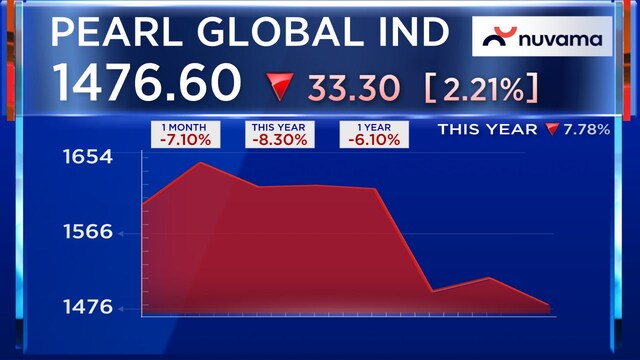
Pallab Banerjee, MD and Group President of Pearl Global, noted that US buyers are reluctant to absorb the full weight of tariffs without clarification on their duration.
Currently, many Indian suppliers are sharing the tariff impact, directly affecting profitability. “Most manufacturers in India are bearing a hit of around 25% in tariffs, which results in nearly a 15% reduction in selling prices,” Banerjee stated, emphasizing that this situation is unsustainable in the long term.
For
Pearl Global, the repercussions are comparatively less severe as over 70% of its manufacturing occurs outside of India, primarily in Bangladesh, Vietnam, Indonesia, and Guatemala. Nonetheless, Banerjee acknowledged that production based in India for the US market is slowing, prompting companies to actively adjust their order distribution to other regions.
The impact on the domestic front, particularly for smaller enterprises, is substantial. Banerjee warned that smaller players may exit the market more quickly, potentially resulting in job losses and factory closures.
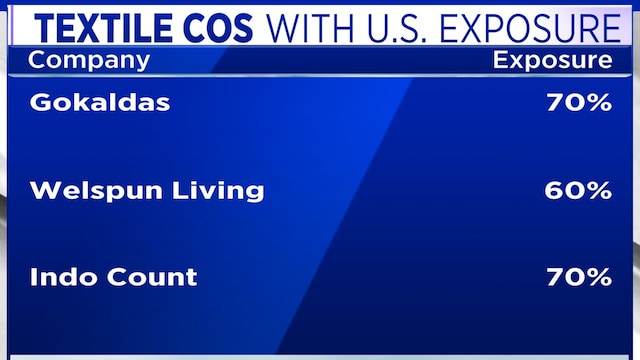
Vij echoed these concerns, indicating that key textile hubs such as Tirupur, Karur, and the NCR-Panipat market are all feeling the heat. “MSMEs are really facing significant challenges,” he said, noting that even large listed companies are undergoing pressure. The cotton garment sector, which accounted for roughly $10 billion in annual exports to the US, has been particularly impacted.
Export statistics illustrate this strain. Compared to September 2024, India’s textile exports to the US dropped by 5–6% in September 2025. In contrast, Bangladesh’s exports experienced a growth of about 10%, while Vietnam saw an increase of around 2.5%, showcasing a notable shift in sourcing by American buyers.
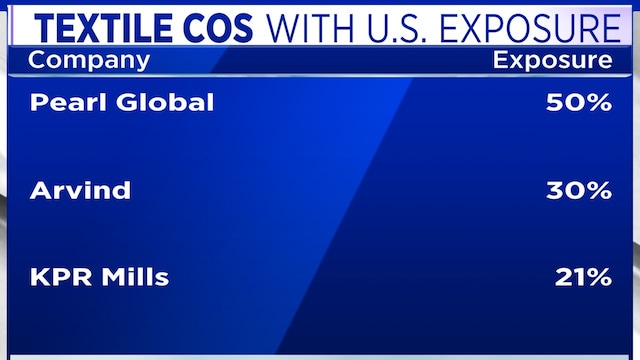
Vij added that government assistance through credit facilities and initiatives like PLI is beneficial, but more support is required. He highlighted the need for accessibility to raw materials, such as cotton and man-made fibers, at international prices to help exporters remain competitive.
Follow our live blog for more stock market updates