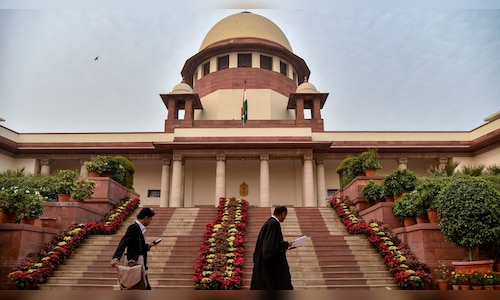
Disputing the income tax department’s argument that such payments qualify as capital expenditure, the apex court asserted that non-compete fees are generally paid to protect or boost the payer’s business by offering a competitive advantage or shielding it from competition. The court determined that these payments do not lead to the generation of a new asset or enhance the profit-generating capability of the business.
“The intention behind the non-compete payment is to provide the payer’s business with a head start, safeguard its operations, or improve profitability,” the court remarked. Any long-lasting benefits resulting from limiting competition do not fall under the capital expenditure category, as they merely support more effective and profitable business operations, it further stated.
A bench including Justice Manoj Misra and Justice Ujjal Bhuyan noted that as long as the benefits gained do not impact the business’s fixed capital structure, the costs incurred to achieve such advantages would be deemed allowable business expenses, irrespective of the time frame over which the benefits may be realized. The court also highlighted that the payment of a non-compete fee is made with an expectation of potential benefits, with no assurance that the payer will achieve the anticipated results. “Despite such an agreement, the payer might still not obtain the expected outcome,” the bench remarked.
Overturning a 2012 ruling by the Delhi High Court, the Supreme Court declared that the non-compete fee paid by Sharp Business System to Larsen & Toubro Ltd. should not be classified as capital expenditure. The high court had previously ruled against Sharp, asserting that the payment resulted in a lasting advantage.
Sharp Business System, formed in 2000 as a joint venture between Sharp Corporation of Japan and Larsen & Toubro, focused on importing, marketing, and selling electronic office products in India. For the assessment year 2001–02, the company paid ₹3 crore to L&T in exchange for the latter’s agreement not to enter or support a competing business in India for a period of seven years. Sharp sought to claim this payment as a deductible revenue expense.
The income tax department, however, rejected this claim, contending that the payment eliminated competition for a defined period and created a lasting advantage, thus justifying its classification as capital expenditure. Consequently, the amount was added back to Sharp’s taxable income.
Related disputes involving companies like Pentasoft Technology Ltd. and Piramal Glass Ltd. were also brought before the court. The Supreme Court indicated that these cases should be referred back to their respective Income Tax Appellate Tribunals, with all appeals and cross-appeals reinstated and reconsidered based on the legal principles established in its ruling.
This decision is anticipated to have considerable implications for the corporate tax treatment of non-compete payments, especially in the contexts of mergers, joint ventures, and restructuring efforts.