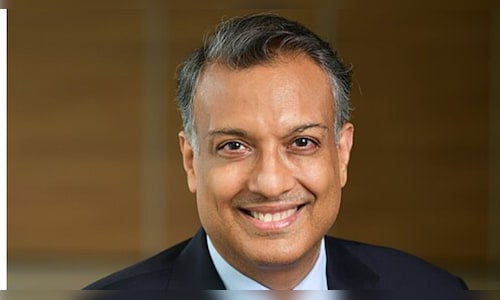
In an interview with CNBC-TV18 at the World Economic Forum 2026 in Davos, Sumant Sinha, Chairman and CEO of ReNew, highlighted that India outpaced the US in solar capacity additions last year, showcasing the momentum of the country’s renewable energy initiatives.
“Last year, India surpassed the US in adding solar capacity. We are now the second-largest solar market globally, right after China,” Sinha noted, indicating a significant shift in international energy investments.
A divided world: ‘Electro states’ versus ‘petro states’
According to Sinha, the global energy transition is increasingly bifurcating nations into two categories—those abundant in fossil fuels and those that aren’t.
“Countries rich in fossil fuels can be termed petro states, while nations like India and China, which lack fossil fuel resources, are electro states, focused on electrifying their economies and decarbonizing that process,” he explained.
This divide, Sinha pointed out, compels fossil-fuel-limited economies to embrace clean energy, transforming energy dependence into a strategic advantage.
For India, this shift has the potential to be revolutionary.
India’s clean energy opportunity
Sinha remarked that India’s rapid expansion in solar energy, along with electrification across various sectors, positions it to become a significant global clean energy alternative, rivaling China.
“India has a remarkable chance to catch up and emerge as a noteworthy global player in clean energy,” he said.
The drive for renewables in India is fueled by robust domestic growth, rising power needs, and a strategic aim to minimize energy imports, even amid global geopolitical instability.
At Davos, Sinha noted that while world leaders grapple with uncertainties—spanning geopolitical tensions to shifts in policies—India stands out for its relative stability.
“India is in a strong position. Growth is positive, and our low profile right now allows us to focus on our own initiatives,” he remarked.
Why 2026 could be a breakout year
Sinha also emphasized green hydrogen and data centers as key areas for India’s next phase of clean energy growth.
India is increasingly positioning renewable energy as foundational for new-age infrastructure, especially for data centers that are in search of low-carbon energy sources.
“India is leading several exciting developments—be it green hydrogen or the broader data center movement, which relies on clean energy,” Sinha stated. “All of this is gaining traction.”
Industry experts believe these adjacent sectors could greatly enhance renewable capacity additions in the coming years, making 2026 a potential pivotal year rather than merely incremental progress.
Also Read | ReNew’s Sumant Sinha says delisting from US ‘not a bad thing’, India listing one of several options
Below is the excerpt of the interview.
Q: You’ve been here now for about 48 hours, picking up on the conversations that people are having, not just about the global economy but also about India. What are the key takeaways so far?
Sinha: This is a very interesting Davos, as there’s so much happening globally. People seem a bit confused about what might unfold in the coming days, which could shape the agenda for the year ahead for many. I think the presence of President Trump here, interacting with his European counterparts, is significant, and it will be interesting to see the outcomes.
Regarding India, I feel we are in a good position because we are performing well domestically as an economy. Growth is robust, and our current low visibility allows us to advance our initiatives, which is advantageous in this context. Additionally, there is a sizeable Indian delegation here focused primarily on business and economic matters rather than politics, which is a positive aspect.
Q: Speaking about growth back home, especially in the renewable energy sector, we also have the minister, Pralhad Joshi, present here at Davos. As India and China continue increasing renewable energy capacity, do you expect 2026 to follow the same trend, or do you foresee any changes?
Sinha: Right now, we see two distinct paths forming worldwide. There is a visible divide: countries rich in fossil fuels—let’s call them petro states—and those that lack fossil fuels, like India and China. These electro states are pursuing clean energy paths, focusing on electrifying their economies and decarbonizing, thereby doubling down on renewable energy.
This presents an opportunity for India, alongside China, which has established a considerable lead, to catch up and become a crucial alternative in the global clean energy landscape.
Last year, India added more solar capacity than the US, confirming our position as the second-largest solar market after China. Moreover, India is pioneering various notable clean energy developments, including green hydrogen and the data center sector, which rely heavily on renewable energy. All of these fields are experiencing significant growth. Therefore, I believe India is strategically positioned with many exciting developments on the horizon.
Watch the accompanying video for the complete discussion.