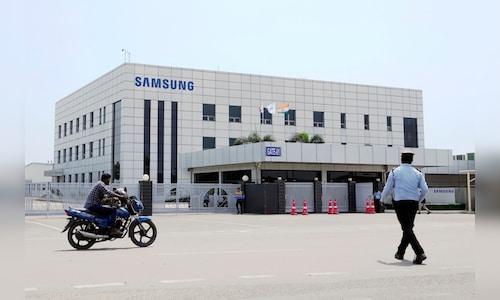
In an interview with PTI, JB Park, President and CEO of Samsung Southwest Asia, indicated that the South Korean conglomerate aims to strengthen its manufacturing operations in India and has submitted applications under the production-linked incentive (PLI) scheme for components related to mobile phone display manufacturing in India.
Samsung operates the world’s largest smartphone manufacturing facility in Noida, which has recently become a significant export hub.
Also read: Driving AI for India’s urban transformation
When queried about the potential for an IPO, Park stated, “No, we do not have any such plans as of now.”
While other South Korean companies, such as Hyundai Motor India and LG Electronics, have turned to public markets for capital and to strengthen their local presence, Samsung prefers to prioritize internal growth rather than market-funded expansion.
This approach reflects a dual strategy: utilizing AI to set its products apart in a competitive consumer electronics landscape while employing financing options to encourage sales during a period of declining global demand.
Park noted that Samsung would secure sufficient funding for its growth investments. Besides an IPO, the company is considering alternative capital acquisition methods, such as institutional borrowings or corporate bonds, among others.
Also read: Outlook 2026 | How PropTech is going to outrun India’s construction sites
“There are various ways to ensure working capital is available, so an IPO is not part of Samsung’s plans,” he remarked.
By focusing on expansion rather than a public offering, Samsung is expressing confidence in its long-term growth prospects in India while maintaining greater control over its strategic and financial decisions.
Park mentioned that Samsung aims to broaden its interest-free financing scheme to include home appliances. Currently, it offers smartphones under interest-free monthly EMIs, which will soon extend to televisions and washing machines.
“More than 40 percent of smartphones have been sold through the Finance + (Samsung EMI scheme),” he explained.
When asked about the anticipated growth in this sector, Park responded, “This segment (Finance +) is growing by 10 percent annually.”
This initiative serves as a significant “growth engine” for Samsung India as it aims to penetrate rural markets in the north and northeast.
Park emphasized that AI will play a central role in future Samsung products. Many of these innovations will be featured at CES 2026, the world’s premier consumer electronics and IT exhibition, taking place in Las Vegas next month.
He noted that the company’s AI appliances are reaching a “new turning point,” providing smarter, more personalized experiences that enhance everyday life.
Samsung will also showcase advancements in TV technology at its “The First Look” event on January 4, 2026, in Las Vegas, he added.
During CES, Samsung is set to reveal updates across its AI appliance range, including the AirDresser, Laundry Combo, WindFree Pro Air Conditioner, and the flagship Jet Bot Steam Ultra robot vacuum.
These upgrades merge AI-driven customization with hardware improvements, delivering smarter fabric care, intuitive temperature management, and seamless cleaning experiences tailored to users’ lifestyles.
In the kitchen segment, Samsung will present its upgraded AI Refrigerator Family Hub, integrating Google Gemini for the first time. The new AI Vision enhances on-device food recognition capabilities, expanding the range of fresh and processed foods the refrigerator can identify and manage, thus offering a more versatile and comprehensive kitchen experience.
Additionally, Samsung will broaden its Micro RGB TV lineup, introducing the next generation of display technology intended to set new benchmarks for premium home viewing.
Emphasizing its global AI objectives, Park highlighted that Samsung employs over 10,000 engineers in India at three R&D centers and a design center, contributing to both local and global product innovations.