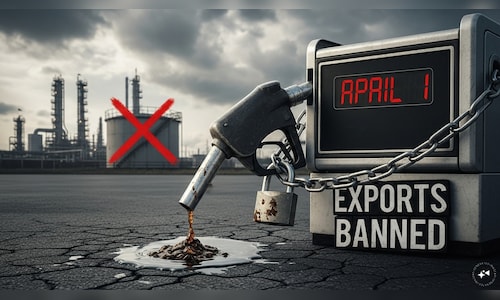
Deputy Prime Minister Alexander Novak has instructed the Energy Ministry to draft legislation that will prohibit gasoline exports beginning next month, according to a government statement.
During a meeting with oil industry leaders on Friday, Novak remarked that “the turbulence in the global crude oil and oil products market, driven by the crisis in the Middle East, has triggered major price fluctuations,” as stated in the announcement. This volatility coincides with a surge in global demand for Russian oil products, the statement noted.
Typically, Russia’s gasoline exports average around 100,000 barrels per day, based on Bloomberg’s data. This figure is a small portion of the overall global trade for the product.
The oil market is already on high alert as the Iran conflict approaches its second month. The Strait of Hormuz, a crucial route for energy exports from Gulf nations, has effectively been closed since late February, resulting in tighter global supplies. Any additional restrictions on global fuel trading will further complicate matters for oil-importing countries.
Concurrently, Ukraine has been aggressively targeting Russian oil infrastructure, including refineries, hindering Russia’s capacity to produce and export oil.
Since the beginning of the month, drone strikes have disrupted operations at two Russian oil-processing facilities: Rosneft PJSC’s Saratov plant in the Volga region and Surgutneftegas PJSC’s Kirishi refinery located near the Baltic coast. Together, these facilities represent just under 10% of Russia’s total refining capacity, according to Bloomberg’s estimates.
In recent years, Russia has suspended gasoline exports ahead of high-demand seasons like spring and autumn, coinciding with peak agricultural activities. The most recent suspension of gasoline exports was lifted only in February.