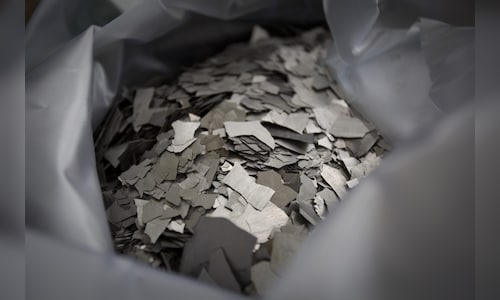
The turning point occurred in April, when China tightened export licensing regulations for rare earth elements. By October, these restrictions expanded to include rare earth magnets and processing technologies. The effects were immediate. Exports dwindled, supply chains were interrupted, and sectors from electric vehicles and renewable energy to defense manufacturing found themselves vulnerable.
This was not a crisis of scarcity but rather one of access. Global production of rare earths in 2025 was approximately 196,000 tonnes, valued at around $12-15 billion. However, these elements support industries worth an estimated $7 trillion worldwide. Their significance lies in their irreplaceability at scale. Without rare earths, electric motors run inefficiently, wind turbines stop functioning, and advanced military systems lose vital capabilities.
The statistics highlight the dependency. An electric vehicle necessitates one to two kilograms of rare earth magnets. Offshore wind turbines can require between 600 and 2,000 kilograms each. A single fighter jet can use over 400 kilograms across its systems and sensors. Alternatives remain limited, costly, or technologically undeveloped.
China’s dominance throughout the rare earth value chain made its actions particularly disruptive. The nation accounts for about 70% of global rare earth output, controls 85-90% of refining and processing, and produces over 90% of the world’s permanent magnets. Even when rare earths are extracted elsewhere, they typically need processing in China to be usable, making global supply chains fragile and highly vulnerable to geopolitical influence.
Also Read | China’s critical rare earth export to Trump’s United States declines in November
The repercussions were swift. Factories around the world faced uncertainty, and global EV production experienced pressure due to limited magnet availability and increased costs. In India, Maruti Suzuki reduced its electric vehicle production target to approximately 8,000 units from an earlier projection of 26,000 units. The defense manufacturing sector was also impacted, prompting NATO nations to formally designate rare earths as strategic minerals and to begin building stockpiles.
Price fluctuations added to the chaos. Several rare earth elements experienced sharp increases, with yttrium prices soaring more than 4,000% during peak supply stress, reflecting both scarcity concerns and speculative pressure.
What ensued was a worldwide scramble. The US and its allies invested billions to establish non-China refining capacity. The European Union, under its Critical Raw Materials Act, aimed to process 40% of its rare earth needs domestically. Japan took steps to secure long-term supply contracts and accelerate recycling initiatives. Globally, over 300 million tonnes of rare earth resources have been identified outside of China, with at least 146 extraction and processing projects currently being developed.
However, creating viable alternatives is a long-term endeavor. Developing mines, refining capacity, and downstream ecosystems can take a decade or more, highlighting the structural challenge of diminishing dependence on China in the short term.
India found itself especially vulnerable. Despite holding about 6% of global rare earth reserves, the country imports nearly all of its rare earth magnets. This presents a direct risk to India’s manufacturing aspirations, a key element of the government’s vision for Viksit Bharat.
In response, New Delhi approved a ₹7,280 crore incentive scheme to establish domestic magnet manufacturing capacity of around 6,000 tonnes annually. The goal is twofold: to decrease strategic vulnerability and gradually position India as an alternative supplier in the global market.
Also Read | Govt unveils details of ₹7,280-crore rare earth magnet manufacturing scheme
As 2026 begins, the competition for rare earths is expected to escalate. Global demand is projected to rise by nearly 700% by 2040, driven by the energy transition, semiconductor manufacturing, and increasing defense and space needs. With stakes this elevated, rare earth minerals are no longer just commodities. They have transformed into strategic assets—tools of influence in an evolving global landscape where those who control supply chains increasingly set the terms.