 1 / 10
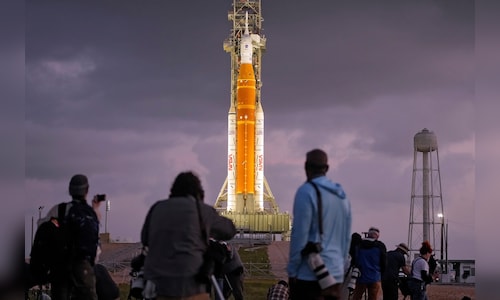
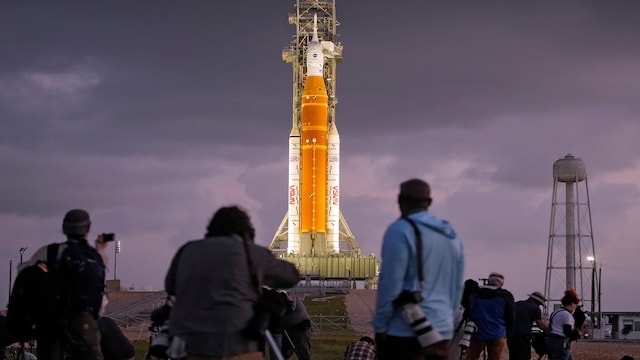
Moon Mission: NASA is gearing up for Artemis II, its inaugural crewed lunar mission in over half a century, designed to send astronauts further from Earth than ever before. This mission symbolizes the first crewed journey toward the moon since 1972, as part of NASA’s Artemis initiative focused on reintroducing humans to lunar exploration and establishing a long-term presence on the moon.
(Photo Credit : nasa.gov)
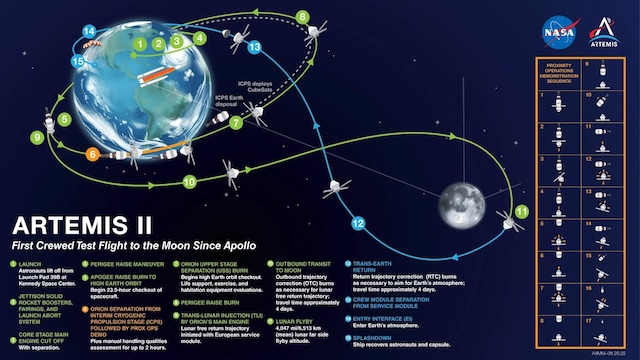
2 / 10Flyby Plan: Artemis II will propel four astronauts on a lunar flyby, avoiding a landing. The spacecraft is set to traverse thousands of miles past the moon, execute a maneuver in space, and return directly to Earth. This mission is expected to last under ten days, with no lunar orbit and no moonwalking—merely a brief test flight to assess performance.
 3 / 10
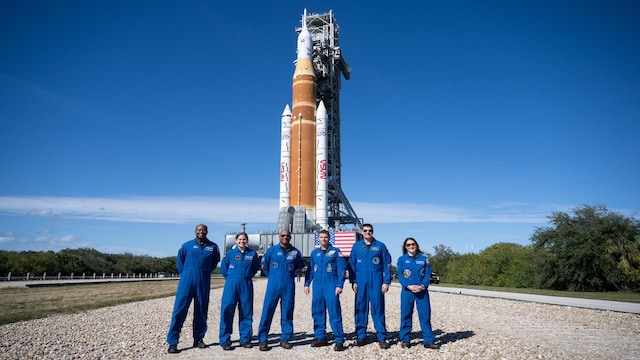
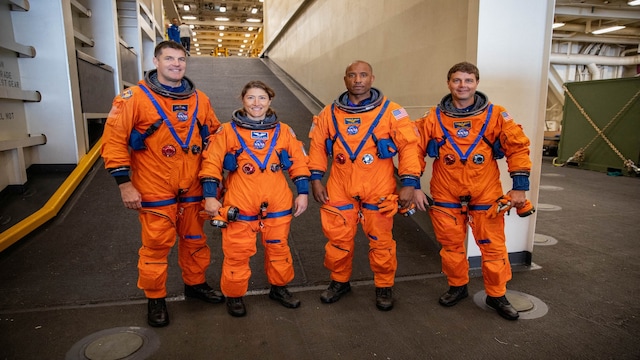
Test Mission: While NASA has plans for future missions that will land astronauts on the moon, Artemis II serves as a test mission aimed at evaluating systems and procedures with a crew onboard. Astronauts Reid Wiseman, Victor Glover, Christina Koch, and Jeremy Hansen will assess the Orion spacecraft and mission operations, contributing to NASA’s broader goal of sustaining a human presence on the lunar surface.
 4 / 10
Diverse Crew: The Artemis II team includes the first woman, the first person of color, and the first non-American selected for a lunar mission. Comprising astronauts from both the United States and Canada, their ages range from 47 to 50, showcasing NASA’s commitment to diversifying its astronaut corps for lunar explorations.
 5 / 10
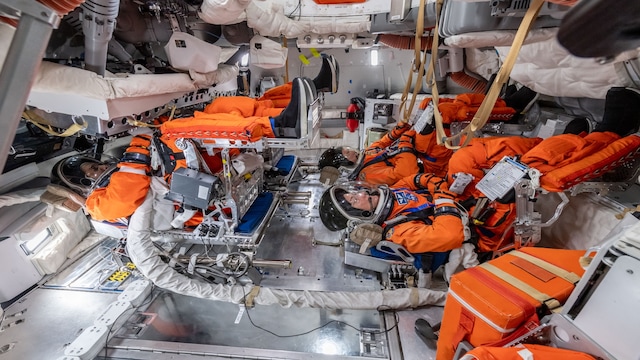
Crew Experience: Christina Koch holds the record for the longest single spaceflight by a woman, having spent 328 days aboard the International Space Station between 2019 and 2020, during which she also participated in the first all-female spacewalk. Victor Glover, a Navy test pilot, became the first Black astronaut to live and work on the space station and launched aboard a SpaceX mission.

(Photo Credit : AP)
6 / 10Mission Leaders: Jeremy Hansen from the Canadian Space Agency, a former fighter pilot, will join the mission as the only astronaut without prior spaceflight experience. The mission commander, Reid Wiseman, is a retired Navy captain who lived aboard the space station in 2014 and later became the chief of NASA’s astronaut corps.
 7 / 10
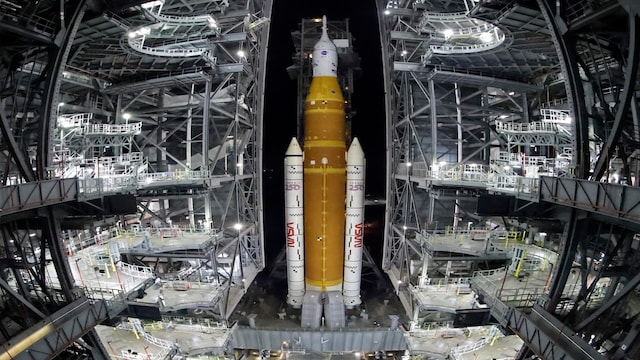
Powerful Rocket: Artemis II will lift off on NASA’s Space Launch System rocket, which stands at 322 feet and generates more power at liftoff than the Saturn V rockets used during the Apollo missions. The Orion capsule carrying the astronauts is positioned on top of the rocket, which utilizes liquid hydrogen fuel and incorporates components from the space shuttle program.
 8 / 10
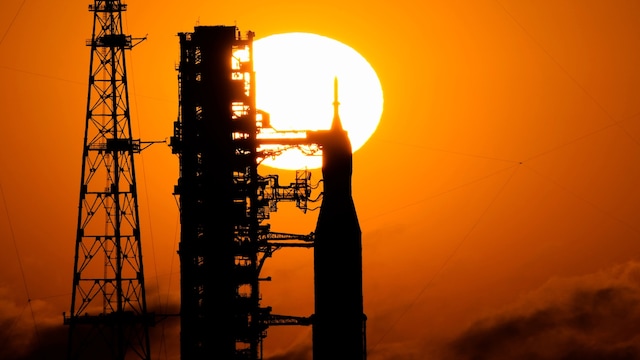
Launch Delays: Hydrogen leaks that caused delays in space shuttle launches also hindered earlier SLS tests, including an uncrewed test flight in 2022. Artemis II faced similar hydrogen leaks during a fueling trial in February, leading to missed launch opportunities. Additional helium flow concerns have further postponed the mission, pushing the expected launch window to April.
(Photo Credit : nasa.gov)
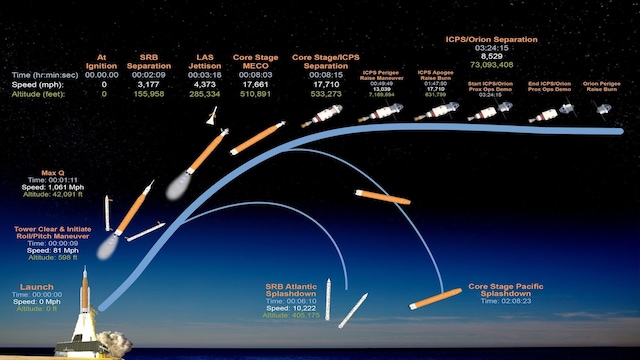
9 / 10Flight Path: Post-liftoff, the astronauts will spend approximately 25 hours in high orbit around Earth, practicing spacecraft navigation using the rocket’s upper stage as a reference. They will depend on visual cues over instruments to guide Orion close to the upper stage. Following this, the spacecraft will ignite its main engine, entering a free-return path around the moon.
 10 / 10
Return Splashdown: Throughout the mission, Orion will cover roughly 244,000 miles to the moon, reaching a point about 5,000 miles beyond it, surpassing the Apollo 13 distance record. The crew may take pictures of portions of the lunar far side. The mission concludes with a splashdown in the Pacific Ocean near San Diego, where Navy vessels will retrieve the capsule after reentry.