The affiliate of Hyundai Motor Co. aims to finalize the development of its first software-defined vehicle by the end of 2027, as stated Thursday in its 2030 strategy. This vehicle will feature Level 2 driving automation, enabling it to operate on highways, with Kia also planning to release a more advanced model that can navigate regular roads by early 2029.
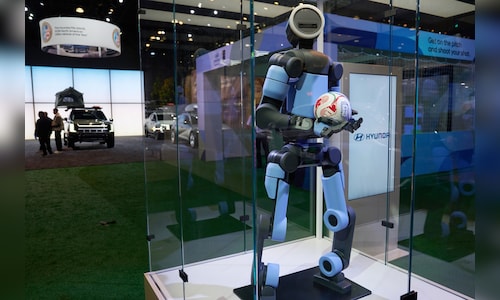
In addition, Kia announced that it will implement the Atlas robot, created by Hyundai’s Boston Dynamics division, at its Georgia facility in 2029. The robot will initially perform basic manufacturing tasks to enhance safety and productivity, eventually leveraging AI to evolve into more complex roles.
Automakers are increasingly turning to software for in-car infotainment, advanced driving assistance, and over-the-air updates to enhance performance, as well as aiming for manufacturing efficiencies to navigate uncertain consumer sentiments, particularly concerning electric vehicles.
Software-defined vehicles represent a rapidly expanding segment of the automotive market, valued between $250 billion to $300 billion, with projections that it could surpass $1 trillion in the next decade, according to a report from KPMG in February, referencing industry forecasts.
Kia’s transition to software-defined vehicles will enable the company to generate ongoing revenue throughout a vehicle’s lifecycle through software subscriptions, significantly boosting per-unit profitability and reducing repair costs, noted Esther Yim, an analyst at Samsung Securities Co.
The automaker plans to invest over $500 million to enhance its physical AI capabilities and vision-language-action models, while also strengthening strategic partnerships with tech firms such as Google’s DeepMind and Nvidia Corp.
This technological initiative is part of a larger reassessment of its sales goals, as Kia aligns its electric vehicle strategies with those of other major brands.
Kia has revised its annual EV sales target to 1 million units by 2030, down from the previous goal of 1.26 million. Additionally, it will broaden its hybrid lineup to 13 models, aiming to sell 1.1 million units by 2030, which reflects a slight increase from its previous estimate of 1.07 million.
The total global sales target for Kia is now set at 4.13 million units, reduced from the earlier projection of 4.19 million. The company seeks to sell 1 million units in the US and 1.5 million in emerging markets, with a strong emphasis on India.