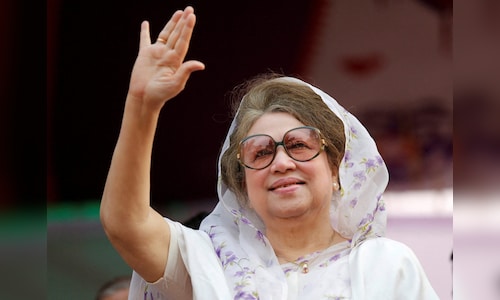
Zia, who passed away at the age of 80 after a prolonged illness, held the Prime Minister position for three terms and never lost an election in any of the constituencies she contested. However, for India, her administration was one of the most challenging periods in bilateral relations since 1971.
Former Indian High Commissioner to Bangladesh, Veena Sikri, remarked that Zia’s most lasting domestic achievement was unifying the BNP following the assassination of her husband, President Zia-Ur-Rahman, and guiding the party through multiple electoral successes. She also acknowledged Zia’s collaboration with Sheikh Hasina’s Awami League to end General H M Ershad’s military dictatorship in 1991, a crucial movement that reinstated democracy after 15 years of military rule.
Nevertheless, Sikri emphasized that India-Bangladesh relations were strained during the BNP era primarily due to the party’s pro-Pakistan stance. In the early 2000s, Pakistan’s intelligence presence in Bangladesh grew significantly, coinciding with a marked increase in insurgent and terrorist activities that impacted India’s Northeast. Militant groups established camps and financial networks in Bangladesh, using the porous border to launch attacks in India. “All terrorist attacks in India during that time had a Bangladeshi footprint,” Sikri noted, identifying it as a significant security challenge for New Delhi.
Former Indian envoy to the US, Meera Shankar, described Khaleda Zia’s legacy as complex. While she claimed the legacy of the liberation struggle through her husband, she also led coalition governments that included Islamic parties, mirroring a persistent ideological rift in Bangladesh regarding whether national identity should stem from language and culture or religion.
Shankar pointed out that the challenge for India was Zia’s expression of a type of Bangladeshi nationalism that frequently positioned itself against India, at the expense of the pragmatism dictated by geographical realities. This stance, she argued, led Bangladesh to forfeit economic and strategic opportunities, including regional connectivity and beneficial trade projects with India.
Security concerns were further complicated by Zia’s defense outreach to China. Her administration finalized substantial military agreements with Beijing, including the procurement of tanks and frigates, reshaping the Bangladesh Army’s orientation and deepening China’s influence in Dhaka’s strategic considerations. For India, this shift introduced another layer of complexity in a neighborhood already sensitive to great power competition.
However, Shankar noted that Zia’s approach was not entirely fixed. In her later years, she displayed a degree of pragmatism, which New Delhi reciprocated. Prime Minister Narendra Modi met Khaleda Zia during his 2015 visit to Bangladesh, a gesture that indicated India’s readiness to engage beyond entrenched political rivalries.
Also Read | Softer voice, sharper strategy: Intel review of Tarique Rahman’s Bangladesh comeback speech
Focus is now shifting to whether her son, Tarique Rahman, who returned to Bangladesh last week after 17 years in self-imposed exile and is perceived as the BNP’s primary candidate for the upcoming February elections, will carry that pragmatism forward. Rahman has addressed the need for moving Bangladesh beyond a politics of vendetta, a sentiment that Shankar described as offering “some optimism” if it leads to actionable policies.
For India, this transition presents both risks and opportunities. A continuation of past BNP policies could rekindle old security concerns, whereas a shift in approach could create possibilities for more stable economic and strategic cooperation. As Prime Minister Modi expressed his condolences on Khaleda Zia’s passing, New Delhi will be closely observing whether the next chapter in Dhaka continues in the same vein as the past or marks a significant move towards a more pragmatic regional relationship.
Watch accompanying video for entire discussion.