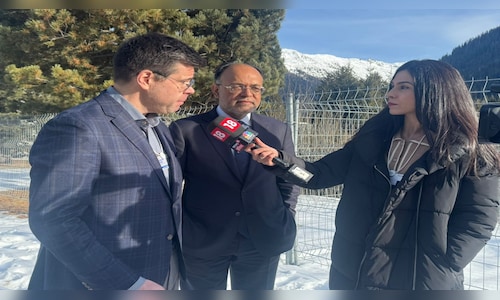
During a conversation with CNBC-TV18 at the summit, Gautam Kumra, Senior Partner at McKinsey & Co and Chair for Asia (ex-China), suggested that traditional scenario planning has become largely ineffective in the current landscape.
“When uncertainty is so pronounced, the number of scenarios to consider is overwhelming,” Kumra remarked. “What leaders should focus on are bold moves with no regrets and real options. Mapping out every conceivable outcome is no longer feasible.”
Transitioning from scenario planning to decisive actions
Kumra warned that companies reacting to uncertainty by halting investments and becoming overly defensive could miss the next growth surge. Conversely, unbridled expansion without precautions poses its own risks.
“Historical evidence demonstrates that solely defending during a crisis results in missed opportunities for growth. On the flip side, an aggressive approach without caution can lead to failure,” he pointed out. “The optimal strategy is to enhance your core operations while selectively pursuing opportunities that yield exceptional value.”
This equilibrium, McKinsey leaders insist, is increasingly challenging as the origins of uncertainty proliferate.
The evolving landscape of geopolitics
Kumra indicated that the fabric of global risk has transformed. While tariff issues were the focal point at Davos a year ago, the current dialogues engage with far more intricate and disruptive themes.
“The discourse surrounding geopolitics has shifted,” he explained. “It’s not merely about tariffs anymore. We’re now engaging with topics such as export sanctions, investment controls, and a myriad of new tools.”
McKinsey’s findings suggest that governments globally have allocated nearly $2 trillion in the past five years for subsidies, incentives, and export regulations. For businesses, this signifies that geopolitics is now a primary business factor, superseding its former status as a marginal policy issue.
A $14 trillion opportunity in trade restructuring
Despite ongoing challenges, Kumra expressed optimism regarding international trade—particularly concerning India’s role in the realignment of supply chains.
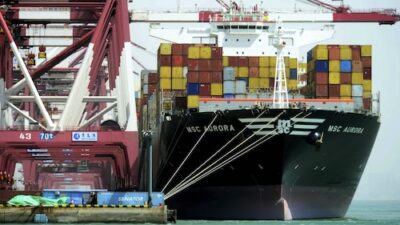
“It’s crucial to acknowledge that global trade is projected to grow by roughly one trillion dollars annually,” he said. “Over the next decade, we anticipate that between $12 trillion and $14 trillion of trade will undergo a significant reshaping.”
McKinsey’s research has identified around 50 key trade corridors that characterize global commerce. Many of the most resilient and rapidly expanding corridors, according to Kumra, are centered on India and Asia, including routes connecting India with the Middle East, Europe, and Japan.
“These corridors represent some of the safest opportunities—meaning they are poised to grow irrespective of circumstances,” he added. “This presents a tremendous avenue for India to re-establish global connections and rethink its international business strategies.”
India Inc’s pivotal moment on the global stage
For Indian enterprises, the transformation of global trade and capital flows poses both opportunities and challenges. Although foreign investment interest in India is on the rise, Kumra believes Indian firms must shake off their domestic-centric mindset.
“The Indian domestic market is immense, which can lead companies to become too complacent,” he cautioned. “In nations like Korea, every firm, regardless of size, is globally minded from inception. Indian companies need to adopt that global perspective.”
As foreign direct investment increases and competition heats up domestically, Indian businesses will be compelled to enhance their capabilities. According to Kumra, those excelling in the Indian market are well-positioned to compete on the international stage.
“If you can succeed in India, you have the potential to excel elsewhere,” he concluded.
Finding opportunity within uncertainty
Reflecting this optimism, Alex Panas, Global Leader for Industry Sectors at McKinsey & Co, noted that CEOs at Davos are not immobilized by uncertainty. Rather, many are driven by fundamental growth strategies, focusing on new products, markets, and enhanced execution.
“In a context of radical uncertainty, what is essential is radical planning and meaningful dialogue,” Panas stated, highlighting a renewed focus on growth, disciplined investments, and strategic positioning for the long haul.
For Indian businesses, the takeaway from Davos is clear: while global volatility is unlikely to diminish soon, the current reset in trade dynamics, geopolitical factors, and supply chains could signify a transformative era. Companies ready to act decisively—without falling into recklessness—may discover that radical uncertainty presents a once-in-a-generation opportunity.
Also Read | India Inc expects 7-8% GDP growth riding on jobs, exports and capex: FICCI
Here’s an excerpt from the discussion.
Q: The buzzword that I’ve encountered in nearly every conversation is the need for scenario planning. Who better to discuss this than consultants? Gautam, what insights do you take away? What scenarios are you envisioning?
Kumra: Unfortunately, scenario planning isn’t as beneficial anymore due to the overwhelming number of scenarios to consider in such high uncertainty. It’s crucial for everyone to contemplate what I term no-regrets, bold moves and options, as mapping every scenario is impractical.
That said, confronting this reality while maintaining optimism is essential. Historical trends suggest that during times of crisis, simply freezing operations leads to weaker recovery. Conversely, being solely offensive can result in disaster. A balanced approach is key—fortifying your business while simultaneously seeking new opportunities that can generate significant value.
Q: What sets radical uncertainty apart from regular uncertainty?
Kumra: The growing complexity of factors that CEOs and management teams face continues to escalate. Reflect on Davos last year—we were discussing tariff uncertainty. This year, military and security uncertainty has taken center stage. The lexicon of geopolitics has transformed; it’s no longer merely about tariffs—it encompasses export sanctions, investment controls, and a range of new tools at the disposal of nations and corporations alike. Notably, the global expenditure on various subsidies and controls has approached $2 trillion over the past five years. Thus, geopolitics has evolved beyond mere tariffs. That realization is increasingly evident amid the surrounding uncertainty.
Q: Alex, in this realm of radical uncertainty, how do you identify opportunities and positive developments? What insights are you gaining from your discussions, and what guidance do you provide to clients?
Panas: Dialogues at Davos have clearly illustrated people’s eagerness to communicate. It fascinates me that many CEOs are concentrating on time-honored fundamentals: first, exploring growth avenues through innovative products, services, and new markets; secondly, embracing AI while emphasizing the need for tangible ROI from AI initiatives, re-aligning people and processes, and fundamentally transforming business frameworks; and thirdly, a resurgence in M&A activity. The M&A landscape is vibrant, with explorations expanding across various sectors. Certainty may fluctuate, but what’s imperative—emphasizing Gautam’s observations regarding radical uncertainty—is both radical planning and meaningful dialogue.
Q: In line with Gautam’s observations regarding not becoming stagnant and being strategic about offense versus defense, what is fueling the recent M&A activity? We’ve observed a flurry of bolt-on acquisitions driven by tech advancements and other sectors. What factors do you believe are influencing this?
Panas: Yes, we are witnessing a surge in acquisitions across diverse sectors—consumer, industrial, oil and gas, mining, telecom, and others. This activity can be attributed to several factors: firstly, a backlog in M&A, as activity had stagnated for years, which is now surfacing; secondly, heightened stock prices create more effective currency for transactions; and thirdly, companies recognize the transformative potential that technology innovations afford, presenting new opportunities.
Q: Gautam, what implications does this hold for India and Asia? Contextualizing this against a recent conversation with Sunil Mittal, he indicated a readiness to make larger global investments and an appetite for more. Are Indian enterprises looking outward more than before?
Kumra: The succinct answer is yes, and there is a need for further action. Allow me to highlight a few points. Firstly, regarding the impact on Asia and India: we are amidst a significant trade transformation. In this climate of chaos and radical uncertainty, we should not overlook that global trade is projected to grow by about one trillion dollars yearly. Over the next decade, we foresee that trade worth $12 to $14 trillion will undergo a transformation. Our studies have mapped out approximately 50 key corridors defining global trade. Encouragingly, Asia and India lie at the heart of some of the most stable corridors—those likely to continue growing, such as India-Middle East, India-Japan, and India-Europe, among others. This represents a prime opportunity for India to reforge connections globally and innovate its business methods. Indian firms could enhance their global engagement. Observing South Korea, where every business, regardless of scale, is inherently global-minded, it becomes clear that the formidable domestic market in India can lead to complacency. My belief is that as we attract increased foreign investment and face tougher domestic competition, Indian companies must broaden their global focus. Ultimately, if you can thrive in India, you’re positioned to succeed elsewhere.
Watch the accompanying video for the full discussion.