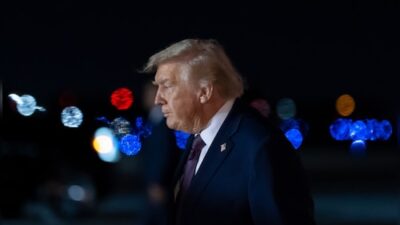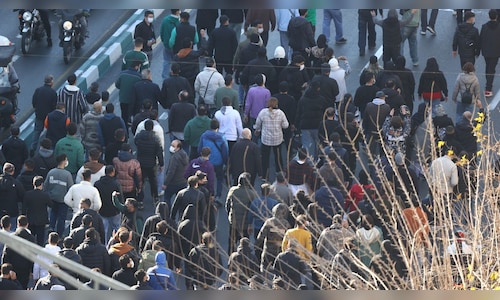
The new fatalities came after US President Donald Trump issued a warning to Iran on Friday, January 2, stating that if Tehran “violently kills peaceful protesters,” the United States “will come to their rescue.” Although it remains uncertain whether Trump will take action, his remarks prompted an immediate and furious reaction from officials within the theocracy, who threatened to target American troops in the Middle East.
The weeklong protests have emerged as the largest in Iran since 2022, when the death of 22-year-old Mahsa Amini while in police custody ignited nationwide demonstrations. Still, the current protests have yet to match the breadth and intensity of those that followed Amini’s death, which resulted from her detention for not wearing her hijab, or headscarf, in accordance with authorities’ standards.
Also read: Yemen’s separatists announce constitution for independent south in escalation of conflict
The fatalities occurring overnight into Saturday, January 3, marked a new level of violence. In Qom, a city known for its major Shiite seminaries, a grenade detonated, killing a man, according to the state-owned IRAN newspaper. The publication quoted security officials who claimed that the man had carried the grenade to attack individuals in the city, located approximately 130 kilometers (80 miles) south of Tehran.
Online footage from Qom allegedly depicted fires raging in the streets overnight.
The second fatality occurred in the town of Harsin, situated about 370 kilometers (230 miles) southwest of Tehran. The newspaper reported that a member of the Basij, the all-volunteer branch of Iran’s paramilitary Revolutionary Guard, lost his life in a combined gun and knife attack in Kermanshah province.
Demonstrations have spread to over 100 locations across 22 of Iran’s 31 provinces, the US-based Human Rights Activists News Agency stated.
Iran’s civilian governance under reformist President Masoud Pezeshkian has been attempting to convey that it desires to engage in negotiations with the protesters. However, Pezeshkian has admitted there is little that can be done as Iran’s rial has plummeted in value, with $1 now requiring approximately 1.4 million rials. This economic decline ignited the initial protests.
Also read: At least 7 explosions and low-flying aircraft are heard in Venezuela’s Caracas
Recently, Iran announced that it is no longer enriching uranium at any domestic site, attempting to signal to the West its willingness to negotiate over its nuclear program in order to alleviate sanctions. Nevertheless, such discussions have yet to commence, as Trump and Israeli Prime Minister Benjamin Netanyahu have cautioned Tehran against reviving its nuclear program.