
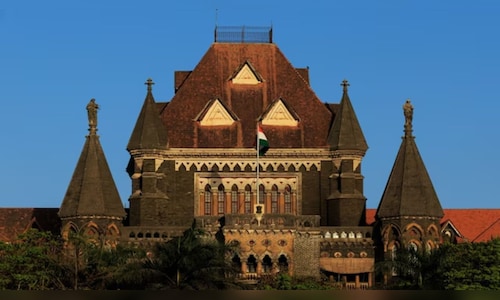
This relief was granted by a division bench comprising Justice GS Kulkarni and Justice Aarti Sathe, which has postponed the contested orders until the next hearing scheduled for February 18, 2026.
Who initiated the court action: A range of insurers
The writ petitions were submitted by a diverse array of players in India’s insurance landscape, including public sector, private general, and health insurance companies. Among the petitioners are Aditya Birla Health Insurance Co. Ltd, Oriental Insurance Co. Ltd, SBI General Insurance Company Ltd, IFFCO Tokio General Insurance Co. Ltd, Generali Central Insurance Co. Ltd, Universal Sompo General Insurance Co. Ltd, New India Assurance Co. Ltd, Zuno General Insurance Ltd, Bharti Management Services Ltd, ICICI Lombard General Insurance Co. Ltd, IndusInd General Insurance Co. Ltd, Tata AIG General Insurance Co. Ltd, and Raheja QBE General Insurance Co. Ltd.
These entities collectively represent a significant portion of India’s general and health insurance market, highlighting the widespread ramifications of the dispute.
What led to the GST demands
The controversy stems from adjudication orders issued by the Additional Commissioner of Central GST and Central Excise, Palghar Commissionerate, which upheld GST demands related to co-insurance premiums and ceding commissions in reinsurance agreements.
The tax authority asserts that these transactions constitute independent taxable supplies under GST, necessitating the imposition of tax along with interest and penalties. In contrast, insurers have consistently argued that co-insurance and reinsurance are essential risk-sharing mechanisms within the insurance framework and do not represent a separate supply of services subject to GST.
The demands encompass several assessment periods and total over ₹10,000 crore, marking one of the most significant GST disputes encountered by the insurance industry since the tax was introduced.
Circulars and GST Council decisions central to the case
Representing the insurers, senior advocates Arvind Datar and Rohan Shah contended that the disputed demands are fundamentally in conflict with binding circulars issued by the Central Board of Indirect Taxes and Customs (CBIC) on October 11, 2024, and January 28, 2025.
These circulars were issued following a GST Council decision that clarified that co-insurance premiums and ceding commissions are not liable for GST and aimed to resolve past disputes on an “as-is-where-is” basis. The circulars were intended to clarify long-existing interpretational discrepancies between the industry and tax authorities.
The petitioners also noted that in at least six analogous cases across Meerut, Delhi, Pune, and Mumbai, departmental authorities had already abandoned identical demands in accordance with the CBIC clarifications. Conversely, the adjudication orders being challenged adopted a completely contradictory stance, despite the existence of clear circular guidance.
Court’s insights and interim protection
Taking into account the arguments presented, the High Court noted that the GST Council has been included as a party to the proceedings, reflecting the significant institutional relevance of the issue. The bench instructed the Revenue to present records of cases where similar demands had been dismissed by GST authorities, as requested by the petitioners.
Upon hearing both sides, the court determined that ad-interim assistance was necessary. It ruled that “there shall be an ad-interim stay of the respective impugned orders, subject matter of each of the Writ Petitions until the adjourned hearing date.” The Revenue has been mandated to submit its reply affidavits by February 12, 2026.
Why this ruling is significant for the insurance sector
Tax experts indicate that the interim stay arrives at a crucial moment for the insurance sector, which has been confronting growing compliance uncertainties and potential cash flow challenges due to large disputed GST liabilities.
Amit Maheshwari, Managing Partner at AKM Global, stated that the High Court’s intervention underscores the authority of GST Council-backed clarifications.
“The ad-interim stay by the Bombay High Court presents timely relief from considerable GST demands that have obstructed industry operations,” he said.
“The GST Council had already made a clear recommendation on co-insurance premiums and ceding commissions, which was later implemented through CBIC circular clarifications. This order reinforces that such circular-based guidance should not be overlooked in assessment processes,” Maheshwari added.
He also pointed out the inconsistencies in departmental actions.
“The petitioners have highlighted that in numerous similar cases, the department itself dropped demands according to the circulars, while the impugned orders take a contradictory position. The stay will aid in maintaining cash flows and emphasizes the necessity for consistent application of the circular while the broader legal issues are under review,” he said.
The path forward
While the stay offers immediate relief, the ultimate outcome of the case will be closely monitored by insurers, reinsurers, and tax administrators alike. A conclusive ruling could definitively resolve the GST treatment of co-insurance and reinsurance transactions—an issue that has persisted for years and poses considerable financial risk for the industry.
For the time being, the Bombay High Court’s order grants insurers a vital reprieve, ensuring that recovery actions remain on hold as the larger legal questions are meticulously examined.


