The governing body of men’s tennis explained that the rule, which is based on the globally recognized Wet Bulb Globe Temperature (WBGT) index that gauges human heat stress in direct sunlight, establishes “clear thresholds” for cooling measures and play suspension.
“The new heat rule offers a systematic, medically-backed framework for managing extreme heat, aimed at protecting player well-being,” the ATP stated on Monday.
It also noted that the regulation will enhance conditions for fans, officials, ball persons, and tournament staff.
If the WBGT hits 30.1 C (86.18 F) or higher during the first two sets of a best-of-three-set singles match, either player can request a 10-minute cooling break after the second set, which will apply to both competitors.
During these breaks, players are allowed to hydrate, change their clothing, shower, and receive coaching under the supervision of ATP medical staff, according to the governing body. Play will be halted when the WBGT exceeds 32.2 C.
World number two Jannik Sinner’s title defense in Shanghai ended painfully in October as the Italian faced cramps in his right thigh before retiring in the decisive set against Tallon Griekspoor.
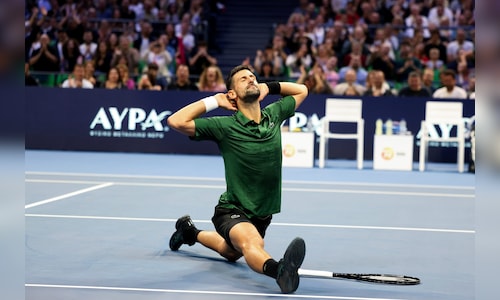
At the same tournament, Novak Djokovic was seen vomiting during his match against Yannick Hanfmann, while Holger Rune expressed concerns to an official during a medical timeout in his match against Ugo Humbert, questioning whether players had to “die on court” due to the heat and humidity.
The call for a formal ATP heat rule grew in August during the Cincinnati event when Arthur Rinderknech collapsed on court amidst sweltering conditions, which led to Felix Auger-Aliassime winning the match.
Under the previous regulations, decisions regarding play suspension due to adverse weather—like extreme heat—were left to an onsite ATP supervisor who coordinated with medical teams and local authorities.
The new rule brings the ATP in line with the WTA. All four Grand Slams have also officially adopted regulations that allow for extended breaks and match suspensions.
Moreover, several professional sports, including soccer, Formula One, and cycling, have established formal policies to address extreme weather conditions.