According to Sharma, the hospital, which currently operates 180 beds, is projected to generate ₹8–10 crore per month once all multi-super-specialties are operational, leading to an annual revenue of approximately ₹100 crore at 18–20% EBITDA margins, while keeping the average revenue per occupied bed (ARPOB) within the ₹32,000–₹34,000 range.
The company’s current market capitalization stands at ₹6,284.59 crore, with its stock experiencing a decline of about 2% over the past year.
These are edited excerpts from the interview.
Q: Can you provide insights into the acquisition in Agra regarding the hospital’s financials? What is the current occupancy and average revenue per patient? Is it profitable in terms of Earnings Before Interest, Taxes, Depreciation, and Amortization (EBITDA) and net profit?
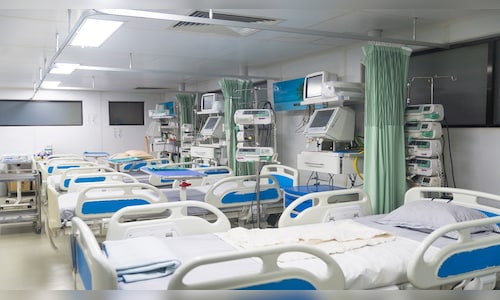
A: The property we acquired is situated in a densely populated area in the heart of Agra. This 360-bed hospital is currently operational with only 180 beds, primarily focusing on cardiology and gastroenterology. However, we plan to launch all multi-super-specialties from day one.
At present, it achieves an ARPOB of around ₹34,000, and we anticipate this will remain in the range of ₹33,000–₹34,000. This acquisition is among our most expensive compared to previous purchases, but consolidating it does not significantly affect our CapEx, which remains at around ₹32–34 lakh per bed. This offers a significant advantage.
Currently, the hospital generates about ₹4 crore in monthly revenue. Once we take over and start operations by February 15, we project this will rise to around ₹8-10 crore per month with all multi-super-specialties active, totaling about ₹100 crore annually at an EBITDA of approximately 18-20% and a profit after tax (PAT) of around 10-11%.
Q: Will you have all 360 beds operational by February, given the revenue projections?
A: Yes, all 360 beds are available, but only 180 are currently in use.
Also Read | Markets at long-term averages offer comfort; financials, healthcare attractive: Prashant Khemka
Q: Can you elaborate on the occupancy, revenue per patient, and the range of high-end services being offered, as this will impact margins both standalone and blended?
A:
We will provide various super-specialties, including cardiology, cardiac surgery, gastroenterology, gastrointestinal surgery, neurology, neurosurgery, nephrology, urology, joint replacements, oncology, medical oncology, surgical oncology, and radiation oncology, along with robotic surgeries.
Q: Regarding occupancy, revenue per patient, and the percentage of high-end services currently being provided, how do you envision scaling these up?
A: We anticipate maintaining our ARPOB. Our focus centers on three pillars: affordability, high quality, and profitability, which we have upheld for the past 21 years.
Here as well, we aim for an ARPOB between ₹32,000 and ₹34,000 per bed while ensuring affordability. We expect occupancy to increase with the introduction of multi-super-specialties, as there is significant demand; unfortunately, not all specialties are currently operational.
Q: With the ARPOB currently at ₹34,000, how do you foresee it evolving by FY27, especially as it was around ₹26,000 for FY25? Also, what is your current net debt, and will any additional debt be undertaken?
A: This acquisition costs ₹245 crore. Presently, our total debt is approximately ₹425 crore, against which we have ₹305 crore in unencumbered fixed deposits and around ₹40 crore in our current account. The funding for the ₹245 crore acquisition will mainly come from internal accruals. The initial public offering (IPO) proceeds are planned to reduce ₹380 crore of debt, providing us with the opportunity to take on more debt if necessary.
Q: You have focused on inorganic growth with approximately eight acquisitions thus far. What does your acquisition pipeline look like moving forward?
A: With this hospital added to our portfolio, we will have a total of 15 hospitals spread across five states. Our growth strategy has followed a cluster format, with 10 of these being acquisition projects and five greenfield projects.
Looking ahead, for FY26, we plan to add another 300 beds, in addition to Agra, as a greenfield initiative. We have six projects lined up over the next three years – comprising three brownfield and three greenfield projects.
In FY26, we intend to add a total of 660 beds, including those in Agra, followed by 750 beds in FY27—300 in Kanpur, 200 in Delhi, and 250 in Rohtak. Lastly, in FY28, we will expand by another 600 beds, with 400 from Gorakhpur and Ambala brownfield projects and 200 from a new greenfield initiative, bringing our total bed capacity to 5,260 by FY28.
Q: Are there any further acquisitions planned in North India, and could you update us on the Febris Multispeciality Hospital in Delhi, where you have submitted a resolution plan?
A: That process is ongoing. A share transfer is anticipated to occur soon, probably within a day or two, which should activate Febris by FY27.
For more, watch the accompanying video