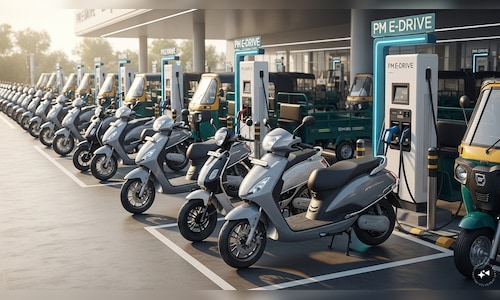
This anticipated extension is motivated by unutilized funds in the e-2W and e-3W categories, according to insiders. The Ministry of Heavy Industries has requested sanction from the Finance Ministry to extend the scheme for these segments, they noted.
Officials indicated that a segment of the allotted funds for electric two- and three-wheelers remains unused, which has led the government to consider prolonging the timeline to promote broader adoption and optimal use of the scheme.
The overall allocation for the PM E-DRIVE scheme will remain steady at ₹10,900 crore, sources revealed.
The initiative has previously been extended to March 31, 2028, with an outlay of ₹10,900 crore, though the latest proposal primarily aims at sustaining demand incentives for high-volume categories.
The expected extension is anticipated to focus on high-volume segments like electric two-wheelers, e-rickshaws, and e-carts, which have experienced robust demand yet still require policy backing to maintain growth.
Other aspects of the scheme, such as electric buses and charging infrastructure, are already valid until March 2028 and are not included in the current extension proposal.
Currently, incentives for electric two- and three-wheelers under the scheme are due to lapse on March 31, 2026, making an expeditious decision vital for industry continuity and maintaining demand.
This initiative arises amidst a review by a Parliamentary Standing Committee, which highlighted significant discrepancies between Budget Estimates (BEs) and Revised Estimates (REs) in key automotive schemes, with notable reductions seen during the RE stage for FY26.
The Standing Committee observed that the utilization of such schemes has largely concentrated on demand incentives, particularly within electric two-wheelers and three-wheelers, underscoring a need for improved implementation strategies.
The Parliamentary panel has advocated for extending demand incentives for electric two-wheelers until March 31, 2028, in line with the broader scheme timeline. It also pointed out that stringent global revenue and investment benchmarks for auto OEM eligibility might limit participation, recommending differentiated criteria for high-potential domestic entities, particularly in the e-2W sector.