 1 / 8
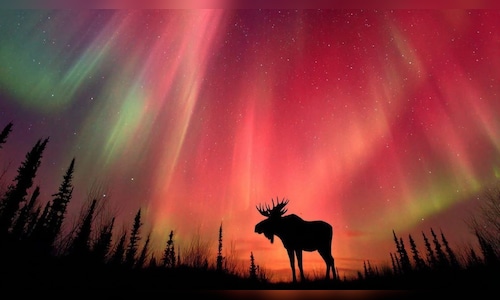
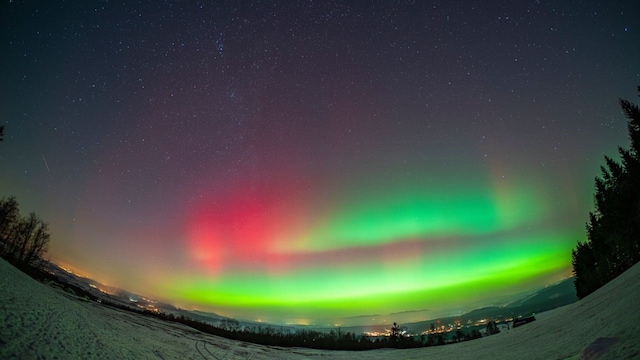
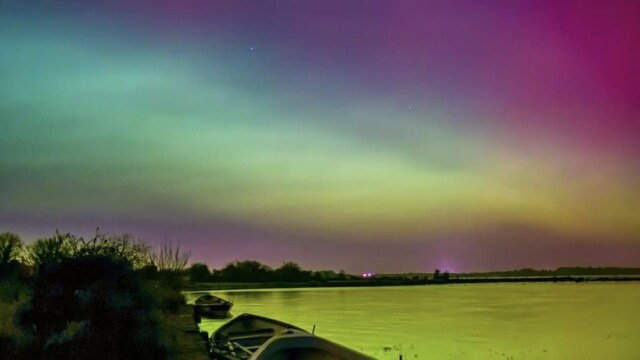
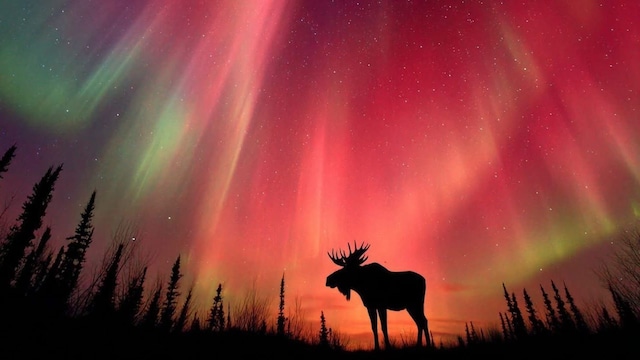
1 / 8On the evening of January 19–20, a powerful G4 geomagnetic storm set off stunning displays of the Northern Lights (Aurora Borealis) in various areas. This phenomenon stemmed from an intense X1.9-class solar flare on January 18, which sent a huge coronal mass ejection (CME) directly toward our planet. (Image X@ Rongelukas)
 2 / 8
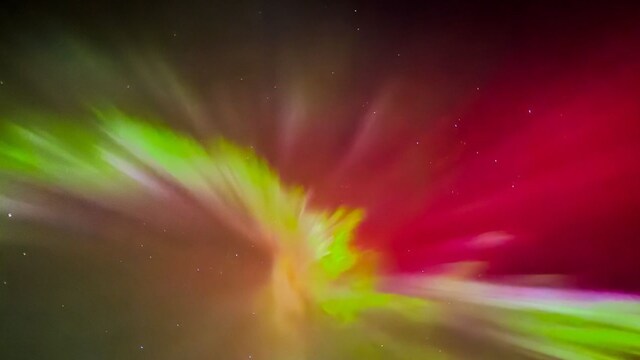
2 / 8The strength of the storm led to sightings throughout Europe, with vibrant reds and greens observable in locations such as China, Scandinavia, the United Kingdom, and various parts of Europe, including Germany, France, and Hungary. While the auroras were intense enough to be seen as far south as Arizona, Texas, and southern California, the geomagnetic activity had diminished by nighttime in North America. (Image X)
 3 / 8
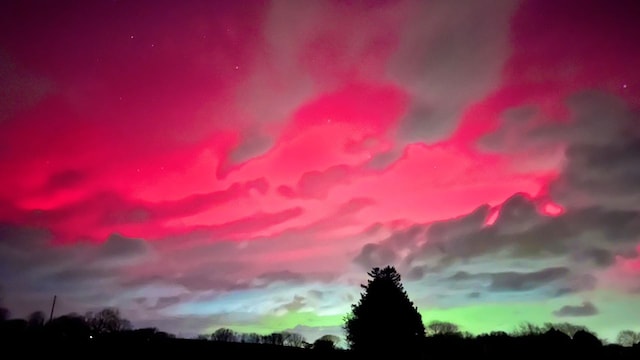
3 / 8Social media was abuzz with reports and images from regions that rarely witness such occurrences, including southern Europe and other lower-latitude regions. The National Weather Service’s Space Weather Prediction Center had previously issued a warning for a level four out of five solar radiation storm, marking the most significant event in over two decades. (Image X)
 4 / 8
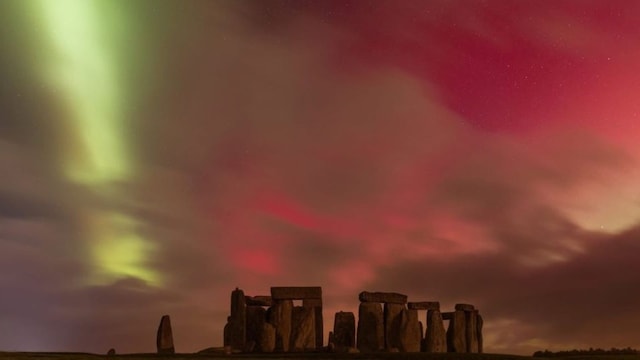
4 / 8The storm has the potential to disrupt satellite communications and GPS accuracy, and it poses radiation threats to astronauts as well as passengers on flights traversing polar routes. The center has alerted airlines, NASA, the Federal Aviation Administration, the Federal Emergency Management Agency, the North American Electric Reliability Corporation, and other stakeholders to prepare for its impact. (Image X@Galwaytourism)
 5 / 8
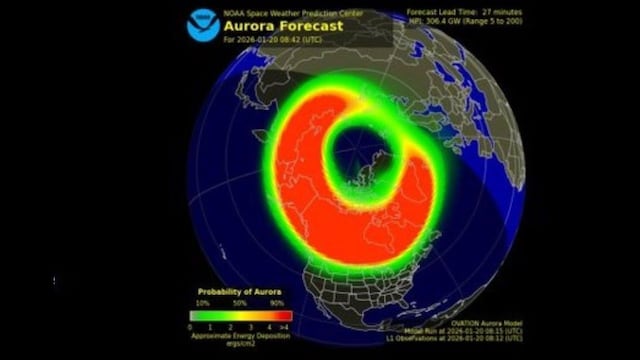
5 / 8“We’ve been reaching out to ensure that all critical technological infrastructure operators are aware of the situation,” stated SWPC forecaster Shawn Dahl, as reported by CNN. Dahl also mentioned that a severe geomagnetic storm impacted Earth on Monday, which could strain the electrical power grid. This storm was driven by a coronal mass ejection emanating from the sun on Sunday, triggered by an X-class flare. (Image X@St0nehenge)
 6 / 8
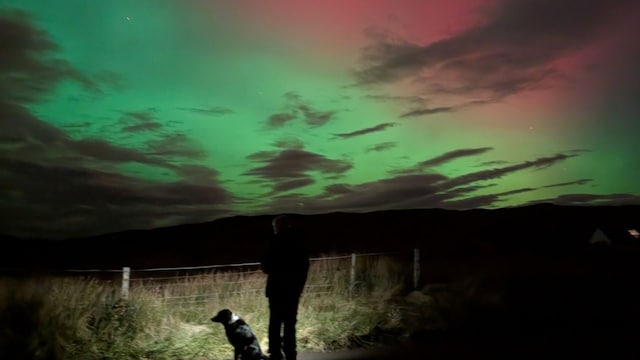
6 / 8As per the NOAA aurora forecast map, there are 24 U.S. states that lie wholly or partially above the aurora viewing line, which include Alaska, Washington, Oregon, Idaho, Montana, North Dakota, Minnesota, South Dakota, Wisconsin, Wyoming, Michigan, New York, Vermont, Maine, New Hampshire, Massachusetts, Nebraska, Iowa, Illinois, Indiana, Ohio, Pennsylvania, Missouri, and Colorado. (Image X)
 7 / 8
7 / 8To view the auroras, seek out a place with a clear, dark view to the north and minimal light pollution. Cameras, including smartphones, often capture the lights even when they are not visible to the naked eye. The active sunspot region is expected to produce additional Earth-directed eruptions, with more flares likely in the upcoming week. (Image X)
 8 / 8
8 / 8As the S4 solar radiation storm is ongoing, it may require rerouting flights over the poles or flying at lower elevations, as noted by MyRadar Weather. “For the first time since 2003, an S4 solar radiation storm is occurring! Solar particles and protons, energized by an approaching magnetic shockwave (CME), are striking Earth. The more of these energized particles there are, the deeper they penetrate into our upper atmosphere,” they highlighted on X. (Image X@forallcurious)