
According to Managing Director and CEO K Krithivasan, companies are shifting away from annual tech budgets in favor of shorter-term decisions. “Most of our customers are making quarterly decisions based on the opportunities available,” he noted, emphasizing that the traditional model of locked-in annual budgets is diminishing.
In spite of the prevailing uncertainty, TCS is experiencing increased traction in AI-driven projects. Although AI currently accounts for a small portion of overall revenue, momentum is gaining. “With each quarter, our incremental revenues from AI are continuously improving,” stated Executive Director and President Aarthi Subramaniam. She highlighted that annualized AI revenue has jumped from $1.5 billion to $1.8 billion in a brief period, with more clients expanding and scaling their AI initiatives.
Simultaneously, the firm is maintaining its commitment to talent investments. “We have been actively hiring, and we still require top talent,” remarked Chief Human Resources Officer Sudeep Kunnumal, noting that the company onboarded nearly 16,000 employees this quarter and is enhancing training in AI, machine learning, and data skills.
Krithivasan emphasized that acquisitions are essential to TCS’ goal of leading the AI service sector, as developing capabilities in-house may not always deliver the needed scale and speed.
The recent acquisition of Coastal Cloud, along with earlier acquisitions such as ListEngage, enhances TCS’ position in the Salesforce ecosystem and bolsters its investment in high-growth advisory and professional services while remaining disciplined regarding valuations.
CFO Samir Seksaria outlined a plan to develop up to 1 GW of data center capacity over five to seven years with key customers.
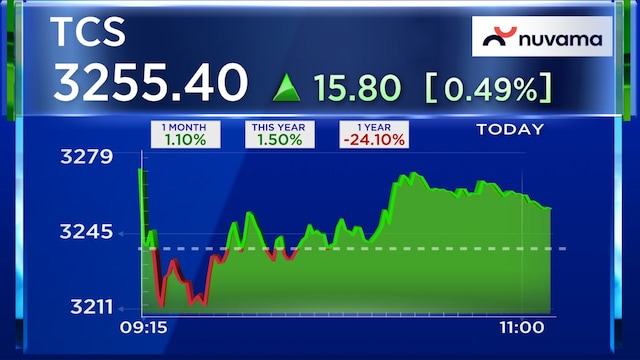
In the October–December quarter (Q3FY26), Tata Consultancy Services reported a revenue of ₹67,087 crore, a net profit of ₹10,657 crore, and an operating margin of 25.2%.
These are verbatim excerpts from the interview.
Q: How does the acquisition of Coastal Cloud fit into TCS’ long-term ambition of becoming a global AI-led services company?
Krithivasan: Our ambition is to be the largest AI-led services company in the world. We have outlined five pillars to support this, one of which is engaging with the broader ecosystem. We have committed to being more acquisitive moving forward, believing this is the best way to achieve rapid scale. While internal competency building is possible, acquisitions enable swift scaling.
This particular acquisition, Coastal Cloud, is highly regarded in both advisory and professional services. With ListEngage, acquired in the previous quarter, it helps position us among the top five in Salesforce consulting. There’s significant potential ahead for us with this profitable company, and we believe the price we’ve paid is quite reasonable, with shareholders set to benefit in the long term.
Q: Given the current climate with AI, are acquisitions becoming slightly expensive?
Krithivasan: TCS approaches acquisitions cautiously, analyzing their operations, client base, and financials. All of those factors made strong strategic sense for us.
Q: Are more acquisitions underway? You’ve indicated a push for more deals.
Subramanian: We are actively evaluating opportunities. We have a comprehensive framework for assessing new-age services—AI, data, cybersecurity, enterprise solutions, Salesforce, and digital engineering. We are examining each area for opportunities that align with our strategic goals.
Q: As we enter 2026, with the geopolitical climate being unpredictable, typically companies finalize their tech budgets. Are you observing any cautious pauses? How is discretionary spending today compared to, say, six months ago?
Krithivasan: The approach to finalizing tech budgets has shifted dramatically. Most of our clients are now making quarterly decisions based on available opportunities, adopting more of a Return on Assets (ROA) approach. The days of strictly fixed annual budgets are fading. Moreover, as companies acclimatize to ongoing macroeconomic uncertainty, they are realizing that they cannot pause budgets indefinitely. The focus is now on evaluating specific programs or projects and their expected returns.
Q: Will FY26 international revenue surpass FY25 as you previously guided?
Krithivasan: We are aiming for that, with a high ask rate for quarter four to meet it.
Q: What’s the ask rate, if I may inquire?
Krithivasan: It is projected to be upwards of 3 to 3.5%, which is indeed a high expectation. We are putting in our utmost effort—following improvements in quarter two, demand stability has continued into quarter three, although quarter three tends to be a furlough period, yet we remain committed to surpassing FY25.
Q: AI-led revenues currently are still in single digits, slightly above mid-single digits in total. What are your immediate goals for this figure in one year, and how does it reflect on the rest of the business?
Subramanian: Across industries, organizations are actively seeking ways to leverage AI for value creation. In the last three quarters, we’ve witnessed continuous improvement in our AI-related revenues.
During our Analyst Day on December 17, we reported an annualized revenue of $1.5 billion, now increased to $1.8 billion. While AI is starting from a small base, its growth is robust, and I expect this trend to continue. As businesses recognize the value of AI initiatives, they are broadening and scaling these efforts. Although I won’t specify a figure, you can anticipate a significant upward trajectory in our quarter-on-quarter annualized revenue reports.
Q: Could you outline your data center plans and associated timelines?
Seksaria: Our goal is to establish 1 GW of data centers over the next five to seven years, with capacities ranging from 150 to 200 megawatts tied to specific anchor customers. Investments include a partnership with TPG, contributing $1 billion, with a matching amount from us and additional funding through debt. Our capital expenditures will align with the requirements of these anchor customers.
Q: Regarding the return profile, do you have more clarity now on what to expect?
Seksaria: We are aiming for an Internal Rate of Return (IRR) in the mid-teens to high teens.
Q: Can you clarify the new Labour Codes? What leads to the one-time charge of ₹2,000 crore? Is it a singular expense or does it alter the company’s future cost structure?
Kunnumal: The Labour Code took effect on November 21, and the draft rules are just surfacing, so clarity is emerging. Based on our advisors’ recommendations, we’ve made provisions for retroactive adjustments, mainly concerning gratuity and leave. The future impact will be minimal; while details depend on finalized rules and implementation, we do not anticipate material changes.
Q: Going forward, will there be a marginal increase?
Kunnumal: The impact will be negligible. We hesitate to quantify as it hinges on our current understanding of the rules and compliance going forward.
Q: Headcount reduced by 20,000 in quarter two, followed by an incremental drop of over 10,000. That’s a 5% reduction in two quarters. How much of this is voluntary attrition versus restructuring? What should we expect moving forward?
Kunnumal: Regarding headcount, we’ve continued hiring and still seek top talent from various sources, having brought in around 16,000 people this quarter. This demonstrates our commitment to talent development. Recently, Everest Group’s PEAK Matrix® recognized TCS as a leader in future skills, especially in AI, ML, and data services.
We’ve tripled our scale in AI and ML training. Currently, we have approximately 217,000 employees engaged in deep skilling. Our investment in talent remains strong, and while around 1,800 individuals were affected by recent strategic adjustments, we approached this with care and respect.
For the complete discussion, watch the accompanying video