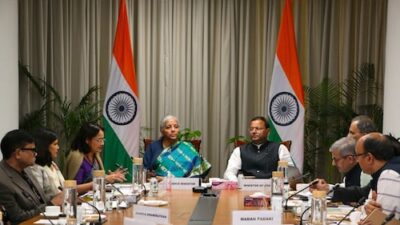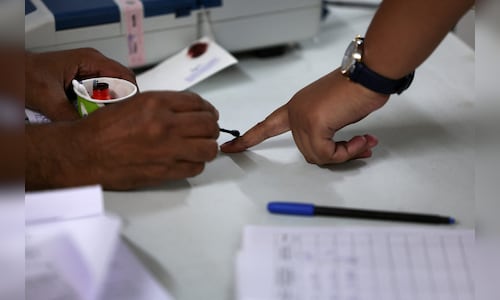
Here are the key political developments likely to capture attention in 2026.
1. High-Stakes Elections Across States and Cities
The electoral agenda in 2026 is densely packed and critically important. After a resurgence following the 2024 Lok Sabha elections, the BJP begins the year on solid ground, having successfully navigated recent Assembly elections in states like Delhi, Haryana, Maharashtra, and Bihar.
For the Opposition, an early significant test will be the Brihanmumbai Municipal Corporation (BMC) elections scheduled for January 15, along with elections for 28 additional municipal bodies in Maharashtra. The control of the BMC, noted as India’s wealthiest civic body, holds both administrative authority and considerable symbolic significance.
Later in the year, Assembly elections in West Bengal, Assam, Tamil Nadu, Kerala, and Puducherry will attract nationwide scrutiny and could alter political dynamics.
Also Read: BMC Elections 2026: AAP manifesto promises free water, power, pothole-free roads, lots more
2. West Bengal: Another Crucial Battle for Power
West Bengal is poised for one of the most closely monitored Assembly elections of 2026. The BJP aims to displace Chief Minister Mamata Banerjee and disrupt the long-standing dominance of the Trinamool Congress.
Nonetheless, the TMC maintains a robust grassroots organization and continues to attract substantial support from minority communities. Political polarization in the state has not consistently translated into electoral advantages for the BJP.
The Left and the Congress, which did not secure any seats in 2021, face the uphill task of regaining their political significance.
3. Tamil Nadu: Bipolar Politics Meets a New Challenger
The traditional DMK–AIADMK rivalry in Tamil Nadu may experience new dynamics in 2026. The incumbent DMK, headed by Chief Minister M K Stalin, approaches the election year with confidence, supported by welfare-centric governance and a fragmented Opposition.
Concurrently, actor Vijay’s official entry into politics brings an element of unpredictability. His influence could impact vote shares among multiple parties, especially within the Opposition. The Assembly elections, anticipated around April, will reveal whether the DMK can secure a second consecutive term.
4. Assam: Alliance Politics Under the Spotlight
In Assam, the Congress is striving for a comeback after a decade in opposition. The BJP enters the fray with a strong alliance that includes the AGP and UPPL, while relying on its well-established electoral strategy in the state.
The Congress, having formed a broad coalition with various regional and Left parties, may face hurdles. Its choice not to align with the AIUDF could split the minority vote, affecting its electoral chances.
5. Kerala: A Possible Shift in Long-Standing Patterns
Kerala’s Assembly elections could signify a pivotal change. Recent local body results indicate that the ruling Left Democratic Front may be experiencing voter fatigue, while the Congress-led United Democratic Front seems to be gaining traction.
A defeat for the Left would be notable, potentially marking the first time in decades without a Communist Chief Minister in India. The BJP is also seeking to enhance its influence, aiming for incremental gains in seats.
Also Read: Indian Parliament in 2025: From VB-G RAM G to Waqf and Constitution amendment — Key bills that sparked debate
6. Push for ‘One Nation, One Election’
One of the most discussed policy proposals in 2026 is likely to be the Centre’s initiative for simultaneous Lok Sabha and Assembly elections, referred to as “One Nation, One Election.”
The government is expected to present constitutional amendment bills to Parliament to facilitate this change. Given that such amendments demand a special majority, the process will likely invite extensive political negotiations and Opposition pushback.
7. Deadline to End Left-Wing Extremism
Union Home Minister Amit Shah has set March 2026 as the target date to eradicate Left-wing extremism in the country. Security actions against Maoist factions have heightened, especially in Chhattisgarh and neighboring areas.
Although there is little political dissent regarding the current security measures, discussions may emerge regarding the efficacy and long-term implications of this strategy, particularly in contrast to previous administrations.
8. Census and Delimitation Concerns
India’s long-delayed decadal Census is scheduled to commence in 2026, marking the nation’s first digital Census and its first to include caste enumeration. The houselisting phase will occur from April to September, with population counting set for early 2027.
The Census is likely to reignite discussions surrounding delimitation, which is required constitutionally after the first Census conducted post-2026. Southern states have voiced concerns regarding possible reductions in parliamentary representation, rendering this a contentious political topic.
Also Read: D K Shivakumar to become Karnataka CM in early January, claims Congress MLA
9. New BJP President and Opposition Strategy
The BJP is expected to appoint Nitin Nabin as its national president in the first half of 2026. His focus is likely to be on maintaining electoral victories while expanding the party’s influence in eastern and southern India.
Conversely, the Congress has signaled a renewed focus on livelihood and economic issues, including a nationwide campaign advocating changes to employment guarantee legislation.
10. Rajya Sabha Elections in Mid-2026
Biennial Rajya Sabha elections for 59 seats across 17 states are slated for April and June 2026. Based on existing Assembly projections, the ruling NDA is anticipated to make gains, while Congress may also see slight improvements in its numbers.