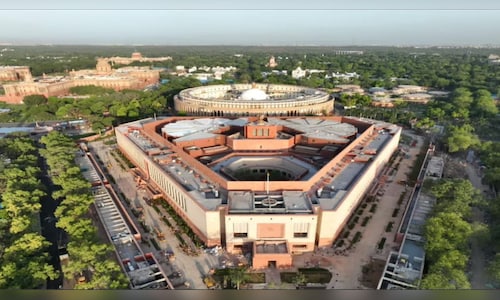
The Lok Sabha achieved a productivity rate of 111%, while the Rajya Sabha exceeded expectations with 121%, indicative of a vigorous legislative agenda across just 19 sitting days.
During this session, five Bills were enacted into law, and one was sent to a parliamentary committee for review. At least three of these legislations aimed at reform, covering areas such as nuclear energy, insurance, and capital markets. Provisions for modifications to the Goods and Services Tax framework were also approved, alongside a new rural employment guarantee law that sparked intense political discussions.
The most controversial piece of legislation was the Viksit Bharat—Guarantee for Rozgar and Ajeevika Mission (Gramin) (VB-G RAM G) Bill, which replaces the longstanding Mahatma Gandhi National Rural Employment Guarantee Act (MGNREGA). This updated law increases the annual employment guarantee for rural households from 100 days to 125 days, though it shifts 40% of the financial responsibility for the scheme to state governments, contrasting with the previous model of full central funding.
The move to rename the scheme and change its funding framework faced significant backlash. Congress leader Priyanka Gandhi criticized the urgency and motivation behind the change, arguing that the government should not have rushed the Bill through Parliament without broader consultations. Activists likewise cautioned that the newly introduced funding formula could undermine the employment guarantee for rural workers during economic downturns.
Despite the protests, the government advanced the Bill with minimal discussion, embodying an assertive legislative strategy during the session.
In addition to rural employment initiatives, the government introduced significant revisions to India’s foreign investment regulations via amendments to insurance and nuclear energy laws. The Sabka Bima Sabki Raksha Bill permits up to 100% foreign direct investment in insurance, aimed at attracting international insurers without necessitating Indian joint venture partners. Finance Minister Nirmala Sitharaman noted that relaxing ownership rules would eliminate a key obstacle for foreign investors aiming to penetrate the Indian market.
The SHANTI Bill represented a significant transformation for the nuclear industry, authorizing up to 49% FDI while allowing private entities, through joint ventures, to construct, own, and manage nuclear power facilities, with the government retaining control over crucial strategic operations.
Reform in capital markets was also a key focus. The Securities Markets Code Bill, introduced during the session, aims to enhance the Securities and Exchange Board of India by bolstering governance, improving investor safeguards, and establishing clear timelines for regulatory investigations. The Bill requires closure of SEBI inquiries within 180 days and introduces an eight-year limitation for initiating enforcement actions, with few exceptions. The proposed legislation is now under review by the Standing Committee on Finance.
Also Read | Parliament logs over 100% productivity as 7 bills are passed in one week
In a significant development for India’s labor force, the Centre also implemented the four labor codes, effective November 21. This new framework requires appointment letters for all workers, establishes minimum wages as a statutory right, shortens the gratuity eligibility period for fixed-term employees to one year, and doubles overtime pay. Gig and platform workers are anticipated to gain from enhanced employment protections.
Together, the Winter Session marked the end of a year filled with vigorous legislative activity for the government. While 2025 will stand out for the numerous reforms passed in Parliament, the emphasis in 2026 is expected to shift towards implementation and scrutiny of Bills currently under review by parliamentary committees — including the new rural employment guarantee law that ignited some of the most heated debates of the session.