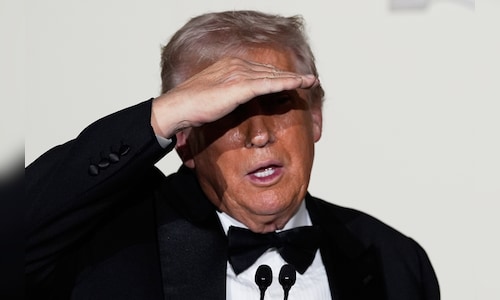
Trump indicated that this initiative was crucial to foster technological advancement and to counter a confusing mix of state laws that the industry fears could impede its growth.
President Trump announced he would restrict federal broadband funding to states whose regulatory frameworks for artificial intelligence are deemed by his administration as obstacles to maintaining American leadership in tech.
“We seek to establish a single point of approval,” Trump told reporters, surrounded by key advisers, including Treasury Secretary Scott Bessent, asserting that differing regulatory schemes across 50 states hinder the development of this emerging sector.
“To succeed, AI companies in the United States need the freedom to innovate without burdensome regulations,” the order stated, noting that the existing assortment of various regulatory frameworks complicates compliance, particularly for start-ups.
Trump has recognized AI as a vital technology, actively collaborating with U.S. firms to enhance investment in an area where China has also made significant progress. However, critics express concerns that unchecked development may expose Americans to risks.
The directive also signifies the Trump administration’s broader opposition to anti-discrimination initiatives, targeting states like Colorado that have aimed to eliminate discriminatory language from AI systems. Such efforts could lead to “ideological bias,” resulting in inaccurate outcomes, the order noted.
FEDERAL FUNDING AT RISK
The directive will equip the Trump administration with tools to counter the most “burdensome” state regulations, according to White House AI adviser David Sacks. He added that the administration will not challenge regulations related to child safety.
It instructs the Secretary of Commerce to assess state laws for alignment with Trump’s AI objectives and to prohibit states in conflict from utilizing the $42 billion Broadband Equity Access and Deployment fund.
Read More: Asian stocks cautiously higher as tech sector rattled by Oracle
Democratic Representative Don Beyer, co-chair of a bipartisan AI caucus, stated that the order would undermine safety measures enacted by states, creating “a lawless Wild West atmosphere for AI companies that jeopardizes American citizens.”
He cautioned that the order might diminish the chances of congressional action and likely breaches the 10th Amendment, which asserts that powers not explicitly assigned to the federal government belong to the states or the populace.
Trump’s directive called for his administration to collaborate with Congress to develop a national standard that prohibits state laws contradicting federal policy, safeguards children, inhibits censorship, respects copyrights, and protects communities.
Until such a standard is established, the order mandated measures to “curb the most burdensome and excessive laws emerging from the states that threaten to hinder innovation.”