US Passes Russia Sanctions Bill
The bill is now sent back to the House of Representatives. Utilizing H.R. 5334, an earlier House bill, the Senate has included the sanctions package. When the House reconvenes on August 31, it has the option to approve, amend, or reject the Senate’s version. Should it make amendments, both chambers must come to a consensus on identical text before forwarding the bill to President Trump.
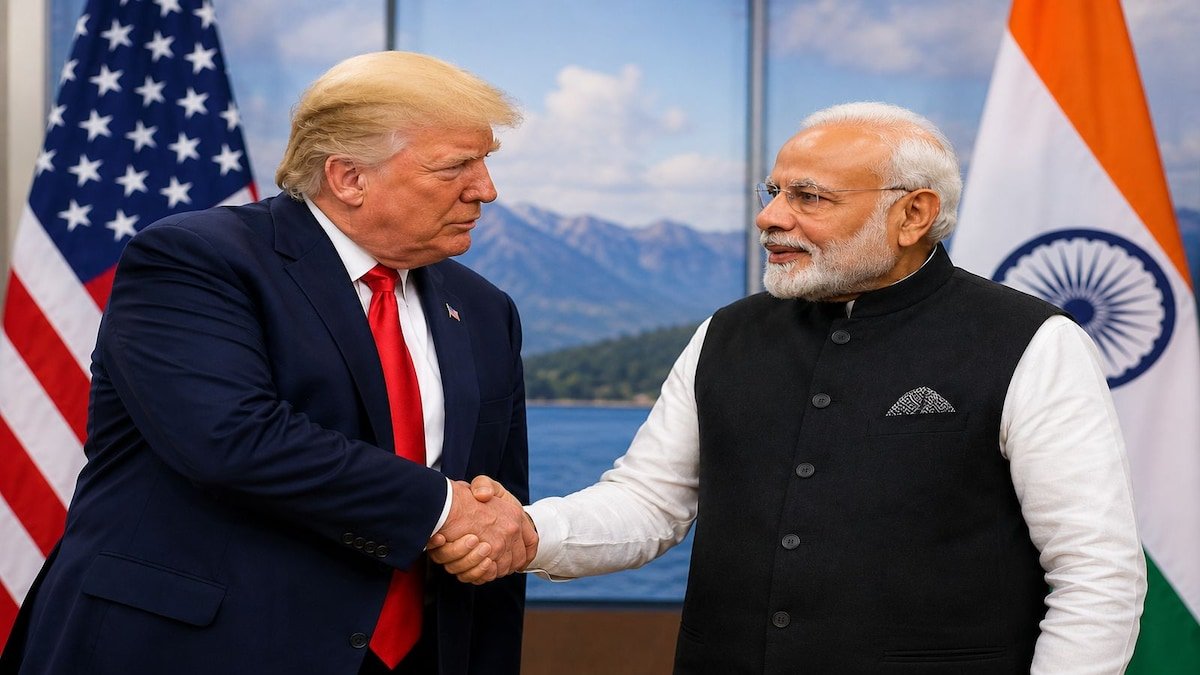
The White House supports the legislation and has signaled that Trump would sign it. However, the House’s approval is not guaranteed. Some lawmakers are apprehensive about granting the President broader tariff powers, which could increase costs for American businesses and consumers. The legislation is named after the late Republican Senator Lindsay Graham from South Carolina, who advocated for stricter sanctions on Russia. His sister and Senate successor, Darline Graham, played a role in advancing the bill.
What It Means For India
The bill does not immediately enforce a 100% tariff on Indian goods. Section 113 permits the US President to impose extra tariffs of up to 100% on products from nations that continue to purchase Russian crude oil or natural gas 30 days after the law comes into effect.
The sponsors of the bill have named China, India, Slovakia, Hungary, and Azerbaijan as the top five purchasers of Russian crude. These tariffs would be in addition to existing US duties, including those from Sections 301 and 232 and antidumping and countervailing measures.
The US Trade Representative has the authority to adjust the tariff within a limit above zero and up to 100%, based on whether a country increases, decreases, or ceases its purchases of Russian energy.
Though China imports more Russian crude than India, the bill grants President Trump substantial discretion in setting tariffs specific to each country. In previous instances, Washington has penalized India while exempting China; for example, in July 2025, an additional 25% Russia-related tariff was placed on Indian goods, which was lifted only in February 2026. In FY2026, Russia accounted for 30.3% of India’s crude imports, amounting to $40.8 billion out of a total $134.7 billion.
What Would It Mean To Give Up Russian Oil
The Global Trade Research Institute (GTRI) has pointed out that discounted Russian oil has reduced India’s import expenditures, bolstered energy security, and helped mitigate inflation, asserting that yielding to pressure would lead to significant costs for the Indian economy.
India has also been significantly increasing its energy imports from the US, with crude imports rising from $6.6 billion to $9.1 billion in FY2026, while total energy purchases from the US reached $12.5 billion. This included LNG valued at $1.4 billion, LPG at $896 million, and petroleum coke at $861 million.
GTRI’s Founder Ajay Srivastava indicated that it’s implausible for Washington to claim that India is excluding American energy. He emphasized that “the larger concern is America’s increasing use of trade restrictions to enforce foreign-policy objectives,” characterizing reciprocal tariffs, Section 301 inquiries, forced-labor regulations, sectoral duties, and now Russia-related sanctions as a conversion of tariffs into tools of strategic pressure.
He advised that India should not allow tariff threats to dictate its energy policy and should continue importing Russian crude as long as it remains commercially viable, stating that “differences with Washington must be handled through firm negotiations—not by offering unilateral concessions that elevate India’s energy costs and undermine its strategic autonomy.”