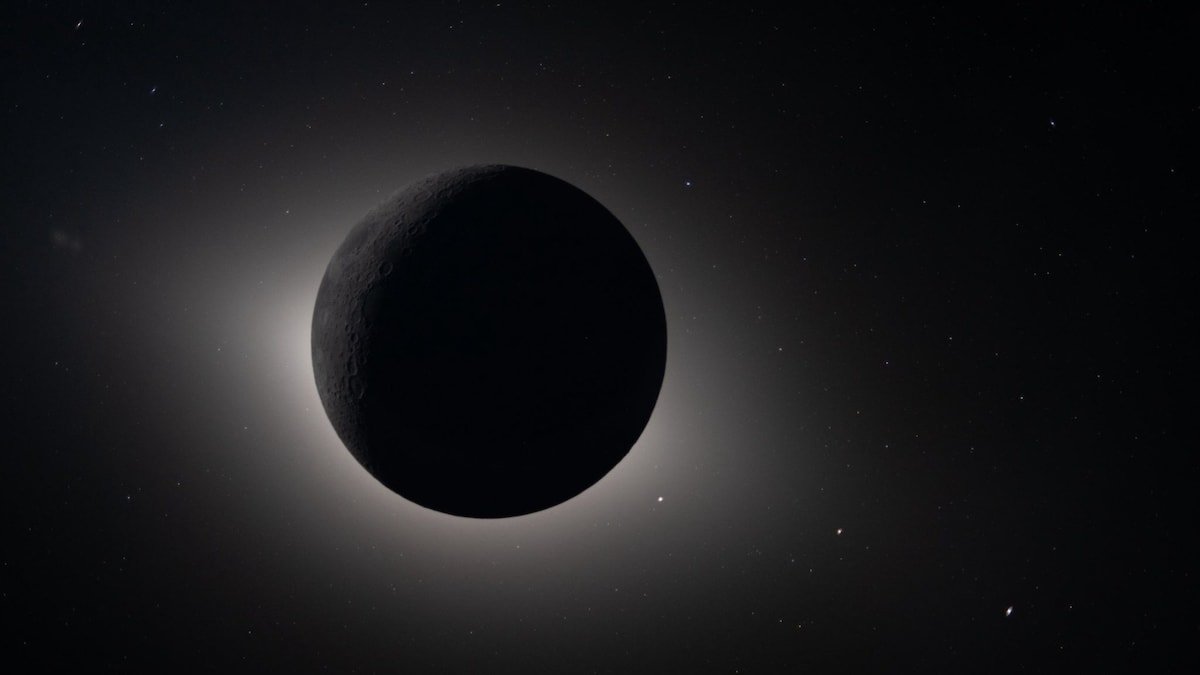
Though the path of totality will be confined to a slender strip, millions across the Northern Hemisphere will still be able to view a partial eclipse.
NASA reports that the total solar eclipse will traverse Greenland, Iceland, northern Russia, the Atlantic Ocean, Spain, and a small section of Portugal. Many parts of Europe, Canada, northwestern Africa, and northern United States will also witness the partial phases.
For numerous viewers in mainland Europe and Africa, the eclipse will align with sunset, resulting in a unique sunset eclipse spectacle.
NASA to livestream the eclipse
Those who cannot view the eclipse in person can catch it online. NASA will broadcast the total solar eclipse live starting at 1:15 PM EDT (10:45 PM IST) on August 12 at https://www.nasa.gov/live.
Where will the eclipse be visible?
Nations along the path of totality on August 12 include Greenland, Iceland, northern Russia, the Atlantic Ocean, Spain, and a small slice of Portugal. In northern Russia, totality is expected around midday, with viewers in Greenland and Iceland experiencing it during late afternoon or early evening.
In Spain and the northwestern edge of Portugal, the Sun will be entirely eclipsed just before sunset, creating a remarkable total solar eclipse.
For several locations along the path of totality, the Moon will fully cover the Sun for under two minutes. Those situated centrally within the eclipse path in Greenland, Russia, and parts of the North Atlantic may enjoy a slightly extended totality, yet it will remain less than two-and-a-half minutes.
What about the rest of the world?
For those outside the path of totality, millions will experience only a partial solar eclipse. NASA states that the partial eclipse will be visible across parts of the northern United States, Canada, Europe, and northwestern Africa, with the degree of coverage varying by location.
In the United States and southern Canada, the Moon will seem to take a small ‘bite’ out of the Sun. Areas nearer to the path of totality, including much of Europe and parts of northwestern Africa, will witness a considerably larger section of the Sun obscured.
How to watch it safely
According to NASA, viewers should only remove their eclipse glasses during the brief totality period when the Moon completely blocks the Sun’s glare. Before and after totality, and throughout the event for anyone viewing a partial eclipse, appropriate eye protection is essential.
Observers are advised to use ISO 12312-2 certified eclipse glasses, a handheld solar viewer, or a properly fitted solar filter for telescopes, binoculars, and cameras. Regular sunglasses are not suitable for viewing the Sun. Individuals without eclipse glasses can safely observe the event using indirect viewing methods, such as a pinhole projector.
What is a total solar eclipse?
A total solar eclipse happens when the Moon passes directly between the Sun and Earth, completely concealing the Sun’s surface. Those located in the center of the Moon’s shadow experience totality, where the sky darkens as if it were dawn or dusk.
With favorable weather conditions, observers may also glimpse the Sun’s corona, its outer atmosphere, typically hidden by the Sun’s bright surface.
What are the stages of a total solar eclipse?
As outlined by NASA, a total solar eclipse unfolds through several stages, each defined by unique visual phenomena.
The eclipse initiates with the partial phase, as the Moon begins to traverse the Sun, giving it a crescent appearance. Just before and after totality, viewers may also observe shadow bands—fast-moving dark lines separated by lighter spaces that can appear on the ground or building sides. According to NASA, these bands can be challenging to capture in photographs.
As the Moon obscures more of the Sun, Baily’s Beads can be seen. These are light rays from the Sun shining through valleys on the Moon’s edge. This is followed by the Diamond Ring effect, when only a single bright spot of sunlight remains, resembling a sparkling diamond set against a ring.
The most striking moment is totality, during which the Moon entirely conceals the Sun’s bright face. During totality, observers may also see the chromosphere, which appears as a thin pink edge around the Moon, and the corona, the Sun’s outer atmosphere, visible as streams of white light. Once totality concludes, the eclipse unfolds in reverse.