The multinational paint and coating manufacturer is optimistic about sales growth after achieving double-digit revenue growth and margin enhancement in the April-June 2026 quarter. “Quarter two appears to be more promising than the first quarter,” Roy stated, noting that reduced rainfall compared to last year is expected to boost paint demand.
He mentioned that price increases across various business segments “will contribute to further improving our margins and revenue.” Roy indicated that Berger Paints aims to expedite the rollout of tinting machines following the installation of approximately 2,100 machines in the first quarter, with expectations to surpass 2,500 installations per quarter moving forward. Additionally, the company is advancing with its ₹600-800 crore capital expenditure plan, which includes investments in its Panagar plant and the expansion of existing facilities.
Despite the market capitalisation of ₹63,809.50 crore, Berger Paints has experienced a decline of over 2% in share prices over the past year. On competition, Roy mentioned that pricing pressure has eased somewhat, but “it still remains at a quite elevated level.”
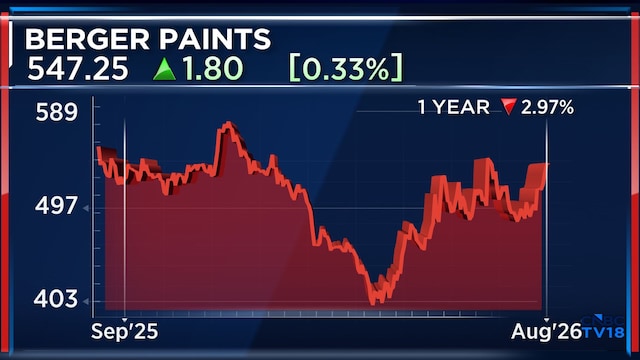
Berger Paints shares were trading at ₹543.60 as of 11:46 am on the NSE.
This is an edited transcript of the interview.
Q: Let’s discuss growth first. How have things shaped up? Not only for your company but also concerning industry growth and your peers. Did you retain market share like you did previously, or did you lose some?
A: Based on the results released so far—one company is yet to announce—I think we have gained a little market share among major competitors. Our first quarter base tends to be slightly higher, so growth from that baseline usually means a market share gain in Q1. Overall, results indicate we are likely gaining a bit of market share.
Q: I mention this because Asian Paints experienced a faster growth rate. Did you perhaps take market share from others?
A: Yes, and we should consider the base effect. Last year, we had a positive growth rate, which, compared to the other competitors who have reported results, places us slightly ahead.
Q: What are your expectations for Q2? Do you foresee mid-teens revenue growth? Can you provide some insights? And for the year as a whole, what are your projections?
A: Q2 seems more favorable than the first quarter. This is likely because of last year’s aggressive rainfall. This year, the rains have been less intense, particularly in July and August. When it rains less, paint sales generally improve.
Additionally, the price increases that were implemented—partly in Q1, with more expected in this quarter—will also aid in enhancing our margins and revenue.
Q: So, Q2’s growth rate, combined with a relatively suppressed base from last year, should reflect improvement. Is that accurate?
A: That’s correct.
Q: I came across a note from JPMorgan discussing competitive intensity, which they believe will remain high. Would you agree? They mentioned that rebates to dealers by Birla Opus seem to have increased. Could you share your perspective?
A: Yes. Previously, there was a 5% difference in dealer pricing compared to the industry. With recent price increases, they have closed that gap. Now, part of that gap is being rebated back to dealers, effectively raising prices by 5% and giving an additional 2% to major dealers.
Q: How would you characterize the trend of competitive intensity? Is it rising, falling, or still elevated?
A: Competitive intensity has improved slightly, but it remains at a quite elevated level.
Q: Can you provide an update on the tinting machines? What is your full-year target and how many were added this quarter?
A: We aim to install about 10,000 machines and added around 2,100 in the first quarter. The first quarter posed challenges due to ongoing price increases, which diverted the sales team’s focus. However, we expect to surpass 2,500 machines installed each quarter moving forward.
Q: You have a capex plan of ₹600 crore to ₹800 crore, right? Will all of that be spent in FY27?
A: Yes, that’s accurate.
Q: What asset turnover can we expect going forward? How does this influence your growth potential?
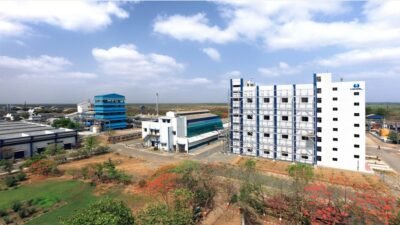
A: Currently, we have a cash balance of approximately ₹1,440 crore. Some will be allocated for dividends and taxes, with the remainder reinvested in funding our capex plans. Routine capex requirements will be covered, and the Panagarh plant is expected to come online in Q4 this year, costing between ₹150 crore and ₹200 crore. Out of the total capex of ₹800 crore, ₹500 crore to ₹600 crore will support the regular expansion of various factories and the ColorBank machines, while the rest is for the Panagarh unit.
Q: I recently visited Bengal and noticed a very optimistic atmosphere. Are you experiencing increased business activity or inquiries? You’ve previously expressed optimism about the prospects, especially with the new government. Are things moving forward?
A: For the first time in 49 years, there is a double-engine government—both the Centre and the state are aligned. This alignment breeds heightened expectations and a sense of optimism.
However, new governments usually bring about systemic changes, which can create turbulence. Bureaucratic reshuffles and the introduction of new policies will occur, and we expect announcements regarding the new industrial and incentive policies from the Finance Minister by August 15.
So, while initial changes may lead to instability, we foresee increased industrialization and infrastructure projects arising in the state once these transitions are resolved in a few months.
For the full interview, watch the accompanying video

Catch all the latest updates from the stock market here