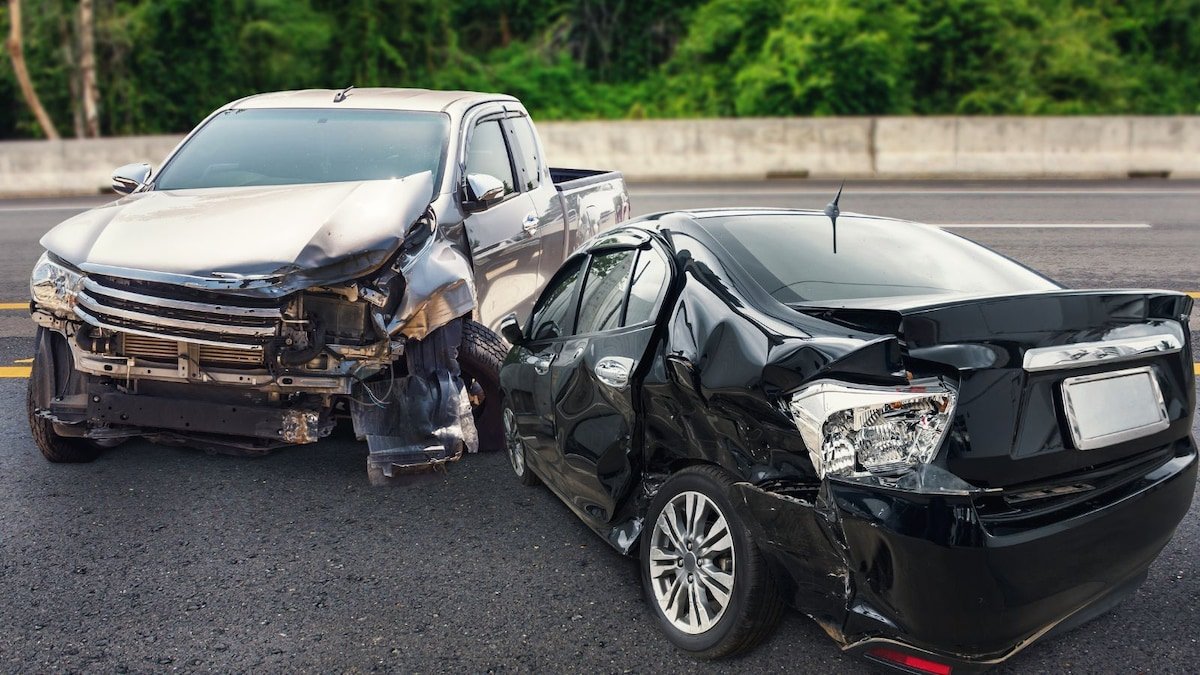
The suggested changes were presented in Parliament on Tuesday by Second Minister for Home Affairs Sim Ann, who emphasized that road accidents have “serious and irreversible consequences” but can be prevented.
“We need to reduce our accident rate and fatalities,” she stated. In 2025, Singapore recorded 149 road fatalities, the highest in ten years, averaging at least one death every two days.
The proposed legislation introduces a new offense termed purposeful endangerment, applicable when a driver intentionally uses a vehicle to threaten another individual, potentially leading to death. Those found guilty under this new law could face up to 15 years in prison, fines, discretionary caning, and possible confiscation of the vehicle involved in the crime.
This new regulation follows a notorious incident where a driver intentionally swerved his vehicle into a motorcycle, resulting in the death of an 18-year-old pillion rider.
How does India compare?
According to Section 106 of the Bharatiya Nyaya Sanhita (BNS), 2023:
Causing death through reckless or negligent behavior can lead to a maximum of five years’ imprisonment and a fine.
In instances of hit-and-run where the driver escapes without reporting to the police or authorities, the penalty can escalate to 10 years’ imprisonment and a fine.Stricter drink-driving rules and AI-driven traffic enforcement in Singapore
Singapore is also set to propose tougher regulations against drink-driving. If approved, the breath alcohol limit will decrease from 35 micrograms to 15 micrograms per 100 ml of breath, while the blood alcohol limit will be lowered from 80mg to 30mg per 100 ml of blood.
Additionally, there are plans to enhance the use of technology for monitoring traffic offenders.
Traffic Violation Enforcement Cameras equipped with video analytics and automatic number plate recognition will identify infractions such as running red lights, crossing double white lines, stopping in yellow boxes, and disregarding directional signs.
During trials, nine of these cameras recorded 67,000 traffic violations between April 2025 and February 2026.
(Edited by : priyanka deshpande)