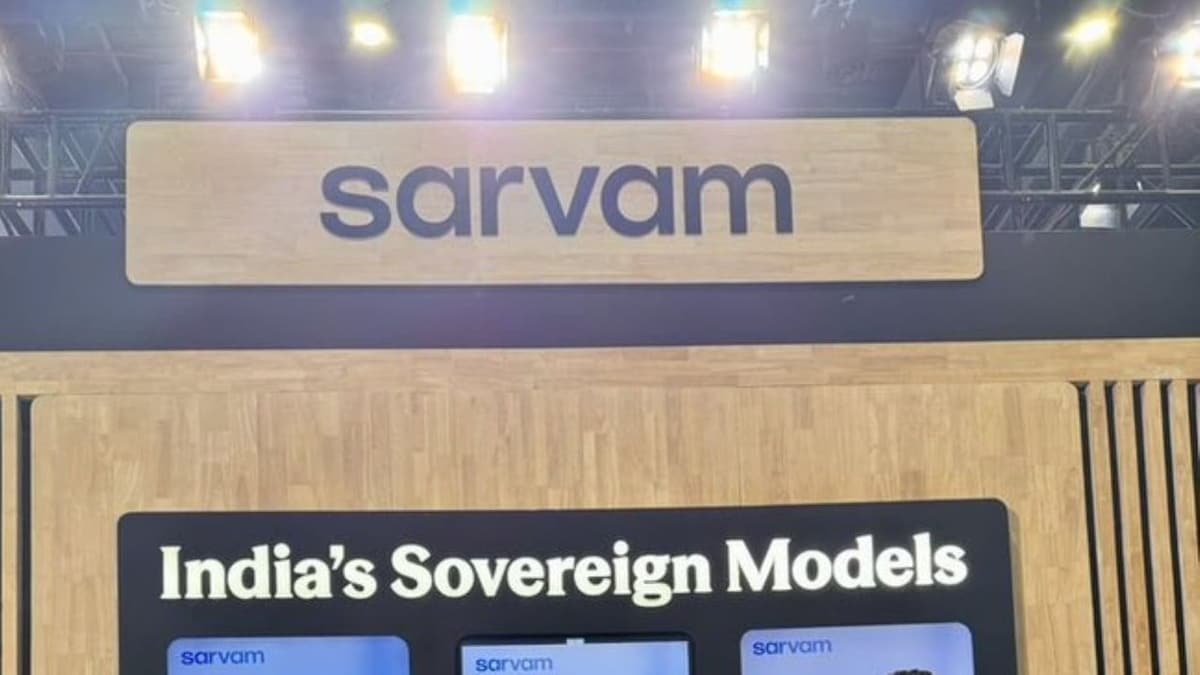
The launch signifies Sarvam AI’s transition from merely creating foundational models to delivering a complete AI platform that encompasses infrastructure, models, and applications. The company is focused on businesses that wish to utilize AI while ensuring that sensitive data remains within India, responding to the rising emphasis on data sovereignty and the corporate adoption of generative AI.
During an interview with CNBC-TV18, Sarvam AI Co-Founder Pratyush Kumar expressed the desire to fill a market gap by presenting an integrated AI stack from a single Indian source.
“For the first time, we have an Indian player capable of providing a full stack that operates within India,” Kumar noted, highlighting that sectors like banking are increasingly inclined to process customer data domestically instead of on foreign servers.
This launch takes place amidst enterprises moving past experimentation with generative AI, seeking production-ready platforms that unify computing infrastructure, AI models, and deployment assistance. Currently, many businesses depend on several technology providers for different aspects of their AI frameworks.
Enterprise focus
Sarvam AI mentioned that Indus is designed for a varied customer base, including startups, small and medium enterprises, and large organizations.
Kumar indicated that the platform empowers businesses to create AI agents for research, data analysis, and presentation generation, launch AI-driven voice applications for customer service, and produce multilingual content.
“Previously, people recognized us for developing models and releasing research components. With Indus, we are now offering full-stack applications that people can identify with,” he stated.
He further elaborated that while smaller firms can implement the platform directly, larger organizations often necessitate deeper integration with their current systems and a clearer return on investment. Sarvam AI has established a specialized deployment team to assist with enterprise implementations.
Capital remains critical
Kumar affirmed that the company plans to continue raising funds as the demand for AI computing infrastructure expands.
“Indeed, we will persist in raising capital. It’s one of the essential ingredients since you need these AI GPUs, which are quite costly,” he remarked.
He emphasized that the company is committed to ensuring that investments in AI infrastructure yield measurable returns for customers, enabling further growth of its computing capacity.
Government backing and sovereign AI
Kumar refrained from addressing rumors about the Government of India potentially investing in Sarvam AI, stating that he would discuss it only after official confirmation.
However, he acknowledged that the IndiaAI Mission had played a role in supporting the development of the company’s initial foundation model and described the government as a crucial stakeholder in India’s sovereign AI objectives.
“We are strongly an India-first player,” Kumar remarked, noting that Sarvam AI is collaborating with multiple state governments to implement AI-based solutions.
He contended that India needs domestic AI capabilities, as evolving geopolitical conditions and export controls could impact access to foreign AI technologies over time.
Kaze rollout delayed
Kumar also mentioned that the launch of Sarvam AI’s Kaze smart glasses has been postponed due to global supply chain challenges.
He clarified that Kaze is primarily being developed as an enterprise product rather than a consumer device, with production currently taking place in Chennai. The company is also partnering with the National Association for the Blind and government agencies regarding the product.
Long-term strategy
Looking forward, Kumar stated that Sarvam AI aims to develop capabilities across AI infrastructure, foundational models, and enterprise applications as businesses adopt AI more extensively.
“The bottom line is unmistakable. We must own the majority of the AI tokens utilized in this country,” he asserted.
He added that enterprises are increasingly seeking customized AI models alongside open-source options, generating demand for companies that can provide technology across the entire AI spectrum.