The 35-year-old, dismissed in a government reshuffle just six months into his role, launched a fierce attack on General Oleksandr Syrskyi, accusing him of creating intrigue, obstructing his initiatives, and undermining his efforts.
This marks the first time these tensions have become public.
Fedorov claimed he had tried to cooperate with Syrskyi after failing to convince President Volodymyr Zelenskiy to remove him, yet asserted that Ukraine’s leading general was intentionally sabotaging him behind the scenes.
”We found ourselves in a situation where all our proposed initiatives were hindered, and Syrskyi, amidst the issues we discussed today, is not willing to confront me and discuss the problems openly,” Fedorov stated.
He accused Syrskyi of maintaining a dysfunctional environment of deceit, poorly organized units, and a lack of accountability within the military – a striking criticism directed at a figure who has commanded the Ukrainian armed forces since February 2024.
”Instead of figuring out how to achieve an asymmetric victory over Russia, he has focused on dividing the country,” he said during a press conference coinciding with lawmakers’ discussions on forming a new cabinet.
Following the accusations, Syrskyi released a brief statement thanking Fedorov for his service as defense minister, emphasizing the need for Ukraine to concentrate on the war, without addressing the substance of Fedorov’s remarks.
The heated exchange highlights growing internal challenges within Ukraine’s defense forces more than four years after Russia’s large-scale invasion, showcasing differing visions on how to conduct warfare in the drone era.
Years of continual conflict have sparked a revolution in military strategy, particularly in the employment of drones, which serve a variety of functions from striking troops to delivering supplies and evacuating casualties.
Fedorov, an emblematic figure for many Ukrainians who believe technology is crucial in winning the war, has been instrumental in ramping up production of tactical drones and improving defense procurement processes.
His time in office coincided with a marked improvement in Ukraine’s battlefield conditions after years of struggling, highlighted by a notable series of drone strikes that have targeted Russia’s oil production and military infrastructure deep within its borders.
Hundreds of Ukrainians gathered in Kyiv on Thursday in support of Fedorov at an impromptu wartime demonstration, predominantly comprised of individuals under 30.
In his comments, Fedorov acknowledged Syrskyi’s past military successes but insisted that ”the nature of the war has completely shifted” and that drones are driving a swift evolution in tactics.
Syrskyi, 60, trained in Moscow during the 1980s, took command of Ukraine’s ground forces in 2019. He successfully defended Kyiv in 2022 and led a rapid counteroffensive in the Kharkiv region later that same year.
He took leadership of the armed forces in February 2024 following the dismissal of his predecessor, Valeriy Zaluzhnyi, by Zelenskiy.
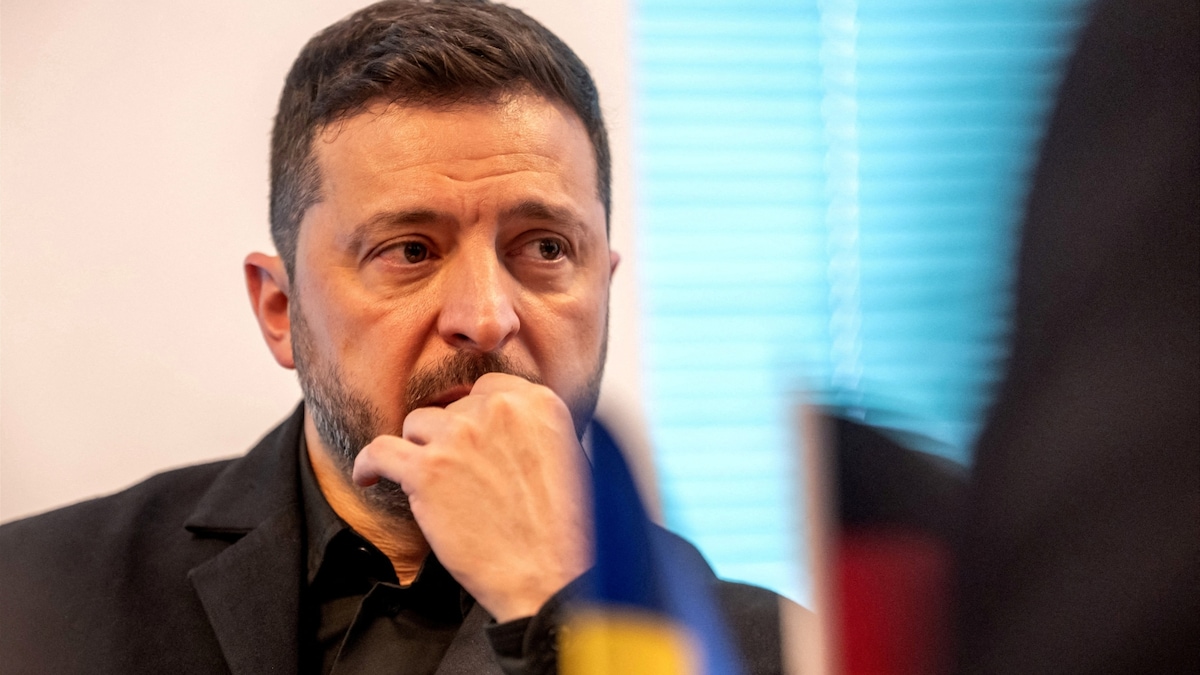
Zelenskiy confirmed there was tension between the two leaders, stating he was not in a position to determine how it would be resolved.
In addition to the role of technology, particularly drones promoted by Fedorov, the Ukrainian military is grappling with a shortage of infantry soldiers, a challenge neither the military nor the defense ministry has effectively addressed.
Zelenskiy mentioned that Ihor Klymenko, the interior minister seen as a potential successor to Fedorov, may be well-suited to tackle the issue of draft officers forcibly recruiting civilians into the military.
This phenomenon, colloquially referred to as ”bus-ification,” has become profoundly unpopular, exacerbating social tensions throughout the conflict as the armed forces strive to maintain the flow of new recruits while facing a larger adversary.
Fedorov implied that reinstatement as defense minister could be a possibility, although the mechanisms for such an outcome remain unclear.
Some military figures expressed their support for Fedorov, including Mykhailo Drapatyi, a well-regarded commander who served as land forces chief from 2024 to 2025 before being demoted by Syrskyi.
Pavlo Yelizarov, a deputy commander of Ukraine’s air force appointed by Fedorov to counter Russian drone attacks, announced he would resign in protest of Fedorov’s dismissal, labeling it ”a significant setback” for Ukraine’s defense.
Also Read: Indian AI founder says companies should own their AI, not rent it