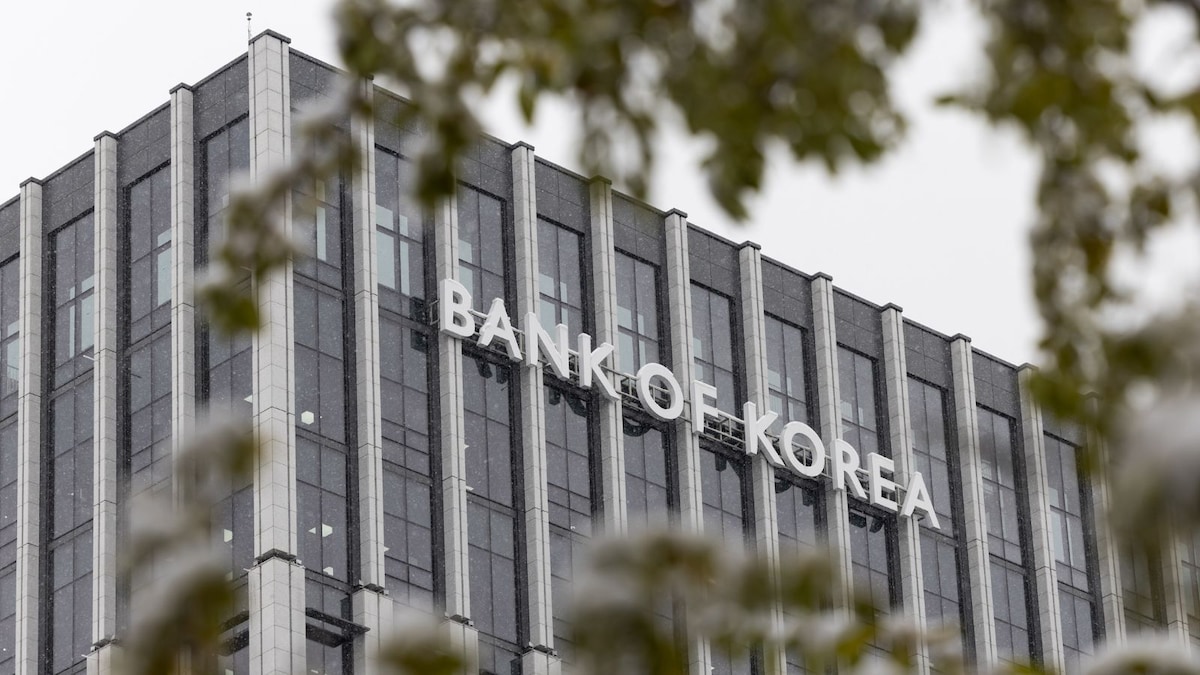
The Bank of Korea lifted the seven-day repurchase rate by a quarter point to 2.75%, aligning with the forecasts of all economists surveyed by Bloomberg. This marks the inception of a new policy cycle after officials reduced borrowing costs four times since late 2024, with the last increase occurring in January 2023.
This decision follows months of increasingly hawkish communication from the central bank. Since his initial policy meeting in May, Governor Shin Hyun Song has consistently emphasized that inflation, growth, exchange rates, and financial stability risks all support the same policy direction, thereby minimizing the usual trade-offs involved in monetary policy.
Authorities have revised their growth projections upward multiple times, the latest being earlier this week when the government announced a 3% GDP growth expectation for this year. Last week, the International Monetary Fund provided South Korea with the largest upward revision among the 30 biggest economies, increasing its 2026 growth forecast to 2.6%.
The rate hike signals the beginning of what investors anticipate will be a tightening cycle extending into next year. Markets are already evaluating how soon the central bank may act again.
“The BOK is anticipated to maintain a hawkish stance and keep the option for additional tightening open,” stated Jemin Choi, an economist at Hyundai Motor Securities Co., in a phone conversation. “However, they are likely to keep their current position rather than become more aggressive, as ongoing risks related to inflation, currency fluctuations, and Middle Eastern conflicts persist without significant deterioration.”
Despite the elevated oil prices, secondary inflation effects have yet to emerge. Additionally, wage growth is decelerating, the won has recently appreciated, and concerns about repo funds may prevent the BOK from implementing consecutive hikes in its next decision on August 27, according to Lim Jae-kyun, an analyst at KB Securities.
Also Read: Asian shares fall led by South Korea’s Kospi, oil extends gain
This policy adjustment follows a notable improvement in South Korea’s economic circumstances. A semiconductor-led export boom has propelled the current-account surplus past 2025’s record total in just the first five months of this year, contributing to an unexpected 1.8% growth in the first quarter.
The BOK has increasingly noted that the current chip cycle is distinct from earlier ones due to structural demand related to AI. Competitive investments from global tech companies, along with supply constraints for advanced chips such as high-bandwidth memory, are expected to sustain this growth for an extended period, the bank mentioned in a statement to a local lawmaker earlier this week.
During his press conference later on Thursday, Shin may be questioned about remarks from Federal Reserve Chairman Kevin Warsh, who has pushed back against the notion that surging AI investment is driving inflation. Warsh expressed on Wednesday that the boom might not necessarily lead to enduring price pressures.
Korea’s inflation has remained persistently high, with consumer prices increasing by 3.2% in June compared to the previous year, marking the fastest growth in over two years. Policymakers anticipate that underlying inflationary pressures will remain strong as earlier oil price increases continue to impact the economy. The government expects an average inflation rate of 2.6% for the year.
Concerns regarding financial stability are now a more significant factor in policy decisions. Apartment prices in Seoul have risen for 75 consecutive weeks, household borrowing has begun to accelerate again, and policymakers have repeatedly warned that investments fueled by leverage could exacerbate broader financial imbalances. In its latest Financial Stability Report, the BOK indicated that higher interest rates would be necessary “at an appropriate time” to mitigate these risks.
While the won has recently appreciated, it has experienced a decline for most of the year, hitting its lowest level against the dollar since 2009 in June. Policymakers have frequently pointed to currency weakness as an additional reason supporting tighter monetary policy.
When Shin briefs reporters later on Thursday, investors will focus on his analysis of stronger-than-expected growth, widening inflation pressures, and escalating financial stability risks.